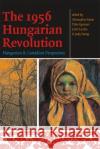
In October 1956, a spontaneous uprising took Hungarian Communist authorities by surprise, prompting Soviet authorities to invade the country. After a few days of violent fighting, the revolt was crushed. In the wake of the event, some 200,000 refugees left Hungary, 35,000 of whom made their way to Canada. This would be the first time Canada would accept so many refugees of a single origin, setting a precedent for later refugee initiatives. More than fifty years later, this collection focuses on the impact of the revolution in Hungary, in Canada, and around the world.
In October 1956, a spontaneous uprising took Hungarian Communist authorities by surprise, prompting Soviet authorities to invade the country. After...
Exploring a variety of topics--including health, politics, education, art, literature, media, and film--Aboriginal Canada Revisited draws a portrait of the current political and cultural position of Canada's Aboriginal peoples. While lauding improvements made in the past decades, the contributors draw attention to the systemic problems that continue to marginalize Aboriginal people within Canadian society.
From the Introduction: " This collection helps] to highlight areas where the colonial legacy still takes its toll, to acknowledge the manifold ways of Aboriginal cultural...
Exploring a variety of topics--including health, politics, education, art, literature, media, and film--Aboriginal Canada Revisited draws a ...