In Marx and Social Justice, George E. McCarthy presents a detailed and comprehensive overview of the ethical, political, and economic foundations of Marx’s theory of social justice in his early and later writings. What is distinctive about Marx's theory is that he rejects the views of justice in liberalism and reform socialism based on legal rights and fair distribution by balancing ancient Greek philosophy with nineteenth-century political economy. Relying on Aristotle’s definition of social justice grounded in ethics and politics, virtue and democracy, Marx applies it to a broader range...
In Marx and Social Justice, George E. McCarthy presents a detailed and comprehensive overview of the ethical, political, and economic foundations of M...
In Debord, Time and Spectacle Tom Bunyard provides a detailed philosophical study of the theoretical work of Guy Debord and the Situationist International. Drawing on evidence from Debord’s books, films, letters and notes, Bunyard reconstructs the Hegelian and Marxian ideas that support Debord’s central concept of ‘spectacle’. This affords a reconsideration of Debord’s theoretical claims, and a reinterpretation of his broader work that foregrounds his concerns with history and lived time. By bringing Situationist theory into dialogue with recent reinterpretations of Marx, this book...
In Debord, Time and Spectacle Tom Bunyard provides a detailed philosophical study of the theoretical work of Guy Debord and the Situationist Internati...
In this volume, Marx’s Theory of the Genesis of Money. How, Why, and Through What is a Commodity Money?, the first of the author’s works to be translated into English, Samezō Kuruma examines the different angles from which Marx analyses the commodity and money in the first two chapters of Capital, Volume I. Kuruma carefully explains each of the theoretical questions raised by Marx, particularly the theory of the value-form, which unravels the mystery surrounding money. The theoretical knowledge Marx gains from his analysis of the commodity is the linchpin of Capital, but he recognises...
In this volume, Marx’s Theory of the Genesis of Money. How, Why, and Through What is a Commodity Money?, the first of the author’s works to be tra...
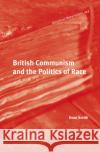
British Communism and the Politics of Race explores the role that the Communist Party of Great Britain played within the anti-racism movement in Britain from the 1940s to the 1980s. As one of the first organisations to undertake serious anti-colonial and anti-racist activism within the British labour movement, the CPGB was a pioneering force that campaigned against racial discrimination, popular imperialism and fascist violence in British society. The book examines the balancing act that the Communist Party negotiated in its anti-racist work, between making appeals to the labour movement to...
British Communism and the Politics of Race explores the role that the Communist Party of Great Britain played within the anti-racism movement in Brita...
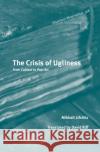
Mikhail Lifshitz is a major forgotten figure in the tradition of Marxist philosophy and art history. A significant influence on Lukács, and the dedicatee of his The Young Hegel, as well as an unsurpassed scholar of Marx and Engels’s writings on art and a lifelong controversialist, Lifshitz’s work dealt with topics as various as the philosophy of Marx and the pop aesthetics of Andy Warhol. The Crisis of Ugliness (originally published in Russian by Iskusstvo, 1968), published here in English for the first time, and with a detailed introduction by its translator David Riff, is a compact...
Mikhail Lifshitz is a major forgotten figure in the tradition of Marxist philosophy and art history. A significant influence on Lukács, and the dedic...
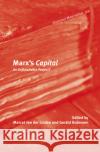
For almost 150 years, scholars have been debating how to interpret Marx’s seminal work Capital while they had access to just some of Marx’s economic manuscripts. This changed in 2013 with the publication of all the known economic writings of Marx and Engels in the Marx-Engels Gesamtausgabe (MEGA). One can now reconstruct the lines of intellectual development, and one can also explore in detail how Friedrich Engels went about compiling volumes II and III of Capital from the vast legacy of manuscripts that Marx left behind after his death in 1883. It should be possible, now, to develop a...
For almost 150 years, scholars have been debating how to interpret Marx’s seminal work Capital while they had access to just some of Marx’s econom...
This volume contains the proceedings and resolutions from three expanded meetings of the Executive Committee of the Communist International (Comintern) held in 1922–1923, while Lenin was still alive. At these 'mini-congresses', Communist leaders from around the world debated out major strategic questions and initiatives, from united front policy to the fight against fascism. The material in this book – much of it appearing in English for the first time – is an essential source for understanding the world revolutionary movement in Lenin’s time, as well as the subsequent evolution of...
This volume contains the proceedings and resolutions from three expanded meetings of the Executive Committee of the Communist International (Comintern...
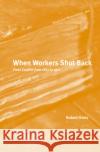
The United States looks today much like it did in the late 19th to early 20th century. Open class conflict is disappearing, strikes are becoming rare, unions are declining, corporate power is growing, and work is insecure and contingent. When Workers Shot Back: Class Conflict from 1877 to 1921 explores one of the most tumultuous times in United States history. Self-organised workers recomposed their power by devising new strategies and tactics to disrupt the capitalist economy and extract concessions. Mine, railroad, steel, and iron workers pursued a strategy of tension that sometimes erupted...
The United States looks today much like it did in the late 19th to early 20th century. Open class conflict is disappearing, strikes are becoming rare,...
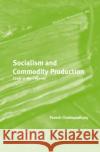
‘Socialism’ is a word that is now habitually taken to refer to a particular social system that prevailed in different parts of the globe during the twentieth century. This system was defined primarily by single-party rule with public (mainly state) ownership of the means of production along with a centrally planned economy. Its material base was generalised commodity production. The spokespersons of this system claim that this socialism was derived from Marx. Paresh Chattopadhyay’s Socialism and Commodity Production argues the falsity of this claim. On the basis of a comprehensive...
‘Socialism’ is a word that is now habitually taken to refer to a particular social system that prevailed in different parts of the globe during th...
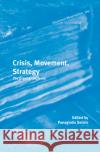
In 2010 Greece entered a period of extreme austerity measures, but also of intense struggles and protests. Social and political crisis led to tectonic shifts in the political landscape and the rise to power of SYRIZA. However, despite the impressive expression of resistance in the 2015 referendum, the EU-IMF-ECB ‘Troika’ managed to impose the continuation of the same politics of austerity, privatisations, and neoliberal reforms. This social and political sequence poses important theoretical and analytical questions regarding capitalist crisis, public debt, European integration,...
In 2010 Greece entered a period of extreme austerity measures, but also of intense struggles and protests. Social and political crisis led to tectonic...