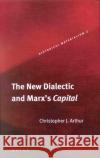
This book both argues for, and demonstrates, a new turn to dialectic. Marx's Capital was clearly influenced by Hegel's dialectical figures: here, case by case, the significance of these is clarified. More, it is argued that, instead of the dialectic of the rise and fall of social systems, what is needed is a method of articulating the dialectical relations characterising a given social whole. Marx learnt from Hegel the necessity for a systematic development, and integration, of categories; for example, the category of 'value' can be fully comprehended only in the context of the...
This book both argues for, and demonstrates, a new turn to dialectic. Marx's Capital was clearly influenced by Hegel's dialectical figures: her...
Lenin's What is to Be Done? (1902) has long been seen as the founding document of a 'party of a new type'. For some, it provided a model of 'vanguard party' that was the essence of Bolshevism, for others it manifested Lenin's elitist and manipulatory attitude towards the workers. This substantial new commentary, based on contemporary Russian- and German-language sources, provides hitherto unavailable contextual information that undermines these views and shows how Lenin's argument rests squarely on an optimistic confidence in the workers' revolutionary inclinations and on his...
Lenin's What is to Be Done? (1902) has long been seen as the founding document of a 'party of a new type'. For some, it provided a model of 'va...
This book both argues for, and demonstrates, a new turn to dialectic. Marx's Capital was clearly influenced by Hegel's dialectical figures: here, case by case, the significance of these is clarified. More, it is argued that, instead of the dialectic of the rise and fall of social systems, what is needed is a method of articulating the dialectical relations characterising a given social whole. Marx learnt from Hegel the necessity for a systematic development, and integration, of categories; for example, the category of 'value' can be fully comprehended only in the context of the...
This book both argues for, and demonstrates, a new turn to dialectic. Marx's Capital was clearly influenced by Hegel's dialectical figures: her...
The Capitalist Cycle is a translation of a previously unknown work in Marxist economic theory. Originally published in 1928, this rediscovered work is one of the most creative essays witten by a Soviet economist during the first two decades after the Russian Revolution. Following the dialectic of Hegel and Marx, Maksakovsky aims to provide a 'concluding chapter' for Marx's Capital. The book examines economic methodology and logically reconstructs Marx's analysis into a comprehensive and dynamic theory of cyclical economic crises. The introductory essay by Richard B. Day situates...
The Capitalist Cycle is a translation of a previously unknown work in Marxist economic theory. Originally published in 1928, this rediscovered ...