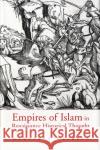
Renaissance humanists believed that the origins of peoples could reveal crucial facts about their modern political character. Margaret Meserve explores what happened when European historians turned to study the political history of a faith other than their own. Meserve investigates the methods and illuminates the motives of scholars negotiating shifting boundaries--between scholarly research and political propaganda, between a commitment to critical historical inquiry and the pressure of centuries of classical and Christian prejudice, between the academic ideals of humanism and the...
Renaissance humanists believed that the origins of peoples could reveal crucial facts about their modern political character. Margaret Meserve ...
Presenting a new interpretation of humanist historiography, Donald J. Wilcox traces the development of the art of historical writing among Florentine humanists in the fifteenth century. He focuses on the three chancellor historians of that century who wrote histories of Florence--Leonardo Bruni, Poggio Bracciolini, and Bartolommeo della Scala--and proposes that these men, especially Bruni, had a new concept of historical reality and introduced a new style of writing to history. But, he declares, their great contributions to the development of historiography have not been recognized because...
Presenting a new interpretation of humanist historiography, Donald J. Wilcox traces the development of the art of historical writing among Florenti...
Dorothea Dix was the most politically engaged woman of her generation, which was itself a remarkable tapestry of activists. An influential lobbyist as well as a paragon of the doctrine of female benevolence, she vividly illustrated the complexities of the "separate spheres" of politics and femininity. Her greatest legislative initiative, a campaign for federal land grants to endow state mental hospitals, assumed a central role in the public land controversies that intertwined with the slavery issues in Congress following the Mexican War. The passage of this legislation in 1854, and its...
Dorothea Dix was the most politically engaged woman of her generation, which was itself a remarkable tapestry of activists. An influential lobbyist...
Contemporary ecumenism is a revival of a Reformation ideal. The Colloquy of Poissy was the last great expression expression of that ideal. At the colloquy, held in1561 on the eve of the French religious wars, revived Catholicism and emergent international Protestantism met in an attempt to establish peace, unity, and reconciliation of differing viewpoints. Ahistory of this great conference reveals how unfinished was the Reformation and how tragic a turnit had taken.
This work on the colloquy presents the dialecticalcomplexities of the sixteenth-century theology--atheology that had...
Contemporary ecumenism is a revival of a Reformation ideal. The Colloquy of Poissy was the last great expression expression of that ideal. At the c...
This book is the first full-dress electoral history of the French Restoration. It examines the institutional structure of Restoration elections as well as the play of political factors in the final years of the Bourbon monarchy. It tells why the French king Charles X and his prime minister Joseph de Villele decided to call the general election of 1827, and the reasons for the dramatic defeat they suffered; the means employed to elect a chamber of deputies that would sustain the reactionary leanings of the king; and the range of efforts by both left and extreme right oppositions to win the...
This book is the first full-dress electoral history of the French Restoration. It examines the institutional structure of Restoration elections as wel...
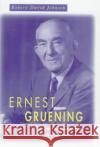
Ernest Gruening is perhaps best known for his vehement fight against U.S. military involvement in Vietnam, where he set himself apart by casting one of two votes against the Tonkin Gulf Resolution in 1964. However, as Robert Johnson shows in this political biography, it's Gruening's sixty-year public career in its entirety that provides an opportunity for historians to explore continuity and change in dissenting thought, on both domestic and international affairs, in twentieth-century America.
Gruening's outlook on domestic affairs took shape in the intellectual milieu of...
Ernest Gruening is perhaps best known for his vehement fight against U.S. military involvement in Vietnam, where he set himself apart by casting on...
In this thorough and lively study, Allen Matusow, tracing the history of government policy on food and agriculture during the Truman administration, relates the process by which the United States government overcame disharmony among its own politicians and farmers to save Europe from famine in the years immediately following World War II. The Department of Agriculture, which had asserted that "food will win the war and write the peace," was often reluctant to believe its own slogan. Elucidating the policies involved in postwar planning for both foreign trade and domestic farm...
In this thorough and lively study, Allen Matusow, tracing the history of government policy on food and agriculture during the Truman administration...
Despite their importance during the French Revolution, the Paris middle classes are little known. This book focuses on the family organization and the political role of the Paris commercial middle classes, using as a case study the Faubourg St. Marcel and particularly the parish of St. Medard.
David Garrioch argues that in the late seventeenth and early eighteenth centuries the commercial middle classes were steadfastly local in their family ties and outlook. He shows, too, that they took independent political action in defense of their local position. This gradually changed during...
Despite their importance during the French Revolution, the Paris middle classes are little known. This book focuses on the family organization and ...
The American Civil War and the Paris Commune of 1871, Philip Katz argues, were part of the broader sweep of transatlantic development in the mid-nineteenth century--an age of democratic civil wars. Katz shows how American political culture in the period that followed the Paris Commune was shaped by that event.
The telegraph, the new Atlantic cable, and the news-gathering experience gained in the Civil War transformed the Paris Commune into an American national event. News from Europe arrived in fragments, however, and was rarely cohesive and often contradictory. Americans were forced...
The American Civil War and the Paris Commune of 1871, Philip Katz argues, were part of the broader sweep of transatlantic development in the mid-ni...
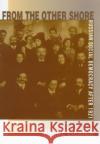
This book is an inquiry into the possibilities of politics in exile. Russian Mensheviks, driven out of Soviet Russia and their party stripped of legal existence, functioned abroad in the West--in Berlin, Paris, and New York--for an entire generation. For several years they also continued to operate underground in Soviet Russia. Bereft of the usual advantages of political actors, the Mensheviks succeeded in impressing their views upon social democratic parties and Western thinking about the Soviet Union.
The Soviet experience through the eyes of its first socialist victims is...
This book is an inquiry into the possibilities of politics in exile. Russian Mensheviks, driven out of Soviet Russia and their party stripped of le...