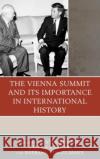
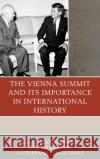
At the beginning of June 1961, the tensions of the Cold War were supposed to abate as both sides sought a resolution. The two most important men in the world, John F. Kennedy and Nikita Khrushchev, met for a summit in Vienna. Yet the high hopes were disappointed. Within months the Cold War had become very hot: Khrushchev built the Berlin Wall and a year later he sent missiles to Cuba to threaten the United States directly. Despite the fact that the Vienna Summit yielded barely any tangible results, it did lead to some very important developments. The superpowers came to see for the first time...
At the beginning of June 1961, the tensions of the Cold War were supposed to abate as both sides sought a resolution. The two most important men in th...
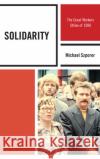
In the summer of 1980, the eyes of the world turned to the Gdansk shipyard in Poland which suddenly became the nexus of a strike wave that paralyzed the entire country. The Gdansk strike was orchestrated by the members of an underground free trade union that came to be known as Solidarnosc Solidarity]. Despite fears of a violent response from the communist authorities, the strikes spread to more than 800 sites around the country and involved over a million workers, mobilizing its working population. Faced with crippling strikes and with the eyes of the world on them, the communist regime...
In the summer of 1980, the eyes of the world turned to the Gdansk shipyard in Poland which suddenly became the nexus of a strike wave that paralyzed t...
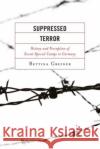
At the end of World War II, the Soviet secret police installed ten special camps in the Soviet occupation zone, later to become the German Democratic Republik. Between 1945 and 1950, roughly 154,000 Germans were held incommunicado in these camps. Whether those accused of being Nazis, spies, or terrorists were indeed guilty as charged, they were indiscriminately imprisoned as security threats and denied due process of the law. One third of the captives did not survive. To this day, most Germans have no knowledge of this postwar Stalinist persecution, even though it exemplifies in a unique way...
At the end of World War II, the Soviet secret police installed ten special camps in the Soviet occupation zone, later to become the German Democratic ...
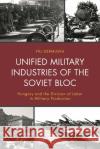
This book draws a subtle picture of Warsaw Pact economic and military cooperation by presenting a complete branch the military industry from the perspective of a smaller member-state, Hungary. It demonstrates that the military industry s cooperation played a crucial role in the development of economic integration within the Soviet Bloc, and it was in this sector that the strongest, most efficient integration was established. The book builds on recently declassified documentation from Soviet-led international economic organizations to give insight into the backstage debates of partner states,...
This book draws a subtle picture of Warsaw Pact economic and military cooperation by presenting a complete branch the military industry from the persp...
The Cold War began in Europe in the mid-1940s and ended there in 1989. Notions of a "global Cold War" are useful in describing the wide impact and scope of the East-West divide after World War II, but first and foremost the Cold War was about the standoff in Europe. The Soviet Union established a sphere of influence in Eastern Europe in the mid-1940s that later became institutionalized in the Warsaw Pact, an organization that was offset by the North Atlantic Treaty Organization (NATO) led by the United States. The fundamental division of Europe persisted for forty years, coming to an end only...
The Cold War began in Europe in the mid-1940s and ended there in 1989. Notions of a "global Cold War" are useful in describing the wide impact and sco...
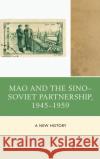
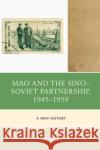
Based on Chinese archival documents, interviews, and more than twenty years of research on the subject, Zhihua Shen and Yafeng Xia offer a comprehensive look at the Sino-Soviet alliance between the end of the World War II and 1959, when the alliance was left in disarray as a result of foreign and domestic policies. This book is a reevaluation of the history of this alliance and is the first book published in English to examine it from a Chinese perspective.
Based on Chinese archival documents, interviews, and more than twenty years of research on the subject, Zhihua Shen and Yafeng Xia offer a comprehensi...
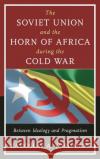
At the height of the Cold War, Soviet ideologues, policymakers, diplomats, and military officers perceived the countries of Africa, Asia, and Latin America as the future reserve of socialism, holding the key to victory over Western forces. The zero-sum nature of East-West global competition induced the United States to try to thwart Soviet ambitions. The result was predictable: the two superpowers engaged in proxy struggles against each other in faraway, little-understood lands, often ending up entangled in protracted and highly destructive local fights that did little to serve their own...
At the height of the Cold War, Soviet ideologues, policymakers, diplomats, and military officers perceived the countries of Africa, Asia, and Latin Am...
At the beginning of June 1961, the tensions of the Cold War were supposed to abate as both sides sought a resolution. The two most important men in the world, John F. Kennedy and Nikita Khrushchev, met for a summit in Vienna. Yet the high hopes were disappointed. Within months the Cold War had become very hot: Khrushchev built the Berlin Wall and a year later he sent missiles to Cuba to threaten the United States directly. Despite the fact that the Vienna Summit yielded barely any tangible results, it did lead to some very important developments. The superpowers came to see for the first time...
At the beginning of June 1961, the tensions of the Cold War were supposed to abate as both sides sought a resolution. The two most important men in th...
This study examines the Sino-Soviet alliance from the end of the World War II through 1959, when the alliance ended as a result of foreign and domestic policies. It reevaluates the history of this alliance and offers the first comprehensive account of it from a Chinese perspective.
This study examines the Sino-Soviet alliance from the end of the World War II through 1959, when the alliance ended as a result of foreign and domesti...
Drawing on recently declassified Soviet archival sources, this book sheds new light on how the division of Europe came about in the aftermath of World War II. The book contravenes the notion that a neutral zone of states, including Germany, could have been set up between East and West. The Soviet Union under Joseph Stalin was determined to preserve control over its own sphere of German territory. By tracing Stalin's attitude toward neutrality in international politics, the book provides important insights into the origins of the Cold War.
Drawing on recently declassified Soviet archival sources, this book sheds new light on how the division of Europe came about in the aftermath of World...