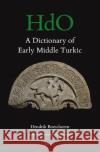
In A Dictionary of Early Middle Turkic Hendrik Boeschoten describes the lexical material contained in works written in different varieties of Eastern Turkic in and around the fourteenth century, e.g. before the classical age of Chaghatay Turkic; late Karakhanid, Khwarezmian Turkic, Golden Horde Turkic, Mamluk Turkic, and early Azeri. As the existing, previously published dictionaries are now antiquated and hardly cover this period (most relevant works were not yet known at their time of writing), A Dictionary of Early Middle Turkic is a most welcome addition to the field.
In A Dictionary of Early Middle Turkic Hendrik Boeschoten describes the lexical material contained in works written in different varieties of Eastern ...
Professor Dr Fuat Sezgin meticulously documented the scientific writings and advances achieved by Muslim scholars. His celebrated Geschichte des arabischen Schrifttums (GAS), the largest bio-bibliography for the Arabic literary tradition in general, and the history of science and technology in the Islamic world in particular, is still of utmost importance for the field.
Professor Dr Fuat Sezgin meticulously documented the scientific writings and advances achieved by Muslim scholars. His celebrated Geschichte des arabi...
For over sixty years, Professor Fuat Sezgin meticulously documented the literary and scientific writings and achievements of Muslim scholars. His celebrated Geschichte des arabischen Schrifttums (GAS), the largest bio-bibliography for the Arabic literary tradition in general, and the history of science and technology in the Islamic world in particular, is still of utmost importance for the field.
For over sixty years, Professor Fuat Sezgin meticulously documented the literary and scientific writings and achievements of Muslim scholars. His cele...
In the 9th century, a secret sect of the Ismā‘īlīs -- known in the Middle Ages under the name of Fatimids -- arose to play a prominent role in the history of the Near East. Their supreme head today is the Agha Khan. In this mesmerising book, Heinz Halm describes the early history of the Fatimids, from the founding and spread of the secret society to the rise of the caliphal dynasty to power in North Africa and the founding of Cairo, their capital.
In the 9th century, a secret sect of the Ismā‘īlīs -- known in the Middle Ages under the name of Fatimids -- arose to play a prominent role in th...
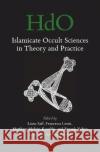
Islamicate Occult Sciences in Theory and Practice brings together the latest research on Islamic occult sciences from a variety of disciplinary perspectives, namely intellectual history, manuscript studies and material culture. Its aim is not only to showcase the range of pioneering work that is currently being done in these areas, but also to provide a model for closer interaction amongst the disciplines constituting this burgeoning field of study. Furthermore, the book provides the rare opportunity to bridge the gap on an institutional level by bringing the academic and curatorial spheres...
Islamicate Occult Sciences in Theory and Practice brings together the latest research on Islamic occult sciences from a variety of disciplinary perspe...
The present English translation reproduces the original German of Carl Brockelmann’s Geschichte der Arabischen Litteratur (GAL) as accurately as possible. In the interest of user-friendliness the following emendations have been made in the translation: Personal names are written out in full, except b. for ibn; Brockelmann’s transliteration of Arabic has been adapted to comply with modern standards for English-language publications; modern English equivalents are given for place names, e.g. Damascus, Cairo, Jerusalem, etc.; several erroneous dates have been corrected, and the page...
The present English translation reproduces the original German of Carl Brockelmann’s Geschichte der Arabischen Litteratur (GAL) as accurately as pos...
The present English translation reproduces the original German of Carl Brockelmann’s Geschichte der Arabischen Litteratur (GAL) as accurately as possible. In the interest of user-friendliness the following emendations have been made in the translation: Personal names are written out in full, except b. for ibn; Brockelmann’s transliteration of Arabic has been adapted to comply with modern standards for English-language publications; modern English equivalents are given for place names, e.g. Damascus, Cairo, Jerusalem, etc.; several erroneous dates have been corrected, and the page...
The present English translation reproduces the original German of Carl Brockelmann’s Geschichte der Arabischen Litteratur (GAL) as accurately as pos...
The present English translation reproduces the original German of Carl Brockelmann’s Geschichte der Arabischen Litteratur (GAL) as accurately as possible. In the interest of user-friendliness the following emendations have been made in the translation: Personal names are written out in full, except b. for ibn; Brockelmann’s transliteration of Arabic has been adapted to comply with modern standards for English-language publications; modern English equivalents are given for place names, e.g. Damascus, Cairo, Jerusalem, etc.; several erroneous dates have been corrected, and the page...
The present English translation reproduces the original German of Carl Brockelmann’s Geschichte der Arabischen Litteratur (GAL) as accurately as pos...