"Looking back at a wonderful way to make a living" Few people have the opportunity to live and work in America's magnificent national parks, let alone in a wide diversity of those great parks. For thirty-two years, beginning when he was hired as a seasonal ranger until he retired in 1989, Roland H. Wauer's career took him to eight national parks, a regional office in Santa Fe, New Mexico, and Chief of the Division of Natural Resources in Washington, DC. In an "inside-out" look at his career, Wauer takes the reader on a wildlife adventure through a number of those parks, documenting...
"Looking back at a wonderful way to make a living" Few people have the opportunity to live and work in America's magnificent national parks, let ...
"Celebrating the celebration of the Old West" In the 1880s, there wasn't much in Anson, Texas, in the way of entertainment for the area s cowhands. But Star Hotel operator M. G. Rhodes changed that when he hosted a Grand Ball the weekend before Christmas. A restless traveling salesman, rancher, and poet from New York named William Lawrence Chittenden, a guest at the Star Hotel, was so impressed with the soiree that he penned his observances in the poem The Cowboys Christmas Ball. Reenacted annually since 1934 based on Chittenden s poem, the contemporary dances attract people from...
"Celebrating the celebration of the Old West" In the 1880s, there wasn't much in Anson, Texas, in the way of entertainment for the area s cowhand...
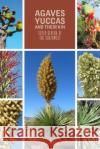
Until now, there has not been a single, full-color guide to some of the most recognizable genera of the southwestern United States: "Agave," "Dasylirion," "Hechtia," "Hesperaloe," "Hesperoyucca," "Nolina," and "Yucca" (the century plants, sotols, false agaves, chaparral yuccas, beargrasses, and yuccas). Some of the species treated in this guide have previously appeared scattered throughout a dozen other field guides, often split roughly between wildflowers and woody plants, or they have been confined to studies of small geographic regions. Still others have appeared virtually nowhere other...
Until now, there has not been a single, full-color guide to some of the most recognizable genera of the southwestern United States: "Agave," "Dasyliri...
The Great Western Trail (GWT) is a nineteenth-century cattle trail that originated in northern Mexico, ran west parallel to the Chisholm Trail, traversed the United States for some two thousand miles, and terminated after crossing the Canadian border. Yet through time, misinformation, and the perpetuation of error, the historic path of this once-crucial cattle trail has been lost. "Finding the Great Western Trail" documents the first multi-community effort made to recover evidence and verify the route of the Great Western Trail. The GWT had long been celebrated in two neighboring...
The Great Western Trail (GWT) is a nineteenth-century cattle trail that originated in northern Mexico, ran west parallel to the Chisholm Trail, traver...