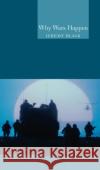
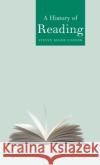
Why Wars Happen is a groundbreaking inquiry into the crucial yet surprisingly understudied question of why wars occur. Jeremy Black, one of Britain's foremost military historians, presents an interdisciplinary study that draws on subjects such as history, political science, and international relations and marshals a vast range of material with global examples spanning from the fifteenth century to today. Black examines several major modern wars in their historical contexts, taking into account cultural differences and various conflict theories. He analyzes the three main types of...
Why Wars Happen is a groundbreaking inquiry into the crucial yet surprisingly understudied question of why wars occur. Jeremy Black, one of Bri...
Steven Roger Fischer s fascinating book traces the complete story of reading from the time when symbol first became sign through to the electronic texts of the present day. Describing ancient forms of reading and the various modes that were necessary to read different writing systems and scripts, Fischer turns to Asia and the Americas and discusses the forms and developments of completely divergent dimensions of reading. With the Middle Ages in Europe and the Middle East, innovative re-inventions of reading emerged silent and liturgical reading; the custom of lectors; reading s focus in...
Steven Roger Fischer s fascinating book traces the complete story of reading from the time when symbol first became sign through to the electronic tex...
In today s tense geopolitical climate, terrorist groups avow their allegiance to the Islamic faith in their edicts, while the president of the United States undertakes controversial wars in Islamic nations and openly refers to his Christian faith as a key component of his decision-making. With the recent surge in terrorist acts and military confrontations, as well as ever-strengthening fundamentalist ideologies on both sides, the Christian-Muslim divide is perhaps more visible than ever but it is not new. Alan G. Jamieson explores here the long and bloody history of the Christian-Muslim...
In today s tense geopolitical climate, terrorist groups avow their allegiance to the Islamic faith in their edicts, while the president of the United ...
The Mongol Empire can be seen as marking the beginning of the modern age, and of globalization as well. While communications between the extremes of Eurasia existed prior to the Mongols, they were infrequent and often through intermediaries. As this new book by Timothy May shows, the rise of the Mongol Empire changed everything through their conquests the Mongols swept away dozens of empires and kingdoms and replaced them with the largest contiguous empire in history.While the Mongols were an extremely destructive force in the premodern world, the Mongol Empire had stabilizing effects on the...
The Mongol Empire can be seen as marking the beginning of the modern age, and of globalization as well. While communications between the extremes of E...