Cabeza de Vaca's mode of transportation, afoot on portions of two continents in the early decades of the sixteenth century, fits one dictionary definition of the word "pedestrian." By no means, however, should the ancillary meanings of "commonplace" or "prosaic" be applied to the man, or his remarkable adventures. Between 1528 and 1536, he trekked an estimated 2,480 to 2,640 miles of North American terrain from the Texas coast near Galveston Island to San Miguel de Culiacan near the Pacific Coast of Mexico. He then traveled under better circumstances, although still on foot, to Mexico City....
Cabeza de Vaca's mode of transportation, afoot on portions of two continents in the early decades of the sixteenth century, fits one dictionary defin...
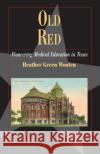
Tucked away in a corner of the University of Texas Medical Branch campus stands a majestic relic of an era long past. Constructed of red pressed brick, sandstone, and ruddy Texas granite, the Ashbel Smith Building, fondly known as Old Red, represents a fascinating page in Galveston and Texas history. It has been more than a century since Old Red welcomed the first group of visionary faculty and students inside its halls. For decades, the medical school building existed at the heart of UTMB campus life, even through periods of dramatic growth and change. In time, however, the building lost...
Tucked away in a corner of the University of Texas Medical Branch campus stands a majestic relic of an era long past. Constructed of red pressed brick...
The traditional story of the Texas Revolution remembers the Alamo and Goliad but has forgotten Matamoros, the strategic Mexican port city on the turbulent lower Rio Grande. In this provocative book, Craig Roell restores the centrality of Matamoros by showing the genuine economic, geographic, social, and military value of the city to Mexican and Texas history.
Given that Matamoros served the Mexican states of Tamaulipas, Coahuila and Texas, Nuevo Leon, San Luis Potosi, Zacatecas, Chihuahua, and Durango, the city's strategic location and considerable trade revenues were crucial. Roell...
The traditional story of the Texas Revolution remembers the Alamo and Goliad but has forgotten Matamoros, the strategic Mexican port city on the tu...
With Washington on the Brazos: Cradle of the Texas Republic, noted historian Richard B. McCaslin recovers the history of an iconic Texas town. The story of the Texas Republic begins and ends at Washington, but the town s history extends much further. Texas leaders gathered in the new town on the west bank of the Brazos in March 1836 to establish a new republic. After approving a declaration of independence and constitution, they fled as Santa Anna's army approached. The government of the Republic of Texas returned there in 1842, but after the United States annexed Texas in 1846, Austin...
With Washington on the Brazos: Cradle of the Texas Republic, noted historian Richard B. McCaslin recovers the history of an iconic Texas town. ...
Presents a general history of San Antonio. Its past is complex and ranges across 300 years, from its origins as a tiny Spanish frontier town to its contemporary status as an American mega-city. This study weaves together the environmental, social, political, and cultural pressures that have shaped life in the city over the last three centuries.
Presents a general history of San Antonio. Its past is complex and ranges across 300 years, from its origins as a tiny Spanish frontier town to its co...
On November 11, 1918, what was then called "the Great War" ended. The consequences of four years of warfare in Europe reverberated throughout the world, leaving few places untouched. Even though it was far from the scenes of conflict, Texas was forever changed, as historian Gregory W. Ball details in Texas and World War I.
On November 11, 1918, what was then called "the Great War" ended. The consequences of four years of warfare in Europe reverberated throughout the worl...