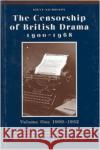
This is the first part of a two volume analysis of British theatre censorship from 1900 until 1968, based on previously undocumented material in the Lord Chamberlain's Correspondence archives. It covers the period before 1932, when theatre was widely seen as a crucial medium with the power to shape the future of society, determining what people believed and how they behaved. Where previous interpretations, based on more limited evidence and topics, have often constructed the Lord Chamberlain's Office either as an annoying but amusing irrelevance, or as dictatorial in its unchanging...
This is the first part of a two volume analysis of British theatre censorship from 1900 until 1968, based on previously undocumented material in the L...
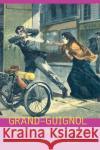
The Theatre du Grand-Guignol in Paris (1897-1962) achieved a legendary reputation as the 'Theatre of Horror, ' a venue displaying such explicit violence and blood-curdling terror that a resident doctor was employed to treat the numerous spectators who fainted each night. Indeed, the phrase 'grand guignol' has entered the language to describe any display of sensational horror. Since the theatre closed its doors forty years ago, the genre has been overlooked by critics and theatre historians. This book reconsiders the importance and influence of the Grand-Guignol within its social, cultural and...
The Theatre du Grand-Guignol in Paris (1897-1962) achieved a legendary reputation as the 'Theatre of Horror, ' a venue displaying such explicit violen...
This is the first part of a two volume analysis of British theatre censorship from 1900 until 1968, based on previously undocumented material in the Lord Chamberlain's Correspondence archives. It covers the period before 1932, when theatre was widely seen as a crucial medium with the power to shape the future of society, determining what people believed and how they behaved. Where previous interpretations, based on more limited evidence and topics, have often constructed the Lord Chamberlain's Office either as an annoying but amusing irrelevance, or as dictatorial in its unchanging...
This is the first part of a two volume analysis of British theatre censorship from 1900 until 1968, based on previously undocumented material in the L...
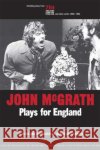
This is an edition of nine of McGrath's plays for the English 7:84 theatre company. It covers McGrath's work for the company spanning four decades, from the 1960s through to the 1990s. The book has a substantial contextualising introduction and commentary on the plays by Nadine Holdsworth, one of the leading specialists in the work of John McGrath. This is set alongside supporting documents such as programme notes, reviews, letters etc. The plays and theatre work of John McGrath are studied in many theatre departments, but they have not been available to the average reader. The English plays...
This is an edition of nine of McGrath's plays for the English 7:84 theatre company. It covers McGrath's work for the company spanning four decades, fr...
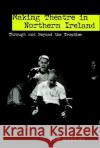
Making Theatre in Northern Ireland examines the relationships between theatre and the turbulent political and social context of Northern Ireland since 1969. It explores in detail key theatrical performances which deal directly with this context. The works examined are used as exemplars of wider approaches to theatre-making about Northern Ireland. The book is aimed at a student readership: it is largely play-text-based, and it contains useful contextualising material such as a chronological list of Northern Ireland's plays in the modern period, a full bibliography, and a brief chronology....
Making Theatre in Northern Ireland examines the relationships between theatre and the turbulent political and social context of Northern Ireland since...
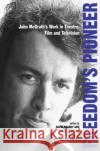
John McGrath's plays are compulsory reading and viewing for students of drama, film and television courses in many university and further education departments, and yet despite recognition of the central importance of McGrath's work, very little has been written about him. This is the first full-length study of his work.This book illuminates the importance of John McGrath's role in the development of theatre, film and television in the last four decades of the twentieth century. Through play and script-writing, through directing, producing and co-ordinating work, and through his critical,...
John McGrath's plays are compulsory reading and viewing for students of drama, film and television courses in many university and further education de...
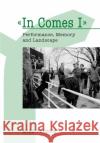
In Comes I explores performance and land, biography and locality, memory and place. The book reflects on performances past and present, taking the form of a series of excursions into the agricultural landscape of eastern England, and drawing from archaeology, geomorphology, folklore, and local and family history.Mike Pearson, a leading theatre artist and solo-performer, returns to the landscape of his childhood - off the beaten track in Lincolnshire - and uses it as a mnemonic to reflect widely upon performance theory and practice. Rather than focusing on author, period and genre as is...
In Comes I explores performance and land, biography and locality, memory and place. The book reflects on performances past and present, taking ...
In Comes I explores performance and land, biography and locality, memory and place. The book reflects on performances past and present, taking the form of a series of excursions into the agricultural landscape of eastern England, and drawing from archaeology, geomorphology, folklore, and local and family history.Mike Pearson, a leading theatre artist and solo-performer, returns to the landscape of his childhood - off the beaten track in Lincolnshire - and uses it as a mnemonic to reflect widely upon performance theory and practice. Rather than focusing on author, period and genre as is...
In Comes I explores performance and land, biography and locality, memory and place. The book reflects on performances past and present, taking ...
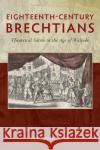
Eighteenth-Century Brechtians looks at stage satires by John Gay, Henry Fielding, George Farquhar, Charlotte Charke, David Garrick and their contemporaries through the lens of Brecht's theory and practice. Discussing the actor mutiny of 1733, theater censorship, controversial plays and Fielding's forgery of an actor's autobiography, Joel Schechter contends that some subversive Augustan and Georgian artists were in fact early Brechtians. He also reconstructs lost episodes in theater history including Fielding's last days as a stage satirist before his Little Haymarket theater was...
Eighteenth-Century Brechtians looks at stage satires by John Gay, Henry Fielding, George Farquhar, Charlotte Charke, David Garrick and their co...