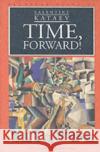
Valentine Kataev's Time, Forward! is a classic of Soviet Realism. Written in 1932, the novel captures the enthusiasm and the optimism of the First Five-Year Plan in its portrayal of the construction of Magnitogorsk, and enormous metallurgical plant considered one of the finest industrial achievements of the period.
Valentine Kataev's Time, Forward! is a classic of Soviet Realism. Written in 1932, the novel captures the enthusiasm and the optimism of the First Fiv...
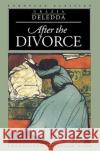
The novel begins with Costantino Ledda's conviction and sentencing for the murder of his cruel uncle. Though innocent of the crime, he accepts the guilty verdict as punishment for marrying Giovanna Era through a civil ceremony rather than an expensive church wedding. When her husband is taken away, Giovanna has no way to provide for herself, her mother, and her son, who soon dies of malnutrition. Out of desperation she divorces Costantino, according to a new law for wives of convicts, and marries a wealthy but brutish landowner. When the true murderer confesses and Costantino returns, he and...
The novel begins with Costantino Ledda's conviction and sentencing for the murder of his cruel uncle. Though innocent of the crime, he accepts the gui...
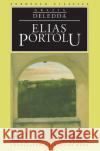
Winner of the 1926 Novel Prize for Literature After serving time in mainland Italy for a minor theft, Elias Portolu returns home to Nuoro, in rural Sardinia. Lonely and vulnerable after his prison exile, he falls in love with his brother's fiancee. But he finds himself trapped by social and religious strictures, his passion and guilt winding into a spiral of anguish and paralyzing indecision. For guidance he turns first to the village priest, who advises him to resist temptation; then he turns to the pagan "father of the woods," who recognizes the weakness of human will and urges him to...
Winner of the 1926 Novel Prize for Literature After serving time in mainland Italy for a minor theft, Elias Portolu returns home to Nuoro, in rura...
Winner of the 1926 Novel Prize for Literature After serving time in mainland Italy for a minor theft, Elias Portolu returns home to Nuoro, in rural Sardinia. Lonely and vulnerable after his prison exile, he falls in love with his brother's fiancee. But he finds himself trapped by social and religious strictures, his passion and guilt winding into a spiral of anguish and paralyzing indecision. For guidance he turns first to the village priest, who advises him to resist temptation; then he turns to the pagan "father of the woods," who recognizes the weakness of human will and urges...
Winner of the 1926 Novel Prize for Literature After serving time in mainland Italy for a minor theft, Elias Portolu returns home to Nuoro, ...
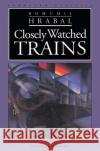
Hrabal's postwar classic about a young man's coming of age in German-occupied Czechoslovakia is among his most beloved and accessible works. Closely Watched Trains is the subtle and poetic portrait of Milos Hrma, a timid young railroad apprentice who insulates himself with fantasy against a reality filled with cruelty and grief. Day after day as he watches trains fly by, he torments himself with the suspicion that he himself is being watched and with fears of impotency. Hrma finally affirms his manhood and, with a sense of peace and purpose he has never known before, heroically confronts a...
Hrabal's postwar classic about a young man's coming of age in German-occupied Czechoslovakia is among his most beloved and accessible works. Closely W...
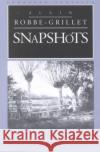
Alain Robbe-Grillet has long been regarded as the chief spokesman for the controversial "nouveau roman." This collection of brilliant short pieces introduces the reader to those techniques employed by Robbe-Grillet in his longer works. These intriguing, gemlike stories represent his most accessible fiction.
Alain Robbe-Grillet has long been regarded as the chief spokesman for the controversial "nouveau roman." This collection of brilliant short pieces int...
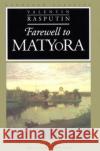
A fine example of Village Prose from the post-Stalin era, Farewell to Matyora decries the loss of the Russian peasant culture to the impersonal, soulless march of progress. Valentin Rasputin's novel of a village destroyed by anonymous technology argues that mankind can only be spiritually regenerated by returning to the old rural way of life.
A fine example of Village Prose from the post-Stalin era, Farewell to Matyora decries the loss of the Russian peasant culture to the impersonal, soull...
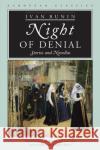
The first Russian to be awarded the Nobel Prize for literature, Ivan Bunin is often considered the last of the great Russian masters. Already renowned in Russia before the revolution, he fled the country in 1920 and lived the remainder of his life in France, where he continued to write for thirty years. Bunin made his name as a short-story writer with such masterpieces as "The Gentleman from San Francisco," the title piece in one of his collections and one of the stories in this volume. His last book of stories, "Dark Avenues, " was published in the 1940s. Among his longer works were a...
The first Russian to be awarded the Nobel Prize for literature, Ivan Bunin is often considered the last of the great Russian masters. Already renowned...
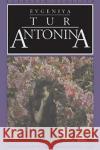
Patterned on the novels of the Bronte sisters, Antonina is a poignant account of a young Russian whose life is shaped by the cruel neglect of her stepparents, the financial ruin of her father and husband, and--the centerpiece of the novel--her failed love affair with a sensitive but weak young man. "
Patterned on the novels of the Bronte sisters, Antonina is a poignant account of a young Russian whose life is shaped by the cruel neglect of h...
This is the first English-language collection of stories by the nineteenth-century writer Boleslaw Prus, who has been called the greatest Polish novelist of all time. This new book, containing twelve of his classic short pieces, explores the depth of thought, human warmth, powers of observation, and technical excellence for which he has been justly praised.
This is the first English-language collection of stories by the nineteenth-century writer Boleslaw Prus, who has been called the greatest Polish novel...