Buddhism and Islam on the Silk Road Johan Elverskog Winner of the 2011 Award for Excellence in the Historical Study of Religion from the American Academy of Religion Selected by Choice magazine as an Outstanding Academic Title for 2010 "Johan Elverskog is exceedingly well read in the relevant literature, and his book is fascinating and thought-provoking."--TLS " Elverskog] challenges deeply ingrained misperceptions about the historical relationship between Buddhism and Islam, and more importantly challenges us to rethink more broadly many of our assumptions about cultural...
Buddhism and Islam on the Silk Road Johan Elverskog Winner of the 2011 Award for Excellence in the Historical Study of Religion from the American Acad...
Asian Medicine and Globalization Edited by Joseph S. Alter "An important collection of studies on a significant group of topics. . . . It deserves to be widely read."--Journal of the Royal Anthropological Institute Medical systems function in specific cultural contexts. It is common to speak of the medicine of China, Japan, India, and other nation-states. Yet almost all formalized medical systems claim universal applicability and, thus, are ready to cross the cultural boundaries that contain them. There is a critical tension, in theory and practice, in the ways regional medical systems...
Asian Medicine and Globalization Edited by Joseph S. Alter "An important collection of studies on a significant group of topics. . . . It deserves to ...
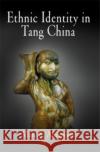
Ethnic Identity in Tang China is the first work in any language to explore comprehensively the construction of ethnicity during the dynasty that reigned over China for roughly three centuries, from 618 to 907. Often viewed as one of the most cosmopolitan regimes in China's past, the Tang had roots in Inner Asia, and its rulers continued to have complex relationships with a population that included Turks, Tibetans, Japanese, Koreans, Southeast Asians, Persians, and Arabs. Marc S. Abramson's rich portrait of this complex, multiethnic empire draws on political writings, religious texts,...
Ethnic Identity in Tang China is the first work in any language to explore comprehensively the construction of ethnicity during the dynasty tha...
Manchuria Under Japanese Dominion Shin'ichi Yamamuro. Translated by Joshua A. Fogel "Long-awaited . . . well done . . . elegant . . . timely."--Journal of Japanese Studies From 1932 until the end of World War II, the Japanese established and maintained by bloody rule a puppet regime in the Chinese region of Manchuria. This region was composed of three northern provinces in China; the puppet ruler was the last Chinese Emperor, Pu Yi, and this rich industrial region was clearly coveted and managed by the Japanese as a critical element in their imperial dominion. Yamamuro Shin'ichi's...
Manchuria Under Japanese Dominion Shin'ichi Yamamuro. Translated by Joshua A. Fogel "Long-awaited . . . well done . . . elegant . . . timely."--Jou...
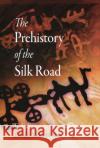
The Prehistory of the Silk Road E. E. Kuzmina Edited by Victor H. Mair "A major advance in the field of the early history and archaeology of central Asia."--Nicola Di Cosmo, Institute for Advanced Study In ancient and medieval times, the Silk Road was of great importance to the transport of peoples, goods, and ideas between the East and the West. A vast network of trade routes, it connected the diverse geographies and populations of China, the Eurasian Steppe, Central Asia, India, Western Asia, and Europe. Although its main use was for importing silk from China, traders moving in the opposite...
The Prehistory of the Silk Road E. E. Kuzmina Edited by Victor H. Mair "A major advance in the field of the early history and archaeology of central A...
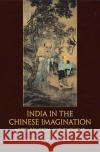
India and China dominate the Asian continent but are separated by formidable geographic barriers and language differences. For many centuries, most of the information that passed between the two lands came through Silk Route intermediaries in lieu of first-person encounters--leaving considerable room for invention. From their introduction to Indian culture in the first centuries C.E., Chinese thinkers, writers, artists, and architects imitated India within their own borders, giving Indian images and ideas new forms and adapting them to their own culture. Yet India's impact on China has not...
India and China dominate the Asian continent but are separated by formidable geographic barriers and language differences. For many centuries, most...
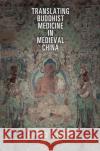
The transmission of Buddhism from India to China was one of the most significant cross-cultural exchanges in the premodern world. This cultural encounter involved more than the spread of religious and philosophical knowledge. It influenced many spheres of Chinese life, including the often overlooked field of medicine. Analyzing a wide variety of Chinese Buddhist texts, C. Pierce Salguero examines the reception of Indian medical ideas in medieval China. These texts include translations from Indian languages as well as Chinese compositions completed in the first millennium...
The transmission of Buddhism from India to China was one of the most significant cross-cultural exchanges in the premodern world. This cultural enc...
Japan and China did not begin to emerge as unified political entities until the nineteenth century. Yet scholars and politicians persistently refer to "Japan" and "China" in discussions of earlier periods, as if the modern nation-state had long been established in these regions. Joshua Fogel here brings together essays by eight renowned East Asian scholars to demonstrate why this oversight distorts our historical analysis and understanding of both countries. The nation-states of Japan and China developed much later and, indeed, far less uniformly than usually conveyed in popular myth and...
Japan and China did not begin to emerge as unified political entities until the nineteenth century. Yet scholars and politicians persistently refer to...