Sieges played a central role in many conflicts of the ancient world and generals, including Darius, Alexander the Great, Hannibal and Scipio Africanus successfully used siegecraft to gain their objectives. As siege tactics became integral to success in war, generals employed the minds of engineers and scientists to develop tactics which ranged from penetrating the defences or blockading the city through to tricks and deception. This fascinating study tracks developments in siege warfare from Ancient Persia in the 6th century BC through to the Roman sieges of the second century BC, describing...
Sieges played a central role in many conflicts of the ancient world and generals, including Darius, Alexander the Great, Hannibal and Scipio Africanus...
Osprey's study of various sieges in Rome, from 146 BC to 378 AD. Sieges were often pivotal in Rome's wars, including its conflicts with the Macedonians and Carthaginians in the 2nd century BC; the civil wars of the Republic; and the late Roman wars against the Sassanid Persians, who, alone amongst Rome's adversaries, were equally skilled in siegecraft. This book discusses the siege techniques employed by Roman armies and their opponents throughout the Republic and Empire. It shows that although the 1st century AD has long been considered the golden age of siegecraft, followed by a decline,...
Osprey's study of various sieges in Rome, from 146 BC to 378 AD. Sieges were often pivotal in Rome's wars, including its conflicts with the Macedonian...
After the United States' failures in special operations missions during the late 1970s and 1980, a decision was made to revamp its unconventional military capabilities. The subsequent reorganization and redesignation in 1983 created the SEALs as they are known today, and later the all-encompassing command for US special operations forces under which they operate. Since then, these Navy Special Warfare (NSW) forces have operated in Grenada, the Persian Gulf, Panama, Somalia, Bosnia, Haiti, and Liberia. NSW units have also participated in the ongoing missions of Operation Enduring Freedom in...
After the United States' failures in special operations missions during the late 1970s and 1980, a decision was made to revamp its unconventional mili...
Osprey's study of the United States' naval tactics during World War II (1939-1945 ). The US armed forces were responsible for many tactical innovations during the years 1941 45, but in no field was US mastery more complete than amphibious warfare. In the vast, almost empty battlefield of the Pacific the US Navy and Marine Corps were obliged to develop every aspect of the amphibious assault landing in painstaking detail, from the design of many new types of vessel, down to the tactics of the rifle platoon hitting the beach, and the logistic system without which they could not have fought...
Osprey's study of the United States' naval tactics during World War II (1939-1945 ). The US armed forces were responsible for many tactical inno...
The battlefield interaction between infantry and tanks was central to combat on most fronts in World War II (1939-1945). The first 'Blitzkrieg' campaigns saw the tank achieve a new dominance. New infantry tactics and weapons some of them desperately dangerous had to be adopted, while the armies raced to develop more powerful anti-tank guns and new light weapons. By 1945, a new generation of revolutionary shoulder-fired AT weapons was in widespread use. This book explains in detail the shifting patterns of anti-tank combat, illustrated with photographs, diagrams and colour plates showing how...
The battlefield interaction between infantry and tanks was central to combat on most fronts in World War II (1939-1945). The first 'Blitzkrieg' campai...
Osprey's study of Mycenaean warriors, from 1650 to 1100 BC. The timeless appeal of Homer's epic poem of the ancient Trojan War, The Iliad, has meant an eduring interest in the Mycenaean age. Modern scholarship and new archaeological evidence now allows us to recontruct with reasonable confidence the appearance of this great warrior civilization, which dominated much of the eastern Mediterranean between the 16th and 12th centuries BC. We can also make deductions, from the few surviving pictorial sources, about the tactics of these armies. This absorbing text is illustrated with examples of the...
Osprey's study of Mycenaean warriors, from 1650 to 1100 BC. The timeless appeal of Homer's epic poem of the ancient Trojan War, The Iliad, has meant a...
The Buffalo Soldier played an important part in the US Army's operations during the "age of American Imperialism," between 1898 and 1916. These men campaigned against the Spanish in Cuba (San Juan Hill, 1898), Filipino insurrectionists on Mindanao and Mexican border raiders. They went on to distinguish themselves in the trenches of World War I (1914-1918), and the sum of two divisions of these Doughboys fought with the French Army and the American Expeditionary Force. This book offers a succinct history of these units and the campaigns in which they fought, and it highlights the...
The Buffalo Soldier played an important part in the US Army's operations during the "age of American Imperialism," between 1898 and 1916. These men ca...
Osprey's examination of German forces prior to World War II (1939-1945). The Condor Legion was the expeditionary force of soldiers and airmen sent by Hitler to aid Franco's Nationalists in the Spanish Civil War (1936-1939). The Germans used the war as an opportunity to develop equipment and tactics, and their force included not only instructors, but also combat units of artillery, tanks and aircraft. These units tested guns, tanks and planes and perfected techniques which were used in the 1940 Blitzkrieg. Many of the officers prominent in the early campaigns of World War II won their first...
Osprey's examination of German forces prior to World War II (1939-1945). The Condor Legion was the expeditionary force of soldiers and airmen sent by ...
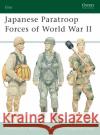
Osprey's examination of Japan's parachute units of World War II (1939-1945). For the first time in English, this book offers a concise but fact-packed account of the organization, equipment, and all operations of Japan's small but elite wartime parachute forces. Correcting and amplifying previous accounts based on wartime intelligence, it traces the Imperial Army's Raiding Regiments and the Imperial Navy's parachute-trained Yokosuka 1st & 3rd Special Naval Landing Forces from the first trials units, through their successful assaults in early 1942, to the last desperate battles and raids of...
Osprey's examination of Japan's parachute units of World War II (1939-1945). For the first time in English, this book offers a concise but fact-packed...
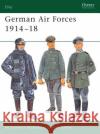
Osprey's examination of German air forces of World War I (1914-1918). The Imperial German Army Air Service of World War I grew from just 500 men in 1914 to 80,000 in 1918, inventing in the process a wholly new form of warfare. The exploits of the first fighter 'aces' have been widely celebrated, and have tended to overshadow the other, equally important branches of the fighting air forces the reconnaissance and ground attack units, the airships and strategic bombers. This concise but fact-packed guide to both the Army and Naval Air Services their command, organization, strength, training,...
Osprey's examination of German air forces of World War I (1914-1918). The Imperial German Army Air Service of World War I grew from just 500 men in 19...