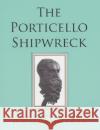
The Porticello Shipwreck provides unique information on seafaring technologies and trade practices at the turn of the fifth century B.C.This volume is the final report of the excavation, including detailed analyses of the ship and its contents and a thorough catalog of artifacts associated with the shipwreck. The Porticello wreck documents for the Classical period aspects of anchor, sail, and hull construction. The cargo provides the earliest evidence for maritime trade in ink and the export of Athenian lead to the Mediterranean, and the cargo of amphoras is the largest assemblage of Greek...
The Porticello Shipwreck provides unique information on seafaring technologies and trade practices at the turn of the fifth century B.C.This volume is...
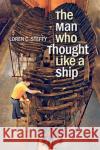
J. Richard "Dick" Steffy stood inside the limestone hall of the Crusader castle in Cyprus and looked at the wood fragments arrayed before him. They were old beyond belief. For more than two millennia they had remained on the sea floor, eaten by worms and soaking up seawater until they had the consistency of wet cardboard. There were some 6,000 pieces in all, and Steffy's job was to put them all back together in their original shape like some massive, ancient jigsaw puzzle. He had volunteered for the job even though he had no qualifications for it. For twenty-five years he'd been an...
J. Richard "Dick" Steffy stood inside the limestone hall of the Crusader castle in Cyprus and looked at the wood fragments arrayed before him. They we...
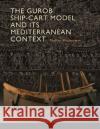
When Shelley Wachsmann began his analysis of the small ship model excavated by assistants of famed Egyptologist W. M. F. Petrie in Gurob, Egypt, in 1920, he expected to produce a brief monograph that would shed light on the model and the ship type that it represented. Instead, Wachsmann discovered that the model held clues to the identities and cultures of the enigmatic Sea Peoples, to the religious practices of ancient Egypt and Greece, and to the oared ships used by the Bronze Age Mycenaean Greeks.
Although found in Egypt, the prototype of the Gurob model was clearly an Aegean-style...
When Shelley Wachsmann began his analysis of the small ship model excavated by assistants of famed Egyptologist W. M. F. Petrie in Gurob, Egypt, in...
Lavish illustrations (photographs, site drawings, and artifact sketches) complement this informative and highly readable account. Naval warfare buffs, amateurs and professionals involved in maritime archaeology, and Civil War aficionados will be intrigued and informed by "USS "Monitor" A Historic Ship Completes Its Final Voyage."
Lavish illustrations (photographs, site drawings, and artifact sketches) complement this informative and highly readable account. Naval warfare buffs,...
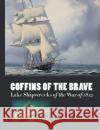
In "Coffins of the Brave: Lake Shipwrecks of the War of 1812," archaeologist Kevin J. Crisman and his fellow contributors examine sixteen different examples of 1812-era naval and commercial shipbuilding. They range from four small prewar vessels to four 16- or 20-gun brigs, three warships of much greater size, a steamboat hull converted into an armed schooner, two gunboats, and two postwar schooners. Despite their differing degrees of preservation and archaeological study, each vessel reveals something about how its creators sought the best balance of strength, durability, capacity,...
In "Coffins of the Brave: Lake Shipwrecks of the War of 1812," archaeologist Kevin J. Crisman and his fellow contributors examine sixteen different ex...
In January 1982, archaeologists conducting a pre-construction excavation at 175 Water Street in Lower Manhattan found the remains of an eighteenth-century ship. Uncertain of what they had found or what its value might be, they called in two nautical archaeologistsWarren Riess and Sheli Smithto direct the excavation and analysis of the ship s remains. As it turned out, the mystery ship s age and type meant that its careful study would help answer some important questions about the commerce and transportation of an earlier era of American history. The Ship that Held Up Wall...
In January 1982, archaeologists conducting a pre-construction excavation at 175 Water Street in Lower Manhattan found the remains of an eighteenth-cen...
In 2007 a symposium was held at Texas A&M University to celebrate the twenty-fifth anniversary of Texas A&M University Press s publication of the first volume reporting the Yassiada shipwreck site. Seventeen papers from that symposium featured in this book broadly illustrate such varied topics as ships and seafaring life, maritime trade, naval texts, commercial cargoes, and recent developments in the analysis of the Yassiada ship itself."
In 2007 a symposium was held at Texas A&M University to celebrate the twenty-fifth anniversary of Texas A&M University Press s publication of the firs...
In The Origins of the Lost Fleet of the Mongol Empire, Randall Sasaki provides a starting point for understanding the technology of the failed Mongol invasion of Japan in 1281 CE, as well as the history of shipbuilding in East Asia. He has created a timber category database, analyzed methods of joinery, and studied contemporary approaches to shipbuilding in order to ascertain the origins and types of vessels that composed the Mongol fleet. Although no conclusive statements can be made regarding the origins of the vessels, it appears that historical documents and archaeological...
In The Origins of the Lost Fleet of the Mongol Empire, Randall Sasaki provides a starting point for understanding the technology of the failed ...
Winner, 2016 Secretary's Research Award, sponsored by the Smithsonian Institution - awarded for author's contributions to research The first oceangoing yacht ever built in America, Cleopatra's Barge, endured many incarnations over her eight-year life, from Mediterranean pleasure cruiser to a Hawaiian king's personal yacht. The famed ship, at times also a Christian missionary transport, pirate ship, getaway vehicle, instrument of diplomacy, and racing yacht, wrecked on a reef in Hanalei Bay on April 6, 1824. Obtaining the first underwater archaeological permits ever...
Winner, 2016 Secretary's Research Award, sponsored by the Smithsonian Institution - awarded for author's contributions to research The first ocea...
Sometime around 1446 A.D., Cardinal Prospero Colonna commissioned engineer Battista Alberti to raise two immense Roman vessels from the bottom of the lago di Nemi, just south of Rome. By that time, local fishermen had been fouling their nets and occasionally recovering stray objects from the sunken ships for 800 years. Having no idea of the size of the objects he was attempting to recover, Alberti failed. For most of the next 500 years, various attempts were made to recover the vessels. Finally, in 1928, Mussolini ordered the draining of the lake to remove the vessels and place them on...
Sometime around 1446 A.D., Cardinal Prospero Colonna commissioned engineer Battista Alberti to raise two immense Roman vessels from the bottom of the ...