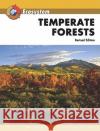
For tens of thousands of years, northern Europe, Canada, and most of the northern United States lay buried beneath vast ice sheets, thousands of feet thick. As the world warmed and the ice began to melt along its southernmost edge, plants began to appear and a forest was born. This forest of the temperate regions became known as the temperate forest. Forests are biologically diverse, meaning they support a wide variety of species of plants, fungi, animals, and single-celled organisms. "Temperate Forests, Revised Edition" explores biodiversity and why preserving it is so important. This book...
For tens of thousands of years, northern Europe, Canada, and most of the northern United States lay buried beneath vast ice sheets, thousands of feet ...
Biomes of the Earth is a new 10-volume set that outlines the main features of each of Earth's major biomes. The biomes covered include the tundra habitats, the taiga and temperate forests, grasslands of the prairies and the tropical savanna, deserts of the world, tropical forests of the equatorial regions, wetlands of the world, vast oceans, rivers and lakes, and a manmade biome--"agricultural and urban areas. This richly illustrated set provides students with a basic understanding of Earth's biodiversity, the factors that influence it, and the future dangers that face the planet and our...
Biomes of the Earth is a new 10-volume set that outlines the main features of each of Earth's major biomes. The biomes covered include the tundra habi...
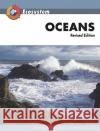
Oceanography is a relatively new science that began to emerge in the 19th century. Combining biology, chemistry, physics, and geology, the study of the Earth's oceans helps us to understand the interrelatedness of natural processes on land, in the sea, and in the air. Covering the numerous developments in marine science since the first edition was published, "Oceans, Revised Edition" discusses the thousands of new marine species inhabiting the Earth's oceans that have been discovered in the last decade, ranging from microbes, to deep-water corals, to the largest species of whales. It examines...
Oceanography is a relatively new science that began to emerge in the 19th century. Combining biology, chemistry, physics, and geology, the study of th...
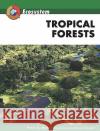
Tropical Forests explores the great biodiversity of forests, from microbes to mammals, as well as the adaptations of organisms to their environment and to the other species surrounding them. The interactions between organisms and their physical surroundings are examined, as are the processes linking the two into an integrated ecosystem. This accessible book portrays the importance of tropical forests with a balance of factual accuracy and a sense of wonder.
Tropical Forests explores the great biodiversity of forests, from microbes to mammals, as well as the adaptations of organisms to their environment an...