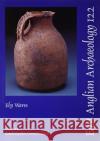
Excavations at Billingborough between 1975 and 1978 revealed a Middle Bronze Age enclosure and extensive Late Bronze and Early Iron Age salt-making debris. This forms the report on findings from the site, outlining the excavation itself and the finds: Copper alloy objects, iron, flint, terracottas, worked bone and antler, skeletal remains and an important pottery sequence for this region. The final discussion sketches a history of the different phases of the site from the 2nd millennium BC to the 1st century AD.
Excavations at Billingborough between 1975 and 1978 revealed a Middle Bronze Age enclosure and extensive Late Bronze and Early Iron Age salt-making de...
Sparse Iron Age occupation was followed by extensive rural occupation, building up over three phases in the Roman period to a large 2nd-4th AD farmstead. In the late 4th century AD this was abandoned for no archaeologically discernible reason to lay the ground for the famous Anglo-Saxon cemetery. Ecofactual evidence for crop-processing (including flax) and artefactual evidence for many craft activities are presented. The large collection of Roman pottery is the first from an excavation in Central Norfolk to receive detailed analysis and indicates fineware flows mostly from the Nene valley....
Sparse Iron Age occupation was followed by extensive rural occupation, building up over three phases in the Roman period to a large 2nd-4th AD farmste...
An early Anglo-Saxon cemetery was identified and excavated within the grounds of the former Park School, Rayleigh, Essex, in advance of development. The remains of 145 cremation burials, a further four possible cremation burials, a single possible inhumation burial and sixteen cemetery-related features were excavated over an area of 4325 sq m, most of which had been severely truncated. Although the majority of the cemetery appeared to be within the area of excavation, it is highly likely that further burials lie beyond the southern limit of the development. Pottery vessels, metalwork and...
An early Anglo-Saxon cemetery was identified and excavated within the grounds of the former Park School, Rayleigh, Essex, in advance of development. T...
A thorough and detailed report on the excavation of a low-status Roman site in advance of gravel extraction in Boreham, 8 km to the north-east of Chelmsford. Whilst briefly discussing prehistoric evidence at the site relating to Neolithic deposits, early to middle Bronze Age ring-ditches, a late Bronze Age settlement and an early Iron Age building, the main focus is on the 2nd- to 4th-century Roman villa and associated settlements and deposits. The Roman aisled villa and house was found to be set within a ditched compound with a network of fields and enclosures and also encompassing a...
A thorough and detailed report on the excavation of a low-status Roman site in advance of gravel extraction in Boreham, 8 km to the north-east of Chel...