Gervase Wheeler was an English-born architect who designed such important American works as the Henry Boody House in Brunswick, Maine; the Patrick Barry House in Rochester, New York; and the chapels at Bowdoin and Williams colleges. But he was perhaps best known as the author of two influential architecture books, Rural Homes (1851) and Homes for the People (1855). Yet Wheeler has remained a little known, enigmatic figure. Renee Tribert and James F. O'Gorman's study sheds new light on the course of Wheeler's career in the states, and brings crucial issues to the fore--the international...
Gervase Wheeler was an English-born architect who designed such important American works as the Henry Boody House in Brunswick, Maine; the Patrick Bar...
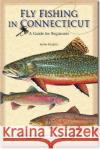
In this book, a long-time resident and devoted fly fisherman imparts a wealth of knowledge about fly fishing in Connecticut. Kevin Murphy teaches novice anglers about the state's trout hatcheries and stocking programs, the differences between brook, brown, and rainbow trout, and offers easy-to-follow instructions on the basics of fly fishing. In this concise text, the reader finds the essentials in fly fishing gear, stream tactics, casting, and a host of related topics. In addition, would-be anglers gain a useful glimpse into the history of fishing in the state, plus important tips on stream...
In this book, a long-time resident and devoted fly fisherman imparts a wealth of knowledge about fly fishing in Connecticut. Kevin Murphy teaches novi...
Connecticut may be a small state, but it is large indeed in its contribution to the nation's literature. Garnet Poems features forty-two poets whose work has a strong connection to Connecticut. The first major anthology of Connecticut poetry to appear since the mid-nineteenth century, it includes the work of such notable poets as Wallace Stevens, Lydia Sigourney, Mark Van Doren, Richard Wilbur, Susan Howe, and Elizabeth Alexander. Distinguished writer-scholar Dennis Barone has supplemented the poems with an editor's preface, notes that illuminate the poet's (or poem's) relation to the...
Connecticut may be a small state, but it is large indeed in its contribution to the nation's literature. Garnet Poems features forty-two poets whose w...
When Ella Tambussi Grasso ran for governor of Connecticut in 1974, she had not lost an election since she was first voted into the state's General Assembly in 1952. The people of Connecticut chose her as the nation's first woman to be elected governor in her own right--the capstone of a long and successful career dedicated to public service, effective government, and the democratic process. During her tenure as governor, Grasso's leadership was tested in the face of fiscal problems, state layoffs, and budget shortfalls. The daughter of Italian immigrants, she endeared herself to her...
When Ella Tambussi Grasso ran for governor of Connecticut in 1974, she had not lost an election since she was first voted into the state's General Ass...
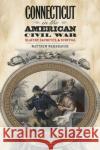
Connecticut in the American Civil War offers readers a remarkable window into the state's involvement in a conflict that challenged and defined the unity of a nation. The arc of the war is traced through the many facets and stories of battlefield, home front, and factory. Matthew Warshauer masterfully reveals the varied attitudes toward slavery and race before, during, and after the war; Connecticut's reaction to the firing on Fort Sumter; the dissent in the state over whether or not the sword and musket should be raised against the South; the raising of troops; the sacrifice of those who...
Connecticut in the American Civil War offers readers a remarkable window into the state's involvement in a conflict that challenged and defined the un...
Winner of the Henry-Russell Hitchcock Award, Victorian Society of America (2014) When P. T. Barnum met twenty-five-inch-tall Charles Stratton at a Bridgeport, Connecticut hotel in 1843, one of the most important partnerships in entertainment history was born. With Barnum's promotional skills and the miniature Stratton's comedic talents, they charmed a Who's Who of the 19th century, from Queen Victoria to Charles Dickens to Abraham Lincoln. Adored worldwide as "General Tom Thumb," Stratton played to sold-out shows for almost forty years. From his days as a precocious child star to...
Winner of the Henry-Russell Hitchcock Award, Victorian Society of America (2014) When P. T. Barnum met twenty-five-inch-tall Charles Stratt...
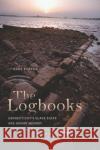
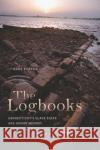
In 1757, a sailing ship owned by an affluent Connecticut merchant sailed from New London to the tiny island of Bence in Sierra Leone, West Africa, to take on fresh water and slaves. On board was the owner's son, on a training voyage to learn the trade. The Logbooks explores that voyage, and two others documented by that young man, to unearth new realities of Connecticut's slave trade and question how we could have forgotten this part of our past so completely. When writer Anne Farrow discovered the significance of the logbooks for the Africa and two other ships in 2004, her mother had...
In 1757, a sailing ship owned by an affluent Connecticut merchant sailed from New London to the tiny island of Bence in Sierra Leone, West Africa, to ...
Prior to 1972, visitors to Connecticut state mental hospitals might have noticed a six-year-old chronically depressed girl crouching in the corner of a chaotic cafeteria, or a seven-year-old autistic boy sleeping on a cot next to a seventy-year-old schizophrenic man. Riverview Hospital for Children and Youth tells the story of one of the first milieu based therapeutic hospitals specializing in children's care, located in Middletown, Connecticut. Richard J. Wiseman, its first superintendent, offers his own story and treatment philosophy alongside the voices of the many people who worked...
Prior to 1972, visitors to Connecticut state mental hospitals might have noticed a six-year-old chronically depressed girl crouching in the corner of ...
In 1757, a sailing ship owned by an affluent Connecticut merchant sailed from New London to the tiny island of Bence in Sierra Leone, West Africa, to take on fresh water and slaves. On board was the owner s son, on a training voyage to learn the trade. The Logbooks explores that voyage, and two others documented by that young man, to unearth new realities of Connecticut s slave trade and question how we could have forgotten this part of our past so completely. When writer Anne Farrow discovered the significance of the logbooks for the Africa and two other ships in 2004, her mother had...
In 1757, a sailing ship owned by an affluent Connecticut merchant sailed from New London to the tiny island of Bence in Sierra Leone, West Africa, to ...