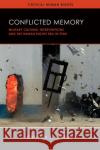
What happens when concepts of "truth," "memory," and "human rights" are taken up and adapted by former perpetrators of violence? Peru has moved from the 1980s-90s conflict between its armed forces and Shining Path militants into an era of open democracy, transitional justice, and truth and reconciliation commissions. Cynthia Milton reveals how Peru's military has engaged in a tactical cultural campaign--via books, films, museums--to shift public opinion, debate, and memories about the nation's violent recent past and its part in it. Milton calls attention to fabrications of our post-truth...
What happens when concepts of "truth," "memory," and "human rights" are taken up and adapted by former perpetrators of violence? Peru has moved from t...
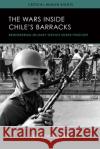
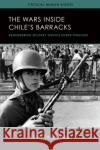
From 1973 to 1990 in Chile, approximately 370,000 young men--mostly from impoverished backgrounds--were conscripted to serve as soldiers in Augusto Pinochet's violent regime. Some were brutal enforcers, but many themselves endured physical and psychological abuse, survival and torture training, arbitrary punishments, political persecution, and forced labor. Leith Passmore examines the emergence, in the early twenty-first century, of a movement of ex-conscripts seeking reparations. The former soldiers challenged the politics of memory that had shaped Chile's truth and reconciliation efforts,...
From 1973 to 1990 in Chile, approximately 370,000 young men--mostly from impoverished backgrounds--were conscripted to serve as soldiers in Augusto Pi...
In Santiago's urban shantytowns, a searing history of poverty and Chilean state violence have prompted grassroots resistance movements among the poor and working class from the 1940s to the present. Underscoring this complex continuity, Alison J. Bruey offers a compelling history of the struggle for social justice and democracy during the Pinochet dictatorship and its aftermath.
In Santiago's urban shantytowns, a searing history of poverty and Chilean state violence have prompted grassroots resistance movements among the poor ...
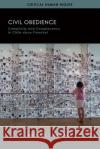
Argues that today's Chile is a product of both complicity and complacency. Combining historical analysis with deft literary, political, and cultural critique, Michael J. Lazzara scrutinizes the post-Pinochet rationalizations made by politicians, artists, intellectuals, bystanders, former revolutionaries-turned-neoliberals, and common citizens.
Argues that today's Chile is a product of both complicity and complacency. Combining historical analysis with deft literary, political, and cultural c...
After the 1994 genocide in Rwanda, victims, perpetrators, and the country as a whole struggled to deal with the legacy of the mass violence. The government responded by creating a new version of a traditional grassroots justice system called gacaca. Bert Ingelaere offers a comprehensive assessment of what these courts set out to do, how they worked, what they achieved.
After the 1994 genocide in Rwanda, victims, perpetrators, and the country as a whole struggled to deal with the legacy of the mass violence. The gover...
Reads between the lines of Argentine cultural texts (fiction, drama, testimonial narrative, telenovela, documentary film) to explore the fundamental role of silence - the unsaid - in the expression of trauma. Nancy J. Gates-Madsen's careful examination of the interplay between textual and contextual silences illuminates public debate about the meaning of memory in Argentina.
Reads between the lines of Argentine cultural texts (fiction, drama, testimonial narrative, telenovela, documentary film) to explore the fundamental r...