Virtuoso Chris Ware (b. 1967) has achieved some noteworthy firsts for comics. The Guardian First Book Award for Jimmy Corrigan: The Smartest Kid on Earth was the first major UK literary prize awarded for a graphic novel. In 2002 Ware was the first cartoonist included in the Whitney Biennial.
Like Art Spiegelman or Alison Bechdel, Ware thus stands out as an important crossover artist who has made the wider public aware of comics as literature. His regular New Yorker covers give him a central place in our national cultural conversation. Since the earliest issues of ACME...
Virtuoso Chris Ware (b. 1967) has achieved some noteworthy firsts for comics. The Guardian First Book Award for Jimmy Corrigan: The Smartest Kid...
Peter Kuper (b. 1958), one of America's leading cartoonists, has created work recognized around the world. His art has graced the pages and covers of numerous magazines and newspapers, including Time, the New Yorker, Mother Jones, and the New York Times. He is also a longtime contributor to Mad magazine, where he has been writing and drawing Spy vs. Spy for nearly two decades. He is the cofounder and coeditor of World War 3 Illustrated, the cutting-edge magazine devoted to political graphic art. Along with two dozen images, this volume...
Peter Kuper (b. 1958), one of America's leading cartoonists, has created work recognized around the world. His art has graced the pages and covers ...
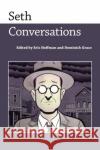
Canadian cartoonist Gregory Gallant, pen name Seth, emerged as a cartoonist in the fertile period of the 1980s, when the alternative comics market boomed. Though he was influenced by mainstream comics in his teen years and did his earliest comics work on Mister X, a mainstream-style melodrama, Seth remains one of the least mainstream-inflected figures of the alternative comics' movement. His primary influences are underground comix, newspaper strips, and classic cartooning.
These interviews, including one career-spanning, definitive interview between the volume editors and the...
Canadian cartoonist Gregory Gallant, pen name Seth, emerged as a cartoonist in the fertile period of the 1980s, when the alternative comics market ...
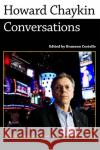
One of the most distinctive voices in mainstream comics since the 1970s, Howard Chaykin (b. 1950) has earned a reputation as a visionary formal innovator and a compelling storyteller whose comics offer both pulp-adventure thrills and thoughtful engagement with real-world politics and culture. His body of work is defined by the belief that comics can be a vehicle for sophisticated adult entertainment and for narratives that utilize the medium's unique properties to explore serious themes with intelligence and wit.
Beginning with early interviews in fanzines and concluding with a new...
One of the most distinctive voices in mainstream comics since the 1970s, Howard Chaykin (b. 1950) has earned a reputation as a visionary formal inn...
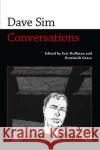
In 1977, Dave Sim (b. 1956) began to self-publish Cerebus, one of the earliest and most significant independent comics, which ran for 300 issues and ended, as Sim had planned from early on, in 2004. Over the run of the comic, Sim used it as a springboard to explore not only the potential of the comics medium but also many of the core assumptions of Western society. Through it he analyzed politics, the dynamics of love, religion, and, most controversially, the influence of feminism--which Sim believes has had a negative impact on society. Moreover, Sim inserted himself squarely into...
In 1977, Dave Sim (b. 1956) began to self-publish Cerebus, one of the earliest and most significant independent comics, which ran for 300 is...
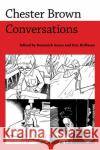
The early 1980s saw a revolution in mainstream comics--in subject matter, artistic integrity, and creators' rights--as new methods of publishing and distribution broadened the possibilities. Among those artists utilizing these new methods, Chester Brown (b. 1960) quickly developed a cult following due to the undeniable quality and originality of his Yummy Fur (1983-1994).
Chester Brown: Conversations collects interviews covering all facets of the cartoonist's long career and includes several pieces from now-defunct periodicals and fanzines. It also includes original...
The early 1980s saw a revolution in mainstream comics--in subject matter, artistic integrity, and creators' rights--as new methods of publishing an...
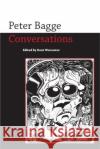
For fans of Peter Bagge (b. 1957) and his bracing satirical writing and drawing, this collection offers a perfect means to track how he describes his career choices, work habits, preoccupations, and comedic sensibility since the 1980s. Featuring a new interview and much previously unavailable material, this book delivers insightful, occasionally gossipy, sometimes funny, and often tart conversations. His career has intersected with the modern history of comics, from underground comix and indie comics to comics journalism and graphic nonfiction.
Bagge's detailed, garrulous, and often...
For fans of Peter Bagge (b. 1957) and his bracing satirical writing and drawing, this collection offers a perfect means to track how he describes h...
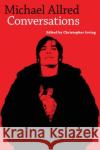
Michael Allred stands out for his blend of spiritual and philosophical approaches with an art style reminiscent of 1960s era superhero comics, which creates a mixture of both postmodernism and nostalgia. His childhood came during an era where pop art and camp embraced elements of kitsch and pastiche and introduced them into the lexicon of popular culture. Allred's use of both in his work as a cartoonist on his signature comic book Madman in the early 1990s offset the veiled autobiography of his own spiritual journey through Mormonism and struggles with...
Michael Allred stands out for his blend of spiritual and philosophical approaches with an art style reminiscent of 1960s era superhero comics, whic...
Canadian cartoonist Gregory Gallant (b. 1962), pen name Seth, emerged as a cartoonist in the fertile period of the 1980s, when the alternative comics market boomed. Though he was influenced by mainstream comics in his teen years and did his earliest comics work on Mister X, a mainstream-style melodrama, Seth remains one of the least mainstream-inflected figures of the alternative comics' movement. His primary influences are underground comix, newspaper strips, and classic cartooning.
These interviews, including one career-spanning, definitive interview between the volume editors...
Canadian cartoonist Gregory Gallant (b. 1962), pen name Seth, emerged as a cartoonist in the fertile period of the 1980s, when the alternative comi...
Ed Brubaker (b. 1966) has emerged as one of the most popular, significant figures in art comics since the 1990s. Most famous as the man who killed Captain America in 2007, Brubaker's work on company-owned properties such as Batman and Captain America and creator-owned series like Criminal and Fatale live up to the usual expectations for the superhero and crime genres. And yet, Brubaker layers his stories with a keen self-awareness, applying his expansive knowledge of American comic book history to invigorate his work and challenge the dividing line between popular...
Ed Brubaker (b. 1966) has emerged as one of the most popular, significant figures in art comics since the 1990s. Most famous as the man who killed ...