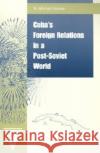
"A classic on post-Cold War Cuba. . . . Azicri evidences Cuba s expanding external relations with the papacy, the Economic Union, and Latin America and argues that Cuba has begun internal changes that could later create an all-national rather than a solely communist party. . . . This work is essential reading for D.C., Havana, and Miami--and is likely to anger all three."--Choice
"A masterful and provocative summary, analysis, and evaluation of political, economic, and cultural developments in Cuba, as well as the international relations of Cuba, in the tumultuous decade...
"A classic on post-Cold War Cuba. . . . Azicri evidences Cuba s expanding external relations with the papacy, the Economic Union, and Latin America...
"One of the first serious attempts to explain the re-articulation of Cuban foreign policy in the 1990s, after the end of its special relationship with the former socialist bloc. Should be of relevance to specialists, students, and all readers interested in Cuban foreign policy and the evolution of the Cuba-U.S. conflict."--International Affairs
"Kudos to Erisman for a timely, provocative, and persuasive analysis of Cuban foreign affairs. This book should be required reading for policy makers in Havana and Washington, for Latin American and Caribbean specialists, and for all...
"One of the first serious attempts to explain the re-articulation of Cuban foreign policy in the 1990s, after the end of its special relationship w...
This unusual collaboration between a Cuban novelist and a Canadian professor offers uncensored and frank interviews with prominent figures of contemporary Cuban cultural life, from a Grammy-winning jazz artist to world-class filmmakers and actors, writers, ballet dancers, and dramatists. In recent years the small island, with a population of just 11 million, has experienced an astonishing cultural renaissance. The immense popularity of the movies Buena Vista Social Club and Strawberry and Chocolate, the successful international tours of the National Ballet of Cuba, and a host of literary...
This unusual collaboration between a Cuban novelist and a Canadian professor offers uncensored and frank interviews with prominent figures of contempo...
"A classic on post-Cold War Cuba. . . . Azicri evidences Cuba s expanding external relations with the papacy, the Economic Union, and Latin America and argues that Cuba has begun internal changes that could later create an all-national rather than a solely communist party. . . . This work is essential reading for D.C., Havana, and Miami--and is likely to anger all three."--Choice
"A masterful and provocative summary, analysis, and evaluation of political, economic, and cultural developments in Cuba, as well as the international relations of Cuba, in the tumultuous decade...
"A classic on post-Cold War Cuba. . . . Azicri evidences Cuba s expanding external relations with the papacy, the Economic Union, and Latin America...
This volume emphasizes two key aspects of Cuba's foreign relations: the country's adjustment since the disintegration of the Soviet Bloc, and the ongoing confrontation between Cuba and the United States. The author proposes that Cuba has been highly sensitive to independence on an external power.
This volume emphasizes two key aspects of Cuba's foreign relations: the country's adjustment since the disintegration of the Soviet Bloc, and the ongo...
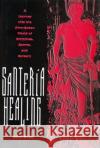
"Will be of interest not only to specialists in Afro-Cuban and African Diaspora religions, but also to medical anthropologists and students of anthropology, psychology, and religious studies. This work provides a particularly revealing entry way into the realities of contemporary Cuba."-- George Brandon, Sophie Davis School of Biomedical Education, City University of New York
Johan Wedel offers a visit inside the world of Santeria healing. Drawing upon extensive fieldwork in contemporary Cuba, including interviews with Santeria devotees, firsthand observations of divination sessions, and...
"Will be of interest not only to specialists in Afro-Cuban and African Diaspora religions, but also to medical anthropologists and students of anthrop...
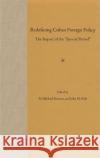
Against all odds, Cuba has adapted to the post-Soviet world and redefined itself by drastically realigning its international relationships. These essays from renowned scholars around the globe (including Cuba) analyze the strategy of the revolutionary government as it patched together a totally revamped foreign policy during the years known as the Special Period, from 1989 to the present. With the implosion of the Soviet Union, Cuba s trading partners in the socialist bloc, who also provided the country with subsidies and solid political and military support, suddenly vanished. Almost...
Against all odds, Cuba has adapted to the post-Soviet world and redefined itself by drastically realigning its international relationships. These essa...
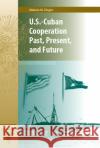
The United States and Cuba actually cooperate on several issues of mutual interest. This intriguing pattern of U.S.-Cuban cooperation emerged during the 1990s. Naked self-interest led the two governments to cooperate in four areas: illegal immigration, drug trafficking, decreasing tensions around Guantanamo Naval Base, and reducing the threat of unintended war. The fact that there has been any cooperation between the United States and Cuba may be surprising since the public rhetoric of animosity has always dominated U.S.-Cuban discourse.To date, there has been little systematic research on...
The United States and Cuba actually cooperate on several issues of mutual interest. This intriguing pattern of U.S.-Cuban cooperation emerged during t...
Does a civil society actually exist in Cuba today and if so what is its nature and role? In seeking answers to this hotly contested and highly politicized question, Alexander Gray and Antoni Kapcia have assembled an impressive and diverse group of contributors.The essays in The Changing Dynamic of Cuban Civil Society range from general discussion of the private sector to case studies about volunteer work, religious entities, and nongovernmental organizations (NGOs). Since the fall of the Soviet Union and the economic crisis in 1990, the Cuban state has experienced severe challenges,...
Does a civil society actually exist in Cuba today and if so what is its nature and role? In seeking answers to this hotly contested and highly politic...
"Luciak has taken two taboo subjects in Cuban political thought, gender and democracy, and fused them together in an analytically elegant way. Many people shy away from studying democracy in Cuba because it seems such an oxymoron. Luciak's astute analysis makes this book highly original and significant."--Julie Shayne, Emory University
"A fascinating book on an important issue, employing unique sources of information. . . . A must-read for anyone interested in gender equality, electoral politics, and democratization in Cuba."--Lorraine Bayard de Volo, University of Kansas
In...
"Luciak has taken two taboo subjects in Cuban political thought, gender and democracy, and fused them together in an analytically elegant way. Many...