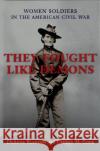
Popular images of women during the American Civil War include self-sacrificing nurses, romantic spies, and brave ladies maintaining hearth and home in the absence of their men. However, as DeAnne Blanton and Lauren M. Cook show in their remarkable new study, that conventional picture does not tell the entire story. Hundreds of women assumed male aliases, disguised themselves in men s uniforms, and charged into battle as Union and Confederate soldiers facing down not only the guns of the adversary but also the gender prejudices of society. They Fought Like Demons is the first book to fully...
Popular images of women during the American Civil War include self-sacrificing nurses, romantic spies, and brave ladies maintaining hearth and home...
Most historians accept the proposition that in the first two years of the Civil War the North's primary aim was to reestablish the Union and the Constitution, not to emancipate slaves. But when northerners began clamoring for the confiscation of southern land and slaves as a punitive, military, and revenue-raising tactic, the constitutional right to personal property, particularly human property, came into question. In From Property to Person, Silvana R. Siddali traces the resulting discourse among northern voters, politicians, military leaders, and President Lincoln, elucidating how...
Most historians accept the proposition that in the first two years of the Civil War the North's primary aim was to reestablish the Union and the Co...
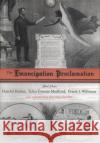
The Emancipation Proclamation is the most important document of arguably the greatest president in U.S. history. Now, Edna Greene Medford, Frank J. Williams, and Harold Holzer -- eminent experts in their fields -- remember, analyze, and interpret the Emancipation Proclamation in three distinct respects: the influence of and impact upon African Americans; the legal, political, and military exigencies; and the role pictorial images played in establishing the document in public memory. The result is a carefully balanced yet provocative study that views the proclamation and its author from the...
The Emancipation Proclamation is the most important document of arguably the greatest president in U.S. history. Now, Edna Greene Medford, Frank J....
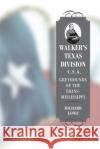
Colorfully known as the "Greyhound Division" for its lean and speedy marches across thousands of miles in three states, Major General John G. Walker's infantry division in the Confederate army was the largest body of Texans -- about 12,000 men at its formation -- to serve in the American Civil War. From its creation in 1862 until its disbandment at the war's end, Walker's unit remained, uniquely for either side in the conflict, a stable group of soldiers from a single state. Richard Lowe's compelling saga shows how this collection of farm boys, store clerks, carpenters, and lawyers became...
Colorfully known as the "Greyhound Division" for its lean and speedy marches across thousands of miles in three states, Major General John G. Walke...
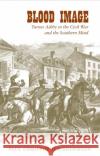
With Blood Image, Paul Anderson shows that the symbol of a man can be just as important as the man himself. Turner Ashby was one of the most famous fighting men of the Civil War. Rising to colonel of the 7th Virginia Cavalry, Ashby fought brilliantly under Thomas J. "Stonewall" Jackson during the 1862 Shenandoah Valley campaign until he died in battle. Anderson demonstrates that Ashby's image -- a catalytic, mesmerizing, and often contradictory combination of southern antebellum cultural ideals and wartime hopes and fears -- emerged during his own lifetime and was not a later creation of...
With Blood Image, Paul Anderson shows that the symbol of a man can be just as important as the man himself. Turner Ashby was one of the most famous...