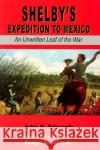
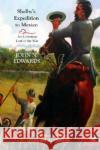
Confederate general Joseph O. Shelby and his legendary Iron Brigade refused to acknowledge Lee's surrender at Appomattox. Instead, they fought their way to Mexico in search of a place where they could continue to defy the United States government. These veteran Missouri calvarymen clawed their way for fifteen hundred miles, fighting Juaristas, Indians, desperados, and disgruntled gringos. Never defeated, they disbanded only when the Emperor Maximilian (the Austrian pretender to an illusory Mexican throne) declined their services. Shelby's adjutant, journalist John N. Edwards, recorded the...
Confederate general Joseph O. Shelby and his legendary Iron Brigade refused to acknowledge Lee's surrender at Appomattox. Instead, they fought their w...
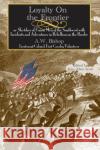
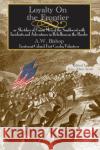
A RARE CONTEMPORARY ACCOUNT OF THE PLIGHT AND PATRIOTISM OF SOUTHERN UNIONISTS. Loyalty on the Frontier was first published in 1863 and has the immediacy, passion, and intimacy of its wartime context. Albert Webb Bishop was a New York attorney who joined the Union Army at the start of the Civil War. In 1862, he accepted a commission as lieutenant colonel in a regiment of Ozark mountaineers. While maintaining Union control of northwest Arkansas, Bishop gathered stories of political secession, social coercion, and the brutal terrorism that marked this region. He compiled them into this heroic...
A RARE CONTEMPORARY ACCOUNT OF THE PLIGHT AND PATRIOTISM OF SOUTHERN UNIONISTS. Loyalty on the Frontier was first published in 1863 and has the immedi...
At the start of the Civil War, Dr. William McPheeters was a distinguished physician in St. Louis, conducting unprecedented public-health research, forging new medical standards, and organizing the state's first professional associations. But Missouri was a volatile border state. Under martial law, Union authorities kept close watch on known Confederate sympathizers. McPheeters was followed, arrested, threatened, and finally, in 1862, given an ultimatum: sign an oath of allegiance to the Union or go to federal prison. McPheeters acted from principle instead, fleeing by night to Confederate...
At the start of the Civil War, Dr. William McPheeters was a distinguished physician in St. Louis, conducting unprecedented public-health research, for...
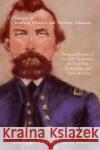
Originally published in 1907 and now reprinted for the first time, this is the only account published by a Union guerrilla in the border region of the central Ozarks, where political and civil violence lasted from the Civil War well into the 1880s. There were probably many people who wanted to shoot Billy Monks. He was a Union patriot and skilled guerrilla fighter to some, but others called him a bushwhacker, a murderer, and a thief. His was a very personal combat: he commanded, rallied, arrested, killed, quarreled with, and sued people he knew. His life provides a striking example of the...
Originally published in 1907 and now reprinted for the first time, this is the only account published by a Union guerrilla in the border region of the...
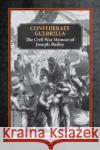
Joseph M. Bailey s memoir, Confederate Guerrilla, provides a unique perspective on the fighting that took place behind Union lines in Federal-occupied northwest Arkansas during and after the Civil War. This storynow published for the first timewill appeal to modern readers interested in the grassroots history of the Trans-Mississippi war. Bailey participated in the Battle of Pea Ridge and the siege of Port Hudson, eventually escaping to northwest Arkansas where he fought as a guerrilla against Federal troops and civilian unionists. After Federal forces gained control of the area, Bailey...
Joseph M. Bailey s memoir, Confederate Guerrilla, provides a unique perspective on the fighting that took place behind Union lines in Federal-occupied...
First published in 1863, this book has the immediacy, passion, and intimacy of its wartime context. It tells the remarkable story of Albert Webb Bishop, a New York lawyer turned Union soldier, who in 1862 accepted a commission as lieutenant colonel in a regiment of Ozark mountaineers. While maintaining Union control of northwest Arkansas, he collected stories of the social coercion, political secession, and brutal terrorism that scarred the region.
His larger goal, however, was to popularize and inspire sympathy for the Southas Unionists and to chronicle the triumph of Unionism in a...
First published in 1863, this book has the immediacy, passion, and intimacy of its wartime context. It tells the remarkable story of Albert Webb Bisho...
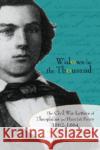
This collection of letters written between Theophilus and Harriet Perry during the Civil War provides an intimate, firsthand account of the effect of the war on one young couple. Perry was an officer with the 28th Texas Cavalry, a unit that campaigned in Arkansas and Louisiana as part of the division known as aWalkeras Greyhounds.a His letters describe his service in a highly literate style that is unusual for Confederate accounts. He documents a number of important events, including his experiences as a detached officer in Arkansas in the winter of 1862a63, the attempt to relieve the siege...
This collection of letters written between Theophilus and Harriet Perry during the Civil War provides an intimate, firsthand account of the effect of ...
Confederate general Joseph O. Shelby and his legendary Iron Brigade refused to acknowledge the end of the Civil War. Instead, they fought their way to Mexico in search of a place where they could continue to defy the U.S. government. These veteran Missouri cavalrymen clawed their way for fifteen hundred miles, fighting Juaristas, Indians, desperados, and disgruntled gringos. They disbanded only after they had offered their services to Emperor Maximilian and were turned down. Shelbyas adjutant, journalist John N. Edwards, first published his story of the exploits of this superb mounted brigade...
Confederate general Joseph O. Shelby and his legendary Iron Brigade refused to acknowledge the end of the Civil War. Instead, they fought their way to...
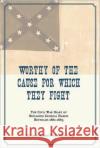
Worthy of the Cause for Which They Fight chronicles the experiences of a well-educated and articulate Confederate officer from Arkansas who witnessed the full evolution of the Civil War in the Trans-Mississippi Department and western theater. Daniel Harris Reynolds, a community leader with a thriving law practice in Chicot County, entered service in 1861 as a captain in command of Company A of the First Arkansas Mounted Rifles. Reynolds saw action at Wilson's Creek and Pea Ridge before the regiment was dismounted and transferred to the Army of Tennessee, the primary Confederate force in the...
Worthy of the Cause for Which They Fight chronicles the experiences of a well-educated and articulate Confederate officer from Arkansas who witnessed ...
2016 Choice Outstanding Academic Title The absorbing documents collected in Slavery and Secession in Arkansas trace Arkansas s tortuous road to secession and war. Drawn from contemporary pamphlets, broadsides, legislative debates, public addresses, newspapers, and private correspondence, these accounts show the intricate twists and turns of the political drama in Arkansas between early 1859 and the summer of 1861. From an early warning of what Republican political dominance would mean for the South, through the initial rejection of secession, to Arkansas s final abandonment...
2016 Choice Outstanding Academic Title The absorbing documents collected in Slavery and Secession in Arkansas trace Arkansas s tort...