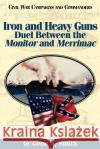
March 1862. The Union ironclad warship, Monitor, with its two eleven inch Dahlgren smoothbores in a unique revolving turret assembly, leaves New York City under tow to serve blockade duty off the coast of North Carolina. Meanwhile, the Confederate ironclad Virginia (formerly the wooden frigate Merrimac) is raising havoc with Union blockaders in Hampton Roads. The inevitable showdown takes place on March 9th. For more than four hours the two ironclads battle furiously at close range. The Merrimac finally withdraws and returns to Norfolk to protect the river approaches to Richmond, leaving the...
March 1862. The Union ironclad warship, Monitor, with its two eleven inch Dahlgren smoothbores in a unique revolving turret assembly, leaves New York ...
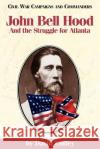
"At thirty-three years of age, Hood became the eighth and youngest of the Confederate Army's generals of full rank. He had risen through the commissioned ranks, from first lieutenant to full general, in only three years, a feat achieved by no other man during the Civil War. . . . Ultimately, Hood was selected for one reason--to fight--and no other available officer was better suited for the challenge." David Coffey's words give a succinct portrait of the ascent of John Bell Hood. His book delivers a clear and riveting evaluation of Hood's service in and command of the Western Army in Northern...
"At thirty-three years of age, Hood became the eighth and youngest of the Confederate Army's generals of full rank. He had risen through the commissio...
James Johnston Pettigrew was the quintessential southern cavalier. Born into fortunate circumstances, this North Carolinian pursued activities that developed his mind as well as his character. Finishing first in his class at the University of North Carolina, Pettigrew taught, wrote poems, and traveled in Europe, carefully noting in his diary the similarity of the Old South to romantic Spain and Italy. Upon returning home, he became a successful Charleston lawyer, militiaman, and when the time came, an ardent secessionist. The men who worked with Pettigrew, and later knew him as a soldier,...
James Johnston Pettigrew was the quintessential southern cavalier. Born into fortunate circumstances, this North Carolinian pursued activities that de...
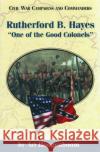
As the nineteenth president of the United States, Rutherford B. Hayes brought an end to Reconstruction and returned order to the White House. But it was his service as a volunteer officer in the Union army during the Civil War that provided the most glorious years of his life and made his post-war political accomplishments possible.
Although he spent much of the war on the periphery, away from the major centers of activity, Hayes performed conspicuously whenever called upon. He participated in the repulse of dreaded Confederate raider John Hunt Morgan's Ohio Raid and, although only a...
As the nineteenth president of the United States, Rutherford B. Hayes brought an end to Reconstruction and returned order to the White House. But it w...
Admiral David Farragut eyed a potentially lethal minefield guarding the entrance to Mobile Bay, Alabama, as his attack column of ironclad monitors rushed forward, opening the assault against the Confederate citadels on shore. One vessel, the USS Tecumseh, looked every inch an invincible monster. As the sleek, turreted warship drew close to its Rebel enemies, a geyser of water shot up on its starboard side followed by a muffled rumble. The ship heeled over and sank in seconds, carried to its watery doom by its own war-speed and momentum. Crewmen aboard the rest of the Union ships looked on in...
Admiral David Farragut eyed a potentially lethal minefield guarding the entrance to Mobile Bay, Alabama, as his attack column of ironclad monitors rus...
Civil War scholars and buffs alike have long differed on the turning point of the war. Gettysburg, Vicksburg, and Chattanooga, to name but a few, have garnered attention as turning points. Seldom do the names of Forts Henry and Donelson enter the argument. But as prolific military historian Spencer C. Tucker points out, the capture of these river bastions in Tennessee became the first important Federal victories of a war still in its infancy.
From the beginning Union leaders devised a plan to capitalize on their command of America's waterways as a means of dividing and conquering the...
Civil War scholars and buffs alike have long differed on the turning point of the war. Gettysburg, Vicksburg, and Chattanooga, to name but a few, have...
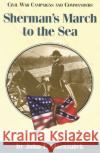
In the fall of 1864 after his triumphant capture of Atlanta, Union Gen. William T. Sherman mobilized 62,000 of his veteran troops and waged destructive war across Georgia, from Atlanta to Savannah. Unhappy with the killing and maiming of Union and Confederate soldiers in combat blood baths. Sherman decided on purposeful destruction, hoping to insure fewer casualties while helping bring the war to an end as quickly as possible. He repeatedly promised Southerners that he would wage a hard war but would tender a soft peace once the South stopped fighting. The general was true to his word on both...
In the fall of 1864 after his triumphant capture of Atlanta, Union Gen. William T. Sherman mobilized 62,000 of his veteran troops and waged destructiv...
To Confederate president Jefferson Davis, America had no finer soldier than Kentucky-born Texan Albert Sidney Johnston. Following the outbreak of the Civil War, Davis turned to Johnston to take control of the deteriorating situation in the Western Theater. With a widely dispersed and undermanned army, Johnston tried but failed to hold the line in Kentucky and Tennessee.After yielding Forts Henry and Donelson, and Nashville, the Confederates fell back into Alabama and Mississippi, where Johnston rallied his troops for a surprise attack against Federal forces in western Tennessee.
Thus far,...
To Confederate president Jefferson Davis, America had no finer soldier than Kentucky-born Texan Albert Sidney Johnston. Following the outbreak of the ...
In 1862 the sleepy town of Corinth, Mississippi, was transformed into one of the South's most strategic strongholds. At Corinth, the Mobile and Ohio Railroad crossed the Memphis and Charleston Railroad, creating a crucial nexus for the transport of supplies, material, and men throughout the western Confederacy. Following the battle of Shiloh, a vast Federal army under Gen. Henry Halleck captured the town after an extended siege. But by summer, Confederate forces began a broad offensive. In the East, Gen. Robert E. Lee invaded Maryland, while in the West, Gen. Braxton Bragg led an...
In 1862 the sleepy town of Corinth, Mississippi, was transformed into one of the South's most strategic strongholds. At Corinth, the Mobile and Ohio R...
In early 1861, most Missourians hoped they could remain neutral in the upcoming conflict between North and South. In fact, a popularly elected state convention voted in March of that year that "no adequate cause" existed to compel Missouri to leave the Union. Instead, Missourians saw themselves as ideologically centered between the radical notions of abolition and secession. By that summer, however, the situation had deteriorated dramatically. Because of the actions of politicians and soldiers such as Missouri Governor Claiborne Jackson and Union General Nathaniel Lyon, Missourians found...
In early 1861, most Missourians hoped they could remain neutral in the upcoming conflict between North and South. In fact, a popularly elected state c...