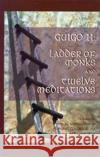
'My thoughts on the spiritual exercises proper to cloistered monks'; the ninth prior of La Grande Chartreuse ( '1180) articulates the monastic contemplative tradition in distinctively western terms.
'...reading, meditation, prayer and contemplation. These make a ladder for monks by which they are lifted up from earth to heaven. It has few rungs, yet its length is immense and wonderful, for its lower end rests upon the earth, but its top pierces the clouds and seeks heavenly secrets.'
'My thoughts on the spiritual exercises proper to cloistered monks'; the ninth prior of La Grande Chartreuse ( '1180) articulates the monastic cont...
Basil the Great (330-379) is one of the most important figures in Christian history and a theologian and spiritual teacher of ecumenical significance. At a time when the sources of their riche spiritual heritage are being re-appropriated by Christians of many traditions, it is strange that little attention has so far been given to Basilian spirituality. A Life Pleasing to God tells the story of Basil's own spiritual development in the theologically turbulent fourth-century. Its core is a study of those passages of the Asceticon which illustrate his understanding of the foundation of the...
Basil the Great (330-379) is one of the most important figures in Christian history and a theologian and spiritual teacher of ecumenical significance....
Preached to monks and edited for publication by a pastor, these sermons are applicable generally to any congregation of Christians, for human problems are the same in both church and cloister. The preacher's vivid imagery, his spontaneity and sense of excitement, and his honesty in facing sometimes harsh, unflattering realities make what he says both piercing and unforgettable.
Preached to monks and edited for publication by a pastor, these sermons are applicable generally to any congregation of Christians, for human problems...
A monk and a scholar generally recognized as the keenest philosophical and theological mind of his time, of Bec, found himself forcibly and unwillingly invested as Archbishop of Canterbury on 6 March 1093. It was the first of many sharp differences between the Norman King and an archbishop who considered the reform of the church and the improvement of the moral conduct of the kingdom his prime tasks.
Among his chief weapons in fighting to establish the Gregorian Reform in his new land was the letter. Whether reporting events or asking for news, proffering advice or wheeding favors,...
A monk and a scholar generally recognized as the keenest philosophical and theological mind of his time, of Bec, found himself forcibly and unwilli...
Bede's commentary on the Book of Acts is one of his earliest exegetical works (usually dated between 709 and 710) and one of his most popular and influential. None of the Latin Fathers of the Church had written a commentary on this book, and those which existed in Greek were unlikely to have been known in the West. Bede became the authority on Acts for countless subsequent students of Scripture. The breadth of Bede's mind, the diversity of his interests, and the thoroughness of his research are all mirrored in this work. Allegory is freely interspersed with practical commentary, textual...
Bede's commentary on the Book of Acts is one of his earliest exegetical works (usually dated between 709 and 710) and one of his most popular and infl...
Spiritual accompaniment -- patient listening and honest openness has become widespread among Christians of many traditions in recent years. Is this modern application of an ancient 'discernment of spirits' the best way for individual persons and groups of Christians to be formed as the People of God?
Can anyone today accompany another person's spiritual experience without a sound knowledge of psychology? Do spiritual accompaniment and psychological therapy overlap? Can one replace the other? Should an accompanist also be a therapist, as some have suggested?
Writing from his...
Spiritual accompaniment -- patient listening and honest openness has become widespread among Christians of many traditions in recent years. Is this...
Monks and priests - male celibates - have for centuries described, expressed, and celebrated their love for God in the language of sex, most prolifically and characteristically in a thousand-year tradition of theological commentaries on the scriptural Song of Songs. As their allegory for the intimate love between God and man, they chose the most intense human model available - erotic love. After analyzing the tradition, its logic, and its imagery, Denys Turner provides translations of a dozen medieval commentaries never before available in English. From Gregory the Great in the sixth century...
Monks and priests - male celibates - have for centuries described, expressed, and celebrated their love for God in the language of sex, most prolifica...
Symeon the New Theologian transformed the Evagrian tradition of hesychia, with its insistence on absolute solitude remote from the affairs of men, and practised it in a monastery in the very heart of Constantinople. A champion of Orthodoxy, and of monks, he composed works which became perhaps the most important source of the hesychast movement on Mount Athos two centuries after his death. Always the spiritual master rather than the systematic theologian, Symeon wrote as he had taught--from his own immediate experience.
Symeon the New Theologian transformed the Evagrian tradition of hesychia, with its insistence on absolute solitude remote from the affairs of men, and...
Scripture brings the Word of God to us when we read and welcome it in faith as the Word which comes from God and leads to God. Scripture is the means by which we live in God. The ancient monastic (and patristic) way of reading Scripture involves reflection (meditation) and prayer. It is listening to the Word, allowing the Word to become active in our lives. It is, in the words of Saint Jerome, 'opening our sails to the Holy Spirit without knowing on what shores we will land.'
Scripture brings the Word of God to us when we read and welcome it in faith as the Word which comes from God and leads to God. Scripture is the mea...
How can we attune ourselves to God's grace? It always takes a lifetime to do - and this is because God wants it so. When first surprised by grace, people speak of a 'conversion'. Some consider this the end of the journey. Those familiar with spiritual development realize that conversion is merely the beginning of an ongoing process. Throughout our lives God's grace continues to draw us and help us turn ever and again back to him and his great, guiding love. Cistercian abbot Andre Louf writes of the power of faith, growth through testing, contrition of heart, spiritual companionship, prayer...
How can we attune ourselves to God's grace? It always takes a lifetime to do - and this is because God wants it so. When first surprised by grace, peo...