An attempt to discover whether a foreign policy consensus can exist among the diverse groups in America, using data from 1,065 national leaders.
Originally published in 1963.
The Princeton Legacy Library uses the latest print-on-demand technology to again make available previously out-of-print books from the distinguished backlist of Princeton University Press. These editions preserve the original texts of these important books while presenting them in durable paperback and hardcover editions. The goal of the Princeton Legacy Library is to vastly increase access to the...
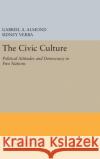
An attempt to discover whether a foreign policy consensus can exist among the diverse groups in America, using data from 1,065 national leaders.
The authors interviewed over 5,000 citizens in Germany, Italy, Mexico, Great Britain, and the U.S. to learn political attitudes in modem democratic states.
Originally published in 1963.
The Princeton Legacy Library uses the latest print-on-demand technology to again make available previously out-of-print books from the distinguished backlist of Princeton University Press. These editions preserve the original texts of these important books while presenting them in durable paperback and hardcover editions. The goal of the Princeton Legacy Library is to vastly increase...
The authors interviewed over 5,000 citizens in Germany, Italy, Mexico, Great Britain, and the U.S. to learn political attitudes in modem democratic...
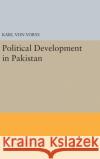
An analysis of Pakistani politics under President Mohammad Ayub Khan that focuses on the practical limitations of that leader's ability to mobilize mass backing even when he is supported by a powerful army. Of particular significance is the non-totalitarian character of Ayub Khan's program.
Originally published in 1965.
The Princeton Legacy Library uses the latest print-on-demand technology to again make available previously out-of-print books from the distinguished backlist of Princeton University Press. These editions preserve the original texts of these important...
An analysis of Pakistani politics under President Mohammad Ayub Khan that focuses on the practical limitations of that leader's ability to mobilize...
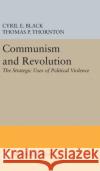
In a period marked by growing fluidity between the West and the Communist nations, the role of revolution as an instrument of political and social change takes on an intense, possibly dangerous importance. Owing to the unacceptable risks of international war, revolutions in the less developed countries are increasingly taking the place of war as the main arena of great-power conflict. Thus, the attitudes and policies of the Communist countries toward revolution are of vital concern. In this book, thirteen specialists on Communist affairs consider how the Communists have used revolutions in...
In a period marked by growing fluidity between the West and the Communist nations, the role of revolution as an instrument of political and social ...
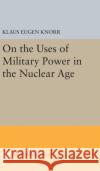
Professor Knorr examines bends in the values which nations derive in their international relationships from the possession and use of both nuclear and non-nuclear military forces, and suggests that territorial conquest and the furtherance of economic benefits by military means have generally diminished in appeal. He inquires into the costs and disadvantages of military power-the greatly reduced security obtainable even by the major nuclear powers and the noticeable diminution in the legitimacy of international violence in its several forms.
Originally published in 1966.
The...
Professor Knorr examines bends in the values which nations derive in their international relationships from the possession and use of both nuclear ...
This discussion of agricultural policy in the decade after Stalin shows how decisions are made and then enforced.
Originally published in 1965.
The Princeton Legacy Library uses the latest print-on-demand technology to again make available previously out-of-print books from the distinguished backlist of Princeton University Press. These editions preserve the original texts of these important books while presenting them in durable paperback and hardcover editions. The goal of the Princeton Legacy Library is to vastly increase access to the rich scholarly heritage found in...
This discussion of agricultural policy in the decade after Stalin shows how decisions are made and then enforced.
The risks of arms control and disarmament, how they can be reduced or eliminated, and the political implications of drastic disarmament are analyzed by eleven experts. Emphasis is placed on the development of techniques for disarming that are politically feasible and give reasonable assurance to each side that the other is not violating its obligations for any serious reason. Three major aspects of the problem are considered: how to get the disarmament process started, and once started to continue it how to retain the freedom of diplomatic action that might be needed to defend national...
The risks of arms control and disarmament, how they can be reduced or eliminated, and the political implications of drastic disarmament are analyze...
The possibilities for third-party intervention aimed at facilitating the non-violent termination of international crises are explored in this book. The author develops a theory of third-party intervention at a high level of abstraction and then presents a set of applications which focuses on the Secretary-General of the United Nations and a variety of potential Soviet-American crises.
Originally published in 1967.
The Princeton Legacy Library uses the latest print-on-demand technology to again make available previously out-of-print books from the distinguished backlist...
The possibilities for third-party intervention aimed at facilitating the non-violent termination of international crises are explored in this book....
This book considers the varied roles played by the United Nations in cases where threats to peace are created by civil strife in modernizing societies. These struggles for internal supremacy are viewed by the superpowers and other states as parts of larger racial, anti-colonial, or ideological contests. Through a careful analysis of selected cases-Algeria, Angola, the Congo, Cyprus, the Dominican Republic, Greece, Guatemala, Hungary, Lebanon, Laos, Yemen, and Vietnam-the author clarifies the legal and political factors limiting the United Nations' effectiveness in containing violence and...
This book considers the varied roles played by the United Nations in cases where threats to peace are created by civil strife in modernizing societ...
Charles de Gaulle has often warned France and other European nations of the threat they face from advanced scientific and technological countries such as the United States and the Soviet Union. Robert Gilpin examines this "technological gap," which France fears, and the efforts France is making to introduce change and efficiency into her science administration. He discusses the gap as it affects all of Europe, and suggests that if western European nations are unable to form a common European administration of science policy, and remain the "main world importers of discoveries and exporters...
Charles de Gaulle has often warned France and other European nations of the threat they face from advanced scientific and technological countries s...