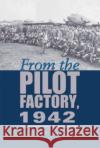
Allan T. Stein idolized his uncle, a pilot in the Great War. So in 1943, in the midst of the Second World War, he left Texas A&M University for Lackland Air Field to learn to fly. By the time he retired in 1969, Stein had flown everything from BT-13s and B-24s to B-52s and C-47s. During World War II, he flew missions over China and the Sea of Japan, and by V-J Day, he had participated in eight campaigns and logged 347 hours in combat. Stein later spent one year in Vietnam as operations officer for the 360 TEWS (Tactical Electronic Warfare Squadron), which used refitted C-47s to monitor and...
Allan T. Stein idolized his uncle, a pilot in the Great War. So in 1943, in the midst of the Second World War, he left Texas A&M University for Lackla...
In 1939, the United States Army Air Force trained just 1,200 new pilots. Yet, by the end of World War II, airfields had become factories, and 193,440 young men had become pilots. Author William P. Mitchell entered the pilot factory at San Antonio's Kelly Field in January 1942. He then went to Garner Field near Uvalde, Texas, for primary training; to Randolph Field for basic; to Brooks Field for advanced flying; and to Del Valle for transition on the C-47. Mitchell's experiences were similar to those of thousands of young men. Because his mother kept his wartime letters, readers of this...
In 1939, the United States Army Air Force trained just 1,200 new pilots. Yet, by the end of World War II, airfields had become factories, and 193,440 ...
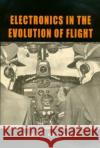
Electronics in the Evolution of Flight traces the paired history of modern aviation and electronics, or avionics, from its earliest years to the indispensable tool it is today. Albert Helfrick, who for twenty-five years has designed avionics for agencies and corporations such as NASA and Boeing, provides a thorough account of the roles played by the famous and the obscure, from Edwin Howard Armstrong to Nikola Tesla and David Sarnoff, in the successful creation of aviation technology. Helfrick focuses much of his work on the advancement of electronic systems. He explains the origins of...
Electronics in the Evolution of Flight traces the paired history of modern aviation and electronics, or avionics, from its earliest years to the indis...
In this book, author Rosalie Schwartz uses the 1933 RKORadio Pictures production Flying Down to Rio to examine the interplay of technology and popular culture that shaped a distinctive twentiethcentury sensibility. The musical comedy connected airplanes, movies, and tourism, ending spectacularly with chorus girls dancing on the wings of airplanes high above Rio de Janeiro, Brazil. The Hollywood fantasy capped three decades during which airplanes and movies engendered new expectations and redefined peoples sense of wellbeing, their personal satisfactions, and their interpersonal...
In this book, author Rosalie Schwartz uses the 1933 RKORadio Pictures production Flying Down to Rio to examine the interplay of technology and popular...
"Human flight is not a simple matter of science and technology. It is a continuing epic of dreams and obsession, of yearning and striving to harness the intellect in the service of the emotions." In Like Sex with Gods: An Unorthodox History of Flight, Bayla Singer offers a unique approach to humanity's fascination with flying. Rather than merely tracing the factual prehistory of flight up to the success of the Wright Brothers, Bayla Singer considers the interaction and influence of our dreams, fantasies, culture, and technology on the age-old quest to fly. This enlightening study...
"Human flight is not a simple matter of science and technology. It is a continuing epic of dreams and obsession, of yearning and striving to harness t...