Successors such as Wordsworth and Coleridge admired yet overshadowed William Cowper (1731 1800). Troubled by mental instability, he retreated from both the legal profession and the woman he had hoped to marry, seeking out a quiet existence in the country. In spite of his struggles, he made a translation of Homer's Iliad, produced a considerable body of poetry, and maintained many epistolary contacts. This four-volume biography, compiled by his friend and fellow poet William Hayley (1745 1820), appeared between 1803 and 1806, bringing together selected letters and unpublished poems to...
Successors such as Wordsworth and Coleridge admired yet overshadowed William Cowper (1731 1800). Troubled by mental instability, he retreated from bot...
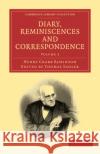
Henry Crabb Robinson (1775 1867) was a lawyer, journalist and indefatigable diarist, who was acquainted with almost all the important figures in English and European cultural circles. His surviving writings amount to almost one hundred volumes, from which this selection was compiled in 1869. He studied at Jena where he became acquainted with Goethe and Schiller, and became foreign editor for The Times, despatching eyewitness reports on the Battle of Corunna. He travelled to Switzerland and Italy with Wordsworth, and his reminiscences of William Blake are an important source of information on...
Henry Crabb Robinson (1775 1867) was a lawyer, journalist and indefatigable diarist, who was acquainted with almost all the important figures in Engli...
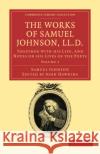
Dr Samuel Johnson (1709 84) is regarded as one of the outstanding figures of English literature, as a poet, essayist, moralist, critic, biographer, editor and lexicographer. This collected edition of his works commissioned by the publisher within hours of Johnson's death, such was his celebrity was published in 1787 in eleven volumes, edited by his literary executor, the musicologist Sir John Hawkins. Volume 1 is entirely devoted to a biography of Johnson by Hawkins, his close friend. Although Boswell's 1791 Life is much better known, Hawkins had been acquainted with Johnson for far longer,...
Dr Samuel Johnson (1709 84) is regarded as one of the outstanding figures of English literature, as a poet, essayist, moralist, critic, biographer, ed...
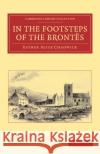
A few years after Esther Alice Chadwick (fl. 1882 1928) who wrote under the name Mrs Ellis H. Chadwick had read a copy of Elizabeth Gaskell's Life of Charlotte Bronte, she moved to a house near the Haworth vicarage where the Bronte family had lived. As a result, Chadwick was able to speak to many people who had known the family, and in 1914 she published this extensive biography of the family. Beginning with the Irish ancestry of the three famous sisters, Charlotte (1816 55), Emily (1818 48) and Anne (1820 49), she traces their short but eventful lives. Chadwick examines their early years and...
A few years after Esther Alice Chadwick (fl. 1882 1928) who wrote under the name Mrs Ellis H. Chadwick had read a copy of Elizabeth Gaskell's Life of ...
Successors such as Wordsworth and Coleridge admired yet overshadowed William Cowper (1731 1800). Troubled by mental instability, he retreated from both the legal profession and the woman he had hoped to marry, seeking out a quiet existence in the country. In spite of his struggles, he made a translation of Homer's Iliad, produced a considerable body of poetry, and maintained many epistolary contacts. This four-volume biography, compiled by his friend and fellow poet William Hayley (1745 1820), appeared between 1803 and 1806, bringing together selected letters and unpublished poems to...
Successors such as Wordsworth and Coleridge admired yet overshadowed William Cowper (1731 1800). Troubled by mental instability, he retreated from bot...
In this nine-volume work, published between 1812 and 1815, the author and publisher John Nichols (1745 1826) provides biographical notes on publishers, writers and artists of the eighteenth century, and also gives 'an incidental view of the progress and advancement of literature in this kingdom during the last century'. (A shorter version had been published in 1782.) His subjects range from the publisher William Bowyer to Henry Fielding and Horace Walpole, and also include histories of individual publishing houses and of genres such as lexicography. The work remains a useful source of...
In this nine-volume work, published between 1812 and 1815, the author and publisher John Nichols (1745 1826) provides biographical notes on publishers...
In this nine-volume work, published between 1812 and 1815, the author and publisher John Nichols (1745 1826) provides biographical notes on publishers, writers and artists of the eighteenth century, and also gives 'an incidental view of the progress and advancement of literature in this kingdom during the last century'. (A shorter version had been published in 1782.) His subjects range from the publisher William Bowyer to Henry Fielding and Horace Walpole, and also include histories of individual publishing houses and of genres such as lexicography. The work remains a useful source of...
In this nine-volume work, published between 1812 and 1815, the author and publisher John Nichols (1745 1826) provides biographical notes on publishers...
In this nine-volume work, published between 1812 and 1815, the author and publisher John Nichols (1745 1826) provides biographical notes on publishers, writers and artists of the eighteenth century, and also gives 'an incidental view of the progress and advancement of literature in this kingdom during the last century'. (A shorter version had been published in 1782.) His subjects range from the publisher William Bowyer to Henry Fielding and Horace Walpole, and also include histories of individual publishing houses and of genres such as lexicography. The work remains a useful source of...
In this nine-volume work, published between 1812 and 1815, the author and publisher John Nichols (1745 1826) provides biographical notes on publishers...
On the death of Edward Gibbon (1737 94), his unpublished papers were left to his friend John Baker Holroyd, first earl of Sheffield, who published them in two volumes in 1796. Gibbon had written six manuscript accounts of his own life, and, according to Sheffield, had always intended to publish his autobiography in his lifetime. The memoir as edited by Sheffield begins with Gibbon's family history, and taking in his education, travels, and career as a historian, finishes with his anxiety over the future of Europe in 1788. Sheffield then continues the story until Gibbon's death through his...
On the death of Edward Gibbon (1737 94), his unpublished papers were left to his friend John Baker Holroyd, first earl of Sheffield, who published the...