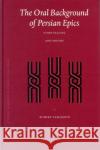
This volume discusses the indirect influence of oral transmission on the genesis and evolution of the Persian written epic tradition. On the basis of formal characteristics of naqqali (Persian storytelling) performance, a set of formal and thematic criteria is proposed to determine the extent to which written Persian epics show structures ultimately deriving from oral performance. It is applied to the Shah-name of Ferdowsi (c. 1000) and to the Garshasp-name of Asadi (c. 1064-66). The first part of the book examines the Oral-Formulaic Theory and proposes an alternative approach focusing on...
This volume discusses the indirect influence of oral transmission on the genesis and evolution of the Persian written epic tradition. On the basis of ...
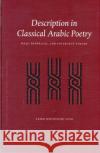
This volume deals with waṣf or description which is one of the salient characteristics of the qaṣīdah (classical Arabic poetry) tradition. The Introduction offers the theoretical background of waṣf and ekphrasis ("verbal representation of non-verbal texts" in its modern sense) that can be considered a Western counterpart of waṣf. The main part of the book examines descriptive passages in a selected group of Arabic qaṣīdah from different ages (Jāhilī, Abbasid, Andalusian) with the motifs of horses, bees and...
This volume deals with waṣf or description which is one of the salient characteristics of the qaṣīdah (classical Arabic...
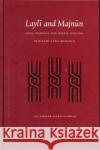
This book is the first comprehensive analysis of Nezāmī's romance Laylī and Majnūn (1188). It examines key themes such as chastity, constancy and suffering through an analysis of the main characters. Majnūn's asceticism, kingship, love-madness, poetic genius, ill-fate, and love-death are treated in separate chapters. The patriarchal society in which Laylī lives, her anxieties and dilemmas, incarceration, secret love, imposed marriage and finally her death are discussed in detail. One chapter is devoted entirely to the different ways parents raise their children...
This book is the first comprehensive analysis of Nezāmī's romance Laylī and Majnūn (1188). It examines key themes such as chastity...
The poetry of the extremely prolific and versatile 'Abbāsid poet Ibn al-Rūmī is examined in this book. Part 1, The Poet, reconstructs the poet's life and times providing the background for Part II, The Poetry, which traces the influences in Ibn al-Rūmī's distinctive poetic style and themes. This provides a glimpse into a rather fluid period in Arabic literary history when the boundary between poetry and prose was becoming increasingly permeable, due to the emergence of the so-called "secretary-poets," and to the prevalence and importance of the...
The poetry of the extremely prolific and versatile 'Abbāsid poet Ibn al-Rūmī is examined in this book. Part 1, The Poet, reconstructs t...
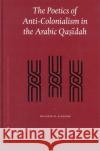
Representing the most sustained investigation of the aesthetics of Anti-Colonialism in modern Arabic poetry, this book chronicles the evolution of a distinct poetics that sought to maintain the integrity of the qaṣīdah without circumventing its historical moment. It painstakingly analyses a selection of odes by four leading twentieth-century poets, Aḥmad Shawqī, Maʿrūf al-Ruṣāfī, Badr Shākir al-Sayyāb and ʿAbd al-Wahhāb al-Bayātī. It will be of particular interest to scholars and students of Arabic...
Representing the most sustained investigation of the aesthetics of Anti-Colonialism in modern Arabic poetry, this book chronicles the evolution of a d...
Starting from the authors' discovery that the Persian epic poem Vāmiq and ʿAdhrā by ʿUnṣurī (11th century AD) derives from the ancient Greek novel of Mētiokhos and Parthenopē, the book contains critical editions of the Greek and Persian fragments and testimonia, with English translation and comments. The exciting story of the modern recovery of the two texts is told, and the transformations of the productive theme of The ardent lover and the virgin are traced from Greek novel to Persian poem, and through later Persian and Turkish...
Starting from the authors' discovery that the Persian epic poem Vāmiq and ʿAdhrā by ʿUnṣurī (11th century AD) derives f...
Through several groundbreaking critical articles on the question of poetic modernity in Persian new verse, this book focuses on the life and works of Nima Yushij (1887-1960), a major modernist Iranian poet. The articles situate Nima's life firmly within the context of early 20th century Iranian history. They are framed by a brief introduction in which the various contributions are related to each other and to various trends in poetic modernism in the Persian language, and a bibliography that lists all of Nima's works and the major studies of his life and work, both in Persian and in various...
Through several groundbreaking critical articles on the question of poetic modernity in Persian new verse, this book focuses on the life and works of ...
Offering an analysis of oral poetry dueling performed at traditional Palestinian weddings this book addresses poetry dueling as a performative and compositional device, and explores the complex linkages between this tradition and other genres of Arabic poetry.
Offering an analysis of oral poetry dueling performed at traditional Palestinian weddings this book addresses poetry dueling as a performative and com...
Like Joseph in Beauty traces the evolution of an Arabic poetic form called 'Humayni poetry'. From Muslim mystical circles, the courts of aristocrats in Highland Yemen, and kabbalist circles of Yemenite Jews, Humayni poetry distinguishes itself with lyricism, musicality, and eroticism. It also plays a variety of code-switching linguistic games. The book addresses the connections between the Humayni poetry of Yemen and the sacred poetry of Jews from Yemen, a hitherto-neglected chapter in the history of Arabic and Jewish literatures. The book culminates with a discussion of ways in which...
Like Joseph in Beauty traces the evolution of an Arabic poetic form called 'Humayni poetry'. From Muslim mystical circles, the courts of aristo...
In Metapoesis in the Arabic Tradition Huda J. Fakhreddine expands the study of metapoesis to include the Abbasid age in Arabic literature. Through this lens that is often used to study modernist poetry of the 20th and the 21st century, this book detects and examines a meta-poetic tendency and a self-reflexive attitude in the poetry of the first century of Abbasid poets. What and why is poetry? are questions the Abbasid poets asked themselves with the same persistence and urgency their modern successor did. This approach to the poetry of the Abbasid age serves to refresh our sense of...
In Metapoesis in the Arabic Tradition Huda J. Fakhreddine expands the study of metapoesis to include the Abbasid age in Arabic literature. Thro...