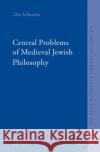
This book deals with central issues of medieval Jewish philosophy. Among the subjects treated are divine immanence, the intellect, miracles, and esoteric writing and its limits. The work provides a new perspective of the history of Jewish Philosophy in the Middle Ages. Relying on many as yet unpublished manuscripts, which enable it to offer new insights relating to such thinkers as Judah Halevi, Maimonides, and Gersonides, it also presents a new and original perception of the dynamics of Jewish thought in general.
This book deals with central issues of medieval Jewish philosophy. Among the subjects treated are divine immanence, the intellect, miracles, and esote...
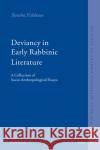
Deviancy in Early Rabbinic Literature deals with the status of those groups and individuals who, for various reasons, appear to have no place in mainstream Rabbinic Jewish society, or may be perceived by that society as posing a threat to its norms and to its very existence. The book examines the thoughts and attitudes of the Rabbis set forth in various sections of the Mishnah, Tosefta and Talmud. Deviant groups studied include witches, prostitutes, Gentiles, bastards, Nazirites, soldiers, Kutites, the disabled and the menstruous woman. Social anthropological methodologies are used to...
Deviancy in Early Rabbinic Literature deals with the status of those groups and individuals who, for various reasons, appear to have no place i...
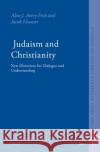
This volume treats the interrelationship between Judaism and Christianity from the first centuries and into modern times, paying particular attention to these faiths' social, cultural, and theological interactions. The issues covered range from the formation of Jewish and Christian ideology in the context of Roman paganism to the ways in which Christian culture and theology of the medieval and modern periods form a backdrop to the creation of Jewish identity. While the historical periods and issues discussed are diverse, the result is to suggest the importance of our recognizing the close...
This volume treats the interrelationship between Judaism and Christianity from the first centuries and into modern times, paying particular attention ...
In Jews and Christians in Denmark: From the Middle Ages to Recent Times, ca. 1100-1948, Martin Schwarz Lausten investigates how the Church and society followed the European antijudaistic tradition using insults, adversities and attempted conversions during Catholic times from around 1100 and Protestant times starting around 1536. In spite of the tolerant policies of integration initiated by the government beginning in the 1800's, anti-Semitic movements arose among priests, professors and local authorities. However, during the German occupation (1940-1945) priests and many others...
In Jews and Christians in Denmark: From the Middle Ages to Recent Times, ca. 1100-1948, Martin Schwarz Lausten investigates how the Church and ...
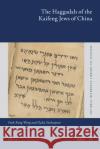
This comprehensive, textual treatment of the Kaifeng Passover Rite is a significant contribution to the ongoing discussion of the community's origins in particular and to comparative Jewish liturgy in general. The book includes a facsimile of one manuscript and a sample of the other, the full text of the Hebrew/Aramaic and Judeo-Persian Haggadah in Hebrew characters, as well as an English translation. Following a review of the community's history, sources for study, and related scholarly work conducted to date, the languages used in the Haggadah and their backgrounds are discussed in detail....
This comprehensive, textual treatment of the Kaifeng Passover Rite is a significant contribution to the ongoing discussion of the community's origins ...
This work revisits the millennia-old Jewish-Christian encounter by providing a nuanced understanding of its challenges as well as presenting new perspectives on hitherto neglected areas of cultural, religious, and social interchange and influence.
This work revisits the millennia-old Jewish-Christian encounter by providing a nuanced understanding of its challenges as well as presenting new persp...
Art, History, and the Historiography of Judaism in Roman Antiquity explores the complex interplay between visual culture, texts, and their interpretations, arguing for an open-ended and self-aware approach to understanding Jewish culture from the first century CE through the rise of Islam. The essays assembled here range from the "thick description" of Josephus's portrayal of Bezalel son of Uri as a Roman architect through the inscriptions of the Dura Europos synagogue, Jewish reflections on Caligula in color, the polychromy of the Jerusalem temple, new-old approaches to the zodiac,...
Art, History, and the Historiography of Judaism in Roman Antiquity explores the complex interplay between visual culture, texts, and their inte...
In Traditional Society in Transition: The Yemeni Jewish Experience Bat-Zion Eraqi Klorman offers an account of the unique circumstances of Yemeni Jewish existence in the wake of major changes since the second half of the nineteenth century. It follows this community's transition from a traditional patriarchal society to a group adjusting to the challenges of a modern society. Unlike the perception of the Yemeni Jews as receptive to modernity only following immigration to Palestine and Israel, Eraqi Klorman convincingly shows that some modern ideas played a role in their lives while in...
In Traditional Society in Transition: The Yemeni Jewish Experience Bat-Zion Eraqi Klorman offers an account of the unique circumstances of Yeme...
In a career spanning over fifty years, the questions Jacob Neusner has asked and the critical methodologies he has developed have shaped the way scholars have come to approach the rabbinic literature as well as the diverse manifestations of Judaism from rabbinic times until the present. The essays collected here honor that legacy, illustrating an influence that is so pervasive that scholars today who engage in the critical study of Judaism and the history of religions more generally work in a laboratory that Professor Neusner created. Addressing topics in ancient and Rabbinic Judaism, the...
In a career spanning over fifty years, the questions Jacob Neusner has asked and the critical methodologies he has developed have shaped the way schol...
In The Religious and Spiritual Life of the Jews of Medina Haggai Mazuz offers an account of the halakhic character of the Jewish community of Medina in the seventh century CE. Making use of a unique methodology of comparison between Islamic and Jewish sources, Mazuz convincingly argues that the Jews of Medina were Talmudic-Rabbinic Jews in almost every respect. Their sages believed in using homiletic interpretation of the Scriptures, as did the sages of the Talmud. On many halakhic issues, their observations were identical to those of the Talmudic sages. In addition, they held...
In The Religious and Spiritual Life of the Jews of Medina Haggai Mazuz offers an account of the halakhic character of the Jewish community of ...