In this multi-award-winning autobiographical novel, Cristovao Tezza draws readers into the mind of a young father whose son, Felipe, is born with Down syndrome. From the initial shock of diagnosis, and through his growing understanding of the world of hospitals and therapies, Tezza threads the story of his son's life with his own. Felipe, who lives in an eternal present, becomes a remarkable young man; for Tezza, however, the story is a settling of accounts with himself and his own limitations and ultimately a coming to terms with the sublime ironies and arbitrariness of life. He...
In this multi-award-winning autobiographical novel, Cristovao Tezza draws readers into the mind of a young father whose son, Felipe, is born with Down...
Set in Tokyo, in a not-too-distant future, this novel tells the story of Shunsuke, a salaryman, and his complicated relationship with his mad poet father, Mr. Okuda, whose hobby is spying on his son. When Shunsuke falls in love with Iulana, a maelstrom of jealousy is set in motion that culminates in abduction and death. In poetic and imaginative language, Cuenca subtly interweaves reality and fiction, creating a dreamlike world whose palpable characters, including a silicone doll, leave a lasting impression. Written like a crime novel, full of odd events and reminiscent of Haruki Murakami's...
Set in Tokyo, in a not-too-distant future, this novel tells the story of Shunsuke, a salaryman, and his complicated relationship with his mad poet fat...
Rubem Fonseca's Crimes of August offers the first serious literary treatment of the cataclysmic events of August 1954, arguably the most turbulent month in Brazilian history. A rich novel, both culturally and historically, Crimes of August tells two stories simultaneously. The first is private, involving the well-delineated character of Alberto Mattos, a police officer. The other is public, focusing on events that begin with the attempted assassination of Carlos Lacerda, a demagogic journalist and political enemy of President Getulio Vargas, and culminate in Vargas's suicide on August...
Rubem Fonseca's Crimes of August offers the first serious literary treatment of the cataclysmic events of August 1954, arguably the most turbulent mon...
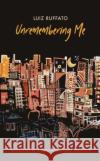
Inspired by his own family's struggles, as well as the broader sociopolitical and economic forces that shaped Brazil in the 1970s, Luiz Ruffato's epistolary novel, Unremembering Me, traces the story of the narrator's older brother, Celio, a young factory hand from Cataguases, Minas Gerais.
Inspired by his own family's struggles, as well as the broader sociopolitical and economic forces that shaped Brazil in the 1970s, Luiz Ruffato's epis...