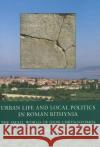
Most studies of Roman local administration focus on the formal structures of power: imperial laws, urban institutions and magistracies. This book explores the interplay of formal power with informal factors such as social prejudice, parochialism and personal rivalries in the cities of northwestern Asia Minor from the first to the fifth centuries AD. Through a detailed analysis of the municipal speeches and career of the philosopher-politician Dion Chrysostomos, we gain new in-depth insight into the petty conflicts and lofty ambitions of an ancient provincial small-town politician and those...
Most studies of Roman local administration focus on the formal structures of power: imperial laws, urban institutions and magistracies. This book expl...
This German doctoral thesis challenges the orthodox view that the South-Caucasian culture of the Late Bronze Age played a decisive role in early iron production. The region is characterized, on the contrary, as a traditionally-bound aristocratic society with an impressive bronze industry. It was instead the underestimated nomad population of South-Eastern Turkey that first made use of the new metal and discovered the art of steel making. Climatic changes forced a southward migration, which not only brought the two cultures into contact, but also into conflict, with each other. However, a...
This German doctoral thesis challenges the orthodox view that the South-Caucasian culture of the Late Bronze Age played a decisive role in early iron ...
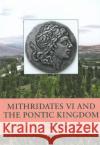
Mithridates VI Eupator, the last king of Pontos, was undoubtedly one of the most prominent figures in the late Hellenistic period. Throughout his long reign (120-63 BC), the political and cultural landscape of Asia Minor and the Black Sea area was reshaped along new lines. The authors present new archaeological research and new interpretations of various aspects of Pontic society and its contacts with the Greek world and its eastern neighbours and investigate the background for the expansion of the Pontic Kingdom that eventually led to the confrontation with Rome.
Mithridates VI Eupator, the last king of Pontos, was undoubtedly one of the most prominent figures in the late Hellenistic period. Throughout his long...
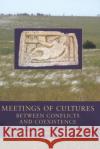
As a theme, Meetings of Cultures in the Black Sea Region: Between Conflict and Coexistence arouses strong feelings. From the remotest Antiquity, the indigenous and nomadic non-Greek populations of the Pontic region were persistently viewed as one of the major Others, first of all by Mediterranean Greeks. And because the region geographically was located as a bridge between Europe and Asia it was, and still is, also part of a Europe/Asia discourse of dichotomy. As far back in time as Antiquity Western self-understanding and identity formation has been shaped not least through its colonial...
As a theme, Meetings of Cultures in the Black Sea Region: Between Conflict and Coexistence arouses strong feelings. From the remotest Antiquity, the i...
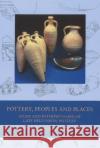
The late Hellenistic period, spanning the 2nd and early 1st centuries BC, was a time of great tumult and violence thanks to nearly incessant warfare. At the same time, the period saw the greatest expansion of Hellenistic Greek culture, including ceramics. Papers in this volume explore problems of ceramic chronology (often based on evidence dependent on the violent nature of the period), survey trends in both production and consumption of Hellenistic ceramics particularly in Asia Minor and the Pontic region, and assess the impact of Hellenistic ceramic culture across much of the eastern...
The late Hellenistic period, spanning the 2nd and early 1st centuries BC, was a time of great tumult and violence thanks to nearly incessant warfare. ...