Poetry. Translated from the Japanese by William I. Elliott and Kawamura Kazuo. Revised edition of a classic that has sold over 100,000 copies in its Japanese edition. Tanikawa is the preeminent Japanese poet of his generation. These evocative hymns of childhood sung from the mouth of a child recreate first lies, first loves, first reactions to adults, playmates and secrets.
Poetry. Translated from the Japanese by William I. Elliott and Kawamura Kazuo. Revised edition of a classic that has sold over 100,000 copies in its J...
Poetry. Asian Studies. Translated from the Japanese by Christopher Drake, Robert Brady, Odagawa Kazuko, Eric Selland, William I. Elliott and Kawamura Kazuo. This anthology contains the books of five poets--Fujii Sadakazu, Hirata Toshiko, Matsuura Hisaki, Yoshida Fuminori, Inagawa Masato--who emerged in the 1970's and 1980's as the voice of a new tradition--asserting an individual voice against the tide of "masu komi" media expression that has created a psychological and spiritual void in today's Japan.
Poetry. Asian Studies. Translated from the Japanese by Christopher Drake, Robert Brady, Odagawa Kazuko, Eric Selland, William I. Elliott and Kawamura ...
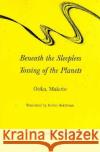
Poetry. Asian Studies. Translated from the Japanese by Janine Beichman. "One of Ooka's virtues was that he was not an intellectual, someone who has forgotten that human beings are more important than ideas, that human beings take priorityover everything. This poet knows, in the deepest sense, that human relationships rest on the relation of human beings to nature and to the universe. It is not difficult to see traces of the surrealist influence that colores Ooka's youth. But in contrast to many other Japanese poets, Ooka was never a blind worshipper of anything imported. Ooka is convinced...
Poetry. Asian Studies. Translated from the Japanese by Janine Beichman. "One of Ooka's virtues was that he was not an intellectual, someone who has fo...
Poetry. Asian Studies. Translated from the Japanese by Janine Beichman. "One of Ooka's virtues was that he was not an intellectual, someone who has forgotten that human beings are more important than ideas, that human beings take priorityover everything. This poet knows, in the deepest sense, that human relationships rest on the relation of human beings to nature and to the universe. It is not difficult to see traces of the surrealist influence that colores Ooka's youth. But in contrast to many other Japanese poets, Ooka was never a blind worshipper of anything imported. Ooka is convinced...
Poetry. Asian Studies. Translated from the Japanese by Janine Beichman. "One of Ooka's virtues was that he was not an intellectual, someone who has fo...