In Haunted Bodies, Anne Goodwyn Jones and Susan V. Donaldson have brought together some of our most highly regarded southern historians and literary critics to consider race, gender, and texts through three centuries and from a wealth of vantage points. Works as diversive as eighteenth-century court petitions and lyrics of 1970s rock music demonstrate how definitions of southern masculinity and femininity have been subject to bewildering shifts and disabling contradictions for centuries.
In Haunted Bodies, Anne Goodwyn Jones and Susan V. Donaldson have brought together some of our most highly regarded southern historians and literar...
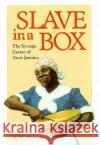
The figure of the mammy occupies a central place in the lore of the Old South and has long been used to ullustrate distinct social phenomena, including racial oppression and class identity. In the early twentieth century, the mammy became immortalized as Aunt Jemima, the spokesperson for a line of ready-mixed breakfast products. Although Aunt Jemima has undergone many makeovers over the years, she apparently has not lost her commercial appeal; her face graces more than forty food products nationwide and she still resonates in some form for millions of Americans.
In Slave in a Box,...
The figure of the mammy occupies a central place in the lore of the Old South and has long been used to ullustrate distinct social phenomena, inclu...
Although it came to epitomize the Cotton South in the twentieth century, the Yazoo-Mississippi Delta emerged as a distinct entity in the decades following the Civil War. As other southerners confronted the need to rebuild, the Delta remained mostly wilderness in 1865. Elsewhere, planters struggled to maintain the perquisites of slaveholding and poor families tried desperately to escape the sharecropper's lot, yet Delta landlords offered generous terms to freed people willing to clear and cultivate backcountry acres subject to yellow fever and yearly flooding. By the turn of the century,...
Although it came to epitomize the Cotton South in the twentieth century, the Yazoo-Mississippi Delta emerged as a distinct entity in the decades fo...
In 1868 a scion of one of the leading families of Richmond, Virginia, ambushed and killed the city's most controversial journalist over an article that had dishonored the killer's family. In 1892 a Democratic politician killed a crusading Danville minister after a dispute at the polls. In 1907 a former judge shot to death the son of the Nelson County sheriff for an alleged rape, and in 1935 an Appalachian schoolteacher stood accused of killing her father by beating him with a shoe. All of these killers stood trial; two were convicted and two were acquitted. These cases attracted extensive...
In 1868 a scion of one of the leading families of Richmond, Virginia, ambushed and killed the city's most controversial journalist over an article ...
One of the first Army bases to implement on a large scale President Truman's call for racial integration of the armed forces, Fort Jackson, South Carolina, quickly took its place in the Defense Department's official history of the process. What reporters, and later on, historians, overlooked was the interaction between the integration of Fort Jackson and developments, in particular, the civil rights movement, in the wider communities in which the base is situated.In Black, White, and Olive Drab, Andrew H. Myers redresses this oversight; taking a case-study approach, Myers meticulously...
One of the first Army bases to implement on a large scale President Truman's call for racial integration of the armed forces, Fort Jackson, South C...
A great deal has been written about southern memory centering on the Civil War, particularly the view of the war as a valiant lost cause. In this challenging new book Bruce Baker looks at a related, and equally important, aspect of southern memory that has been treated by historians only in passing: Reconstruction. What Reconstruction Meant examines what both white and black South Carolinians thought about the history of Reconstruction and how it shaped the way they lived their lives in the first half of the twentieth century.
Baker addresses the dominant white construct of -the dark...
A great deal has been written about southern memory centering on the Civil War, particularly the view of the war as a valiant lost cause. In this c...
In From Yeoman to Redneck in the South Carolina Upcountry, Stephen A. West revises understandings of the American South by offering a new perspective on two iconic figures in the region's social landscape. -Yeoman, - a term of praise for the small landowning farmer, was commonly used during the antebellum era but ultimately eclipsed by -redneck, - an epithet that emerged at the end of the nineteenth century. In popular use, each served less as a precise class label than as a means to celebrate or denigrate the moral and civic worth of broad groups of white men. Viewing these richly...
In From Yeoman to Redneck in the South Carolina Upcountry, Stephen A. West revises understandings of the American South by offering a new p...