That New England might invade Virginia is inconceivable today. But interstate rivalries and the possibility of intersectional war loomed large in the thinking of the Framers who convened in Philadelphia in 1787 to put on paper the ideas that would bind the federal union together. At the end of the Constitutional Convention, Benjamin Franklin rejoiced that the document would "astonish our enemies, who are waiting to hear with confidence . . . that our States are on the point of separation, only to meet hereafter for the purpose of cutting one another's throats." Usually dismissed as...
That New England might invade Virginia is inconceivable today. But interstate rivalries and the possibility of intersectional war loomed large in the ...
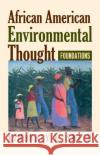
African American intellectual thought has long provided a touchstone for national politics and civil rights, but, as Kimberly Smith reveals, it also has much to say about our relationship to nature. In this first single-authored book to link African American and environmental studies, Smith uncovers a rich tradition stretching from the abolition movement through the Harlem Renaissance, demonstrating that black Americans have been far from indifferent to environmental concerns. Beginning with environmental critiques of slave agriculture in the early nineteenth century and evolving through...
African American intellectual thought has long provided a touchstone for national politics and civil rights, but, as Kimberly Smith reveals, it also h...
Over the course of the last century, scholars have furiously debated four questions concerning the Founders and their act of creation. Were the Framers motivated by their economic interests? How democratic was the Framers' Constitution? Should we interpret the Founding using philosophical or strictly historical approaches? What traditions of political thought were most important to the Framers? In Understanding the Founding: The Crucial Questions, Alan Gibson examines the preconceptions that scholars bring to these questions, explores the deepest sources of scholars' disagreements over them,...
Over the course of the last century, scholars have furiously debated four questions concerning the Founders and their act of creation. Were the Framer...
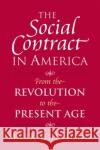
Because most Americans believe that government requires the consent of the governed, the idea of the social contract may come as close to a public philosophy as we've ever had. And, as Mark Hulliung reminds us, we have frequently fought our greatest political battles by wielding one or another version of social contract theory. Hulliung's book is the first to examine the role of the social contract across the entire sweep of American history, well beyond the Revolution and Founding periods. While he pays close attention to the contested versions of the social contract from 1765 to 1861,...
Because most Americans believe that government requires the consent of the governed, the idea of the social contract may come as close to a public phi...
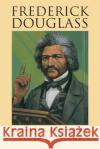
For Frederick Douglass, the iconic nineteenth-century slave and abolitionist, the foundations for his arguments in support of racial equality rested on natural rights and natural law-and the bold proclamation of the Declaration of Independence that all men are created equal. But because many Americans never observed this principle--and in Douglass's day even renounced it--he made it his life's work to move the nation toward this vision of a more noble liberalism. Peter Myers now considers that effort and the natural rights arguments by which Douglass confronted race in America. Myers...
For Frederick Douglass, the iconic nineteenth-century slave and abolitionist, the foundations for his arguments in support of racial equality rested o...
Moral paragon, public servant, founding father; scoundrel, opportunist, womanizing phony: There are many Benjamin Franklins. Now, as we celebrate the tercentenary of Franklin's birth, Jerry Weinberger reveals the Franklin behind the many masks and shows that the real Franklin was far more remarkable than anyone has yet discovered. Taking the Autobiography as the key to Franklin's thought, Weinberger argues that previous assessments have not yet probed to the bottom of Ben's famous irony and elusiveness. While others take the self-portrait as an elder statesman's relaxed and playful...
Moral paragon, public servant, founding father; scoundrel, opportunist, womanizing phony: There are many Benjamin Franklins. Now, as we celebrate the ...
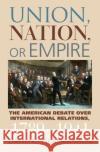
Most overviews of American history depict an isolationist country finally dragged kicking and screaming onto the world stage by the attack on Pearl Harbor. David Hendrickson shows that Americans instead conducted often-raucous debates over international relations in the long epoch customarily seen as isolationist-debates that form the ideological origins of today's foreign policy arguments. Union, Nation, or Empire is a sequel to Hendrickson's acclaimed Peace Pact, in which he identified a "unionist paradigm" that defined America's political understanding in 1787. His new...
Most overviews of American history depict an isolationist country finally dragged kicking and screaming onto the world stage by the attack on Pearl Ha...
John C. Calhoun may be best known for his stature in the U.S. Senate and his controversial defense of slavery, but he is also a key figure in American political thought. The staunchest advocate of the consensus model of government as an alternative to majority rule, he proposed government not by one, by few, or by many, but by all: each key group enjoying veto rights over collective decisions. Some consider consensus preferable to majority rule in deeply divided societies, and consensus theory has been advocated in such contemporary works as Lani Guinier's The Tyranny of the Majority....
John C. Calhoun may be best known for his stature in the U.S. Senate and his controversial defense of slavery, but he is also a key figure in American...
Since the early days of the republic, Americans have recognized Thomas Jefferson's distinctive role in helping to shape the American national character. As Founder and statesman, Jefferson thought broadly about the virtues Americans would need to cultivate in order to preserve and perfect their experiment in republican self-government. Now in an age preoccupied with rights and divided over questions of character in public and private life, Jefferson can help us to think more clearly about our most urgent concerns. American Virtues is the first comprehensive analysis of Jefferson's moral...
Since the early days of the republic, Americans have recognized Thomas Jefferson's distinctive role in helping to shape the American national characte...
Now widely regarded as the best available guide to the study of the Founding, the first edition of Interpreting the Founding provided summaries and analyses of the leading interpretive frameworks that have guided the study of the Founding since the publication of Charles Beard's An Economic Interpretation of the Constitution in 1913. For this new edition, Gibson has revised and updated his study, including his comprehensive bibliography, and also added a new concluding chapter on the "Unionist Paradigm" or "Federalist Interpretation" of the Constitution. As in the original work, Gibson...
Now widely regarded as the best available guide to the study of the Founding, the first edition of Interpreting the Founding provided summaries and an...