Human beings need creation stories. Each culture has one, and is defined in part by its unique explanation of how things came to be. Despite the many differences in the creation stories of various cultures, each seems to serve much the same purpose: to answer questions about humanity's role in the larger whole. The people of the United States are no exception. Since the late-19th century, however, the country as a whole has not been able to agree on a common creation story. Part of the discord stems, of course, from the growing cultural and religious diversity of the USA. But Karl W. Giberson...
Human beings need creation stories. Each culture has one, and is defined in part by its unique explanation of how things came to be. Despite the many ...
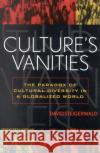
Americans want it both ways. They are committed to cultural diversity, yet demand an endless variety of cheap consumer goods from a global system that destroys distinct ways of life. In this groundbreaking work, David Steigerwald argues that Americans have papered over this paradox by embracing the rhetoric of diversity and multiculturalism, which hides the extent to which they have accepted homogenized ways of working and living.
Americans want it both ways. They are committed to cultural diversity, yet demand an endless variety of cheap consumer goods from a global system that...
Woodrow Wilson is best known for his service as the twenty-eighth president of the United States and his influence on American foreign policy in the twentieth century and beyond. Yet Wilson is equally important for his influence on how Americans think about their Constitution and principles of government. Woodrow Wilson and the Roots of Modern Liberalism highlights Wilson's sharp departure from the traditional principles of American government, most notably the Constitution. Ronald J. Pestritto persuasively argues that Wilson's unfailing criticism places him clearly in line with the...
Woodrow Wilson is best known for his service as the twenty-eighth president of the United States and his influence on American foreign policy in the t...
In Transnational America, Everett Akam brilliantly addresses one of the most fundamental issues of our time--how Americans might achieve a sense of racial and ethnic identity while simultaneously retaining the common ground of shared traditions and citizenship. Akam's study transcends the current debates over multiculturalism and cultural pluralism by retrieving the tradition of cultural pluralist thought neglected since the first half of the twentieth century. He argues that thinkers such as Randolph Bourne, John Collier, Horace Kallen, and Alain Locke sought to reconcile diversity and...
In Transnational America, Everett Akam brilliantly addresses one of the most fundamental issues of our time--how Americans might achieve a sense of ra...
Richard Nixon is hardly remembered for his civil rights policies but there is no denying that, more than any other president, he is responsible for affirmative action. Noting Nixon's hostility towards busing, his political allegiances with segregationists, and the hostility of leading civil rights figures at the time, historians and political scientists have avoided explaining why the origins of modern affirmative action lie in the Nixon era. In this enlightening and original new work, Kevin Yuill combines extensive archival research with a careful analysis of the intellectual climate of the...
Richard Nixon is hardly remembered for his civil rights policies but there is no denying that, more than any other president, he is responsible for af...
In A World Made Safe for Differences, Christopher Shannon examines how an anthropological definition of culture shaped the central political and social narratives of the Cold War era. In the middle decades of the twentieth century, American intellectuals understood culture as a "whole way of life" and a "pattern of values" in order to account for and accommodate differences between America and other countries, and within America itself. Shannon locates the ideological origins of current debates about multiculturalism in the pluralist thought of "consensus" liberalism. The emphasis on...
In A World Made Safe for Differences, Christopher Shannon examines how an anthropological definition of culture shaped the central political and socia...
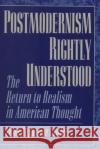
Postmodernism Rightly Understood is a dramatic return to realism--a poetic attempt to attain a true understanding of the capabilities and limitations of the postmodern predicament. Prominent political theorist Peter Augustine Lawler reflects on the flaws of postmodern thought, the futility of pragmatism, and the spiritual emptiness of existentialism. Lawler examines postmodernism by interpreting the writings of five respected and best selling American authors--Francis Fukuyama, Richard Rorty, Allan Bloom, Walker Percy, and Christopher Lasch. Lawler explains why the alternatives available in...
Postmodernism Rightly Understood is a dramatic return to realism--a poetic attempt to attain a true understanding of the capabilities and limitations ...