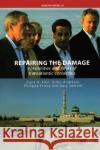
Since the mid-1990s US and European attitudes, strategies and policies towards the Middle East have diverged. The issue of how to deal with Iran has been most divisive of all, with the US threatening to impose economic sanctions on its European allies to coerce them into following Washington's harder line. This paper examines the reasons for these potentially damaging differences and assesses the prospects for improving transatlantic cooperation in the region.
Since the mid-1990s US and European attitudes, strategies and policies towards the Middle East have diverged. The issue of how to deal with Iran has b...
Arab leaderships have been remarkably stable since the 1970s, particularly given the frequency of military coups in preceding years. Nonetheless, the military remains a key force in most Arab states and political leaders must maintain its loyalty if they are to retain office. Regimes have used a range of methods to ensure the military s backing: In Egypt, President Hosni Mubarak has maintained political control largely through providing the military with private and corporate benefits; selective appointments and institutional checks, are also useful instruments.
Tribal relations...
Arab leaderships have been remarkably stable since the 1970s, particularly given the frequency of military coups in preceding years. Nonetheless, t...
North Korea s economic and security policies imperil both itself and its neighbours. The economy has been contracting for almost a decade, and the regime appears unwilling or unable to arrest the decline. Instead, Pyongyang has resorted to begging for international aid. This approach alone cannot work: fundamental reform is needed; without it, the regime cannot survive. In the meantime, the North s problems will be destabilising for the region. Pyongyang has secured short-term international humanitarian assistance, but in the long term the South is its best hope for investment and economic...
North Korea s economic and security policies imperil both itself and its neighbours. The economy has been contracting for almost a decade, and the reg...
East Asia has been relatively free from large-scale conflict in the 1990s, but the absence of security organisations or even of a sense of community within the region has raised doubts about its future security. China and Japan are likely to bear much of the responsibility for maintaining stability, but both countries have been reluctant to adopt a leadership role. South-east Asian states have been willing to take the initiative outside of their sub-region, but they possess neither the resources nor the authority to lead the whole of East Asia. In the long term, the ability to organise the...
East Asia has been relatively free from large-scale conflict in the 1990s, but the absence of security organisations or even of a sense of communit...
Borders dominate the security agenda in South-east Europe. Political and ethnic discontents focus on disputed borders, while traffickers in migrants and drugs ignore them.The EU argues that the Balkan countries should develop models of border management using its policing standards, but the region is rife with corruption and its border guards are both under-resourced and ineffective. This Paper asks how and why border management in South-east Europe is developing as it is, and what this might mean for the future of Europe. Drawing on recent experience in Bosnia, Herzegovina, Slovenia,...
Borders dominate the security agenda in South-east Europe. Political and ethnic discontents focus on disputed borders, while traffickers in migrant...
The damage that has been done to the transatlantic alliance will not be repaired through grand architectural redesigns or radical new agendas. Instead, the transatlantic partners need to restore their consensus and cooperation on key security challenges with a limited agenda that reflects the essential conservatism of the transatlantic partnership during the Cold War and the 1990s. There will inevitably be big challenges, such as the rise of China, where transatlantic disparities in strategic means and commitments preclude any common alliance undertaking. Yet such limits are nothing new....
The damage that has been done to the transatlantic alliance will not be repaired through grand architectural redesigns or radical new agendas. Inst...
Do piracy and maritime terrorism, individually or together, present a threat to international security, and what relationship if any exists between them?
Piracy may be a marginal problem in itself, but the connections between organised piracy and wider criminal networks and corruption on land make it an element of a phenomenon that can have a weakening effect on states and a destabilising one on the regions in which it is found. Furthermore, it is also an aspect of a broader problem of disorder at sea that, exacerbated by the increasing pressure on littoral waters from growing numbers...
Do piracy and maritime terrorism, individually or together, present a threat to international security, and what relationship if any exists between...
In an age of unprecedented world-wide prosperity, forty per cent of Africa's 600 million people exist on less than USD1 per day, and a third of its 53 states are affected by conflict. The African Union (AU) is intended, in part, to mark a new beginning where Africans are more focused on the current issues they confront. In particular, the New Partnership for Africa's Development (NEPAD) has been hailed by African leaders as an important new initiative in development that asks the Africans themselves to assume responsibility for fostering democracy, good governance, and conflict resolution....
In an age of unprecedented world-wide prosperity, forty per cent of Africa's 600 million people exist on less than USD1 per day, and a third of its 53...
Why did India and Pakistan carry out nuclear tests in 1998 and what are the consequences of their actions? This paper examines the complex domestic and international factors that persuaded each country to drop its long-standing nuclear ambiguity. It also unravels the repercussions of the tests, both for regional stability and for global non-proliferation regimes, and argues that the West needs a new approach if it is to deal with the nuclear dangers on the subcontinent.
Why did India and Pakistan carry out nuclear tests in 1998 and what are the consequences of their actions? This paper examines the complex domestic an...