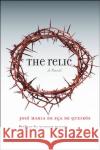
The Relic is an irreverent fictional autobiography narrating the picaresque adventures of Teodorico, a Portuguese playboy determined to be the sole heir of his absurdly pious, sexually repressed, and tyrannical Auntie. Sent to the Holy Land, he returns with what he presumes is the "relic of relics" in hopes of persuading Auntie to bequeath her vast fortune to him. While in Jerusalem, Teodorico has a vision in which he witnesses Christ's trial and crucifixion and the founding of Christianity--with a twist.
The Relic is an irreverent fictional autobiography narrating the picaresque adventures of Teodorico, a Portuguese playboy determined to be the sole he...
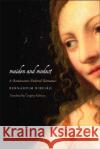
Modern readers will be surprised by Ribeiro's complex treatment of love and longing in Maiden and Modest (1554), because his narrative of suffering and unhappy love is told from the perspective of female protagonists. Indeed, a strikingly feminist note infuses the entire narrative, which also contains both autobiographical aspects and traces of the Cabala and Zohar. A self-conscious narrative that explores issues of gender, identity, and sexuality, Maiden and Modest makes a significant contribution to the development of the European novel. This is an essential book for readers of...
Modern readers will be surprised by Ribeiro's complex treatment of love and longing in Maiden and Modest (1554), because his narrative of suffering an...
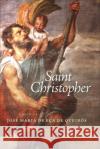
Set in the Middle Ages but written in the early twentieth century, Eca de Queiros's novella, Saint Christopher, is a powerful indictment of those who profess the value of morality but who do not practice it. The narrative is just as relevant today--when issues of religion, hypocrisy, and social justice are more urgent than ever--as it was when it first appeared in 1912. Written as though it were the product of a dialogue between Jesus and Proudhon (whose theories animate much of the narrative), Saint Christopher challenges today's ethically motivated reader to do what the narrative's...
Set in the Middle Ages but written in the early twentieth century, Eca de Queiros's novella, Saint Christopher, is a powerful indictment of those who ...
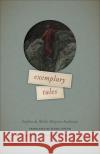
Published in 1962, this short story collection foreshadows two other iconic 1960s works--by the Mozambican Honwana and the Angolan Vieira--in the way it invites its readers to consider a range of ethical issues at a watershed moment during the Salazar dictatorship in Portugal. It alternates between allegorical pieces, endowed with a fable-like quality, such as a modern reworking of the Three Kings biblical story, and more immediate first-person tales focusing on the formative experiences of an autobiographical narrator. Sophia, widely acknowledged as one of Portugal's greatest poets, perhaps...
Published in 1962, this short story collection foreshadows two other iconic 1960s works--by the Mozambican Honwana and the Angolan Vieira--in the way ...
Ungulani Ba Ka Khosa first published Ualalapi: Fragments from the End of Empire in Portuguese in 1987. Named one of Africa's hundred best books of the twentieth century, it reflects on Mozambique's past and present through interconnected narratives related to the last ruler of the Gaza Empire, Ngungunhane. Defeated by the Portuguese in 1895, Ngungunhane was reclaimed for propaganda purposes by Mozambique's post-independence government as a national and nationalist hero. The regime celebrated his resistance to the colonial occupation of southern Mozambique as a precursor to the...
Ungulani Ba Ka Khosa first published Ualalapi: Fragments from the End of Empire in Portuguese in 1987. Named one of Africa's hundred best books of the...