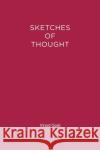
Much of the cognitive lies beyond articulate, discursive thought, beyond the reach of current computational notions. In Sketches of Thought, Vinod Goel argues that the cognitive computational conception of the world requires our thought processes to be precise, rigid, discrete, and unambiguous; yet there are dense, ambiguous, and amorphous symbol systems, like sketching, painting, and poetry, found in the arts and much of everyday discourse that have an important, nontrivial place in cognition.
Goel maintains that while on occasion our thoughts do conform to the current...
Much of the cognitive lies beyond articulate, discursive thought, beyond the reach of current computational notions. In Sketches of Thought,...
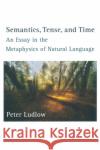
According to Peter Ludlow, there is a very close relation between the structure of natural language and that of reality, and one can gain insights into long-standing metaphysical questions by studying the semantics of natural language. In this book Ludlow uses the metaphysics of time as a case study and focuses on the dispute between A-theorists and B-theorists about the nature of time. According to B-theorists, there is no genuine change, but a permanent sequence of events ordered by an earlier-than/later-than relation. According to the version of the A-theory adopted by Ludlow (a...
According to Peter Ludlow, there is a very close relation between the structure of natural language and that of reality, and one can gain insights ...
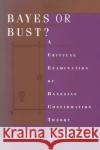
There is currently no viable alternative to the Bayesian analysis of scientific inference, yet the available versions of Bayesianism fail to do justice to several aspects of the testing and confirmation of scientific hypotheses. Bayes or Bust? provides the first balanced treatment of the complex set of issues involved in this nagging conundrum in the philosophy of science. Both Bayesians and anti-Bayesians will find a wealth of new insights on topics ranging from Bayes's original paper to contemporary formal learning theory.In a paper published posthumously in 1763, the Reverend...
There is currently no viable alternative to the Bayesian analysis of scientific inference, yet the available versions of Bayesianism fail to do jus...
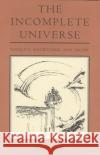
The central claim of this powerful philosophical exploration is that within any logic we have, there can be no coherent notion of all truth or of total knowledge. Grim examines a series of logical paradoxes and related formal results to reveal their implications for contemporary epistemology, metaphysics, and the philosophy of religion. He reaches the provocative conclusion that, if the universe is thought of in terms of its truths, it is essentially open and incomplete.The Incomplete Universe includes detailed work on the liar paradox and recent attempts at solution, Kaplan and Montague's...
The central claim of this powerful philosophical exploration is that within any logic we have, there can be no coherent notion of all truth or of t...
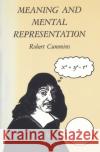
In this provocative study, Robert Cummins takes on philosophers, both old and new, who pursue the question of mental representation as an abstraction, apart from the constraints of any particular theory or framework. Cummins asserts that mental representation is, in fact, a problem in the philosophy of science, a theoretical assumption that serves different explanatory roles within the different contexts of commonsense or "folk" psychology, orthodox computation, connectionism, or neuroscience.
Cummins looks at existing and traditional accounts by Locke, Fodor, Dretske, Millikan, and...
In this provocative study, Robert Cummins takes on philosophers, both old and new, who pursue the question of mental representation as an abstracti...
Despite their apparently divergent accounts of higher cognition, cognitive theories based on neural computation & those employing symbolic computation can strengthen one another. This work set develops a cognitive architecture based in neural computation, but supports formally explicit higher-level symbolic descriptions.
Despite their apparently divergent accounts of higher cognition, cognitive theories based on neural computation & those employing symbolic computation...
The idea that the language we speak influences the way we think has evoked perennial fascination and intense controversy. According to the strong version of this hypothesis, called the Sapir-Whorf hypothesis after the American linguists who propounded it, languages vary in their semantic partitioning of the world, and the structure of one's language influences how one understands the world. Thus speakers of different languages perceive the world differently.
Although the last two decades have been marked by extreme skepticism concerning the possible effects of language on thought,...
The idea that the language we speak influences the way we think has evoked perennial fascination and intense controversy. According to the strong v...
Probability ideas are the success story common to the growth of the modern natural and social sciences. Chance, indeterminism, and statistical inference have radically and globally transformed the sciences in a "probabilistic revolution."This monumental work traces the rise, the transformation, and the diffusion of probabilistic and statistical thinking in the nineteenth and early twentieth centuries. It is less concerned with specific technical discoveries than with locating the probability revolution historically within a larger framework of ideas. There is no comparable study that...
Probability ideas are the success story common to the growth of the modern natural and social sciences. Chance, indeterminism, and statistical infe...
Change in View offers an entirely original approach to the philosophical study of reasoning by identifying principles of reasoning with principles for revising one's beliefs and intentions and not with principles of logic. This crucial observation leads to a number of important and interesting consequences that impinge on psychology and artificial intelligence as well as on various branches of philosophy, from epistemology to ethics and action theory.
Change in View offers an entirely original approach to the philosophical study of reasoning by identifying principles of reasoning with principles ...
In this rigorous investigation into the logic of truth Anil Gupta and Nuel Belnap explain how the concept of truth works in both ordinary and pathological contexts. The latter include, for instance, contexts that generate Liar Paradox. Their central claim is that truth is a circular concept. In support of this claim they provide a widely applicable theory (the "revision theory") of circular concepts. Under the revision theory, when truth is seen as circular both its ordinary features and its pathological features fall into a simple understandable pattern.
The Revision Theory of...
In this rigorous investigation into the logic of truth Anil Gupta and Nuel Belnap explain how the concept of truth works in both ordinary and patho...