• Wyszukiwanie zaawansowane
  • Kategorie
  • Kategorie BISAC
  • Książki na zamówienie
  • Promocje
  • Granty
  • Książka na prezent
  • Opinie
  • Pomoc
  • Załóż konto
  • Zaloguj się

Exogenous Enzymes as Feed Additives in Ruminants » książka


zaloguj się | załóż konto
Logo Krainaksiazek.pl

koszyk

konto

szukaj
topmenu
Księgarnia internetowa
Szukaj
Książki na zamówienie
Promocje
Granty
Książka na prezent
Moje konto
Pomoc
 
 
Wyszukiwanie zaawansowane
Pusty koszyk
Bezpłatna dostawa dla zamówień powyżej 40 złBezpłatna dostawa dla zamówień powyżej 40 zł

Kategorie główne

• Nauka
 [3058955]
• Literatura piękna
 [2054435]

  więcej...
• Turystyka
 [56934]
• Informatyka
 [176363]
• Komiksy
 [39320]
• Encyklopedie
 [25619]
• Dziecięca
 [762122]
• Hobby
 [102281]
• AudioBooki
 [1566]
• Literatura faktu
 [247866]
• Muzyka CD
 [363]
• Słowniki
 [4089]
• Inne
 [492396]
• Kalendarze
 [1883]
• Podręczniki
 [180927]
• Poradniki
 [583610]
• Religia
 [640062]
• Czasopisma
 [548]
• Sport
 [73638]
• Sztuka
 [262901]
• CD, DVD, Video
 [3430]
• Technologie
 [248657]
• Zdrowie
 [132288]
• Książkowe Klimaty
 [128]
• Zabawki
 [2667]
• Puzzle, gry
 [4281]
• Literatura w języku ukraińskim
 [267]
• Art. papiernicze i szkolne
 [8072]
Kategorie szczegółowe BISAC

Exogenous Enzymes as Feed Additives in Ruminants

ISBN-13: 9783031279928 / Angielski
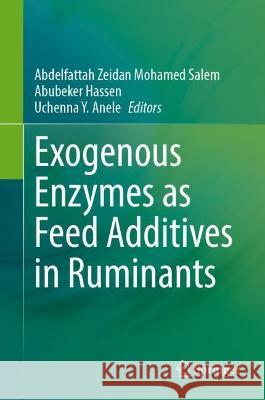
Abdelfattah Zeidan Mohamed Salem; Abubeker Hassen; Uchenna Y. Anele
Exogenous Enzymes as Feed Additives in Ruminants Abdelfattah Zeidan Mohamed Salem Abubeker Hassen Uchenna Y. Anele 9783031279928 Springer - książkaWidoczna okładka, to zdjęcie poglądowe, a rzeczywista szata graficzna może różnić się od prezentowanej.

Exogenous Enzymes as Feed Additives in Ruminants

ISBN-13: 9783031279928 / Angielski

Abdelfattah Zeidan Mohamed Salem; Abubeker Hassen; Uchenna Y. Anele
cena 668,26
(netto: 636,44 VAT:  5%)

Najniższa cena z 30 dni: 616,85
Termin realizacji zamówienia:
ok. 16-18 dni roboczych.

Darmowa dostawa!
inne wydania

This book addresses a global issue of increasing high quality food from ruminant animals while reducing their impacts on the environment. However, one of the main constraints to livestock development and the underlying cause of the low productivity in many developing countries is inadequate nutrition associated with inefficient utilization of forages and fibrous feed resources. In many countries, fibrous feed makes up the bulk of available feed resource base, which is characterized by scarcity and fluctuating supply in the quantity and quality of feed resources, nutrient imbalance as seen in many native pastures, grasslands and crop residues-based feeding systems with limited use of commercial concentrate feeds such as soybean, cottonseed and groundnut meals, etc. Furthermore, the production of methane, an important greenhouse gas (GHG), from ruminants fed highly fibrous diets such as straws and stover is higher than those animals fed better quality forages or concentrate diets. Recent research shows that supplementing livestock diets with exogenous fibre degrading enzymes can improve feed utilization by enhancing intake, fibre degradation in the rumen and overall digestibility of fibrous feeds which in turn leads to improved animal performance, farmers’ income, and a reduction in GHG emissions. The book editors would like to acknowledge the Joint FAO/IAEA Division of Nuclear Techniques in Food and Agriculture for funding part of the studies that make up some of these chapters and were part of the final reports of a coordinated research project financed by IAEA.


This book addresses a global issue of increasing high quality food from ruminant animals while reducing their impacts on the environment. However, one of the main constraints to livestock development and the underlying cause of the low productivity in many developing countries is inadequate nutrition associated with inefficient utilization of forages and fibrous feed resources. In many countries, fibrous feed makes up the bulk of available feed resource base, which is characterized by scarcity and fluctuating supply in the quantity and quality of feed resources, nutrient imbalance as seen in many native pastures, grasslands and crop residues-based feeding systems with limited use of commercial concentrate feeds such as soybean, cottonseed and groundnut meals, etc. Furthermore, the production of methane, an important greenhouse gas (GHG), from ruminants fed highly fibrous diets such as straws and stover is higher than those animals fed better quality forages or concentrate diets. Recent research shows that supplementing livestock diets with exogenous fibre degrading enzymes can improve feed utilization by enhancing intake, fibre degradation in the rumen and overall digestibility of fibrous feeds which in turn leads to improved animal performance, farmers’ income, and a reduction in GHG emissions. The book editors would like to acknowledge the Joint FAO/IAEA Division of Nuclear Techniques in Food and Agriculture for funding part of the studies that make up some of these chapters and were part of the final reports of a coordinated research project financed by IAEA.

Widoczna okładka, to zdjęcie poglądowe, a rzeczywista szata graficzna może różnić się od prezentowanej. Nie gwarantujemy zgodności okładki z prezentowanym zdjęciem.
Kategorie:
Nauka, Medycyna
Kategorie BISAC:
Medical > Weterynaria
Science > Zoologia i nauki o zwierzętach
Wydawca:
Springer
Język:
Angielski
ISBN-13:
9783031279928

Chapter. 1. Yeast as a source of exogenous enzymes in feeding ruminants

Chapter. 2. Yeast culture and direct-fed microbes: Modes of action and beneficial applications in ruminants
Chapter. 3. Effects of Exogenous Enzymes on the Nutritive value of some Fibrous Forage in Ruminants
Chapter. 4. Exogenous fibrolytic enzymes: for the better utilization of Guinea grass and rice straw as ruminant feeds
Chapter. 5. Role of Exogenous Enzymes in Feed Digestibility and Reducing the Emission Intensity of Enteric Methane Production in Ruminants
Chapter. 6. Inclusion of exogenous fibrolytic enzymes in the diets of dairy cows and ewes: Effect on milk yield and milk composition
Chapter. 7. Determining the Effect Enzyme Addition to Locally Available Forages in Mongolia Using In Vitro and In Vivo Techniques
Chapter. 8. Fungi as a source of exogenous enzymes to feed ruminants
Chapter. 9. Dietary inclusion of exogenous fibrolytic enzyme in southern China to enhance fibrous feed utilization by goats and cattle

Prof. Abdelfattah Z.M. Salem, Professor – Researcher (Full time) at the Faculty of Veterinary Medicine and Animal Science, Autonomous University of the State of Mexico, in Mexico. Prof. Salem got his PhD from the Faculty of Veterinary, Leon University, Spain. He is a specialist in Animal Nutrition and working on using natural and synthetic feed additives such as plant tress extracts, yeast, lactic acid bacteria, exogenous enzymes to improve the nutritive values of animal feeds. He has more than 350 published papers (Scopus profile) in peer reviewed indexed journals with impact factor. He is a member of the editorial board of indexed journals of ISI-JCR and reviewer in more than 30 internationals journals and has graduated more than 20 doctoral and 40 MSc students. He is the associate editor of animal nutrition in Tropical Animal Health and Production, Journal of Equine Veterinary Science, Journal of Integrative Agriculture, and Animal Nutrition and Feed Technology and others open access journals. Moreover, he has edited some special issues in indexed journals such as Animal Feed Science and Technology, Agroforestry Systems, Journal of Integrative Agriculture, and Animal Nutrition and Feed Technology. Recently he registered some patents in the files of animal nutrition and published some handbook chapters in Elsevier and Springer Nature. Prof. Salem has received some recognitions from Springer and Elsevier as a distinguish researcher, as well as the recognition by Sandford University in USA as one of - Top 2% scientist worldwide during the last years.

Prof. Abubeker Hassen – is an associate professor in Ruminant Nutrition and Pasture Science at the Department of Animal Science, University of Pretoria in South Africa. Prof Hassen got his BSc Agric and MSc Agric in Animal Science from Alemaya University in Ethiopia and Sokoine University of Agriculture in Tanzania. In 2006 he got his PhD in Pasture Science from University of Pretoria, and was a postdoctoral fellow at the Department of Animal Science, University of Pretoria. He researches climate-smart livestock production with a focus on manipulation of diets using exogenous fibrolytic enzymes and identifying climate-smart forage species to develop climate innovative feeding systems suitable for mixed crop-livestock system in Africa. He has successfully mentored more than 20 master and 12 doctoral students and published more than 82 papers in local and international peer-reviewed journals. Prof Hassen is currently an associate editor of the African Journal of Range and Forage Science, a member of the topic board editors for animals and a guest editor for frontiers in Animal Science. He was a co-recipient of Étoiles de l’Europe, the French Ministry of Higher Education research and innovation award and a trophy from the Department of Animal Production and Health of the University of Oye Ekiti in Nigeria.

Dr. Uchenna Y. Anele is an associate professor of forage evaluation and ruminant nutrition at the Department of Animal Sciences, North Carolina Agricultural and Technical State University, USA. He got his PhD from the University of Bonn, Germany. His research interests include cattle, sheep and goat nutrition, forage utilization, sustainable agriculture through integrated crop/livestock farming, alternatives to antimicrobials use in ruminants, improving feed efficiency, and reducing greenhouse gas (GHG) emissions in ruminants. He has successfully mentored 3 master students and currently mentoring 6 doctoral and 2 master students in his lab. He is an associate editor for Frontiers in Animal Science (Animal Nutrition) and has served as a Guest Editor for two Special Issues for Frontiers in Animal Science.

This book addresses a global issue of increasing high quality food from ruminant animals while reducing their impacts on the environment. However, one of the main constraints to livestock development and the underlying cause of the low productivity in many developing countries is inadequate nutrition associated with inefficient utilization of forages and fibrous feed resources. In many countries, fibrous feed makes up the bulk of available feed resource base, which is characterized by scarcity and fluctuating supply in the quantity and quality of feed resources, nutrient imbalance as seen in many native pastures, grasslands and crop residues-based feeding systems with limited use of commercial concentrate feeds such as soybean, cottonseed and groundnut meals, etc. Furthermore, the production of methane, an important greenhouse gas (GHG), from ruminants fed highly fibrous diets such as straws and stover is higher than those animals fed better quality forages or concentrate diets. Recent research shows that supplementing livestock diets with exogenous fibre degrading enzymes can improve feed utilization by enhancing intake, fibre degradation in the rumen and overall digestibility of fibrous feeds which in turn leads to improved animal performance, farmers’ income, and a reduction in GHG emissions. The book editors would like to acknowledge the Joint FAO/IAEA Division of Nuclear Techniques in Food and Agriculture for funding part of the studies that make up some of these chapters and were part of the final reports of a coordinated research project financed by IAEA.




Udostępnij

Facebook - konto krainaksiazek.pl


Opinie o Krainaksiazek.pl na Opineo.pl

Partner Mybenefit

Krainaksiazek.pl w programie rzetelna firma Krainaksiaze.pl - płatności przez paypal

Czytaj nas na:

Facebook - krainaksiazek.pl
  • książki na zamówienie
  • granty
  • książka na prezent
  • kontakt
  • pomoc
  • opinie
  • regulamin
  • polityka prywatności

Zobacz:

  • Księgarnia czeska

  • Wydawnictwo Książkowe Klimaty

1997-2026 DolnySlask.com Agencja Internetowa

© 1997-2022 krainaksiazek.pl
     
KONTAKT | REGULAMIN | POLITYKA PRYWATNOŚCI | USTAWIENIA PRYWATNOŚCI
Zobacz: Księgarnia Czeska | Wydawnictwo Książkowe Klimaty | Mapa strony | Lista autorów
KrainaKsiazek.PL - Księgarnia Internetowa

Polityka prywatnosci - link
Krainaksiazek.pl - płatnośc Przelewy24
Przechowalnia Przechowalnia



