• Wyszukiwanie zaawansowane
  • Kategorie
  • Kategorie BISAC
  • Książki na zamówienie
  • Promocje
  • Granty
  • Książka na prezent
  • Opinie
  • Pomoc
  • Załóż konto
  • Zaloguj się

Ocular Disease and Sight Loss: Meeting Psychosocial Needs » książka


zaloguj się | załóż konto
Logo Krainaksiazek.pl

koszyk

konto

szukaj
topmenu
Księgarnia internetowa
Szukaj
Książki na zamówienie
Promocje
Granty
Książka na prezent
Moje konto
Pomoc
 
 
Wyszukiwanie zaawansowane
Pusty koszyk
Bezpłatna dostawa dla zamówień powyżej 20 złBezpłatna dostawa dla zamówień powyżej 20 zł

Kategorie główne

• Nauka
 [2952079]
• Literatura piękna
 [1850969]

  więcej...
• Turystyka
 [71058]
• Informatyka
 [151066]
• Komiksy
 [35579]
• Encyklopedie
 [23181]
• Dziecięca
 [620496]
• Hobby
 [139036]
• AudioBooki
 [1646]
• Literatura faktu
 [228729]
• Muzyka CD
 [379]
• Słowniki
 [2932]
• Inne
 [445708]
• Kalendarze
 [1409]
• Podręczniki
 [164793]
• Poradniki
 [480107]
• Religia
 [510956]
• Czasopisma
 [511]
• Sport
 [61267]
• Sztuka
 [243299]
• CD, DVD, Video
 [3411]
• Technologie
 [219640]
• Zdrowie
 [100984]
• Książkowe Klimaty
 [124]
• Zabawki
 [2281]
• Puzzle, gry
 [3363]
• Literatura w języku ukraińskim
 [258]
• Art. papiernicze i szkolne
 [8020]
Kategorie szczegółowe BISAC

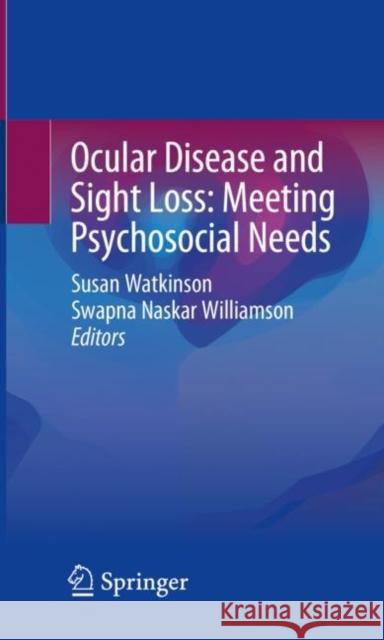
Ocular Disease and Sight Loss: Meeting Psychosocial Needs

ISBN-13: 9783031217272 / Angielski / Miękka / 2023 / 130 str.
Susan Watkinson; Swapna N. Williamson
Ocular Disease and Sight Loss: Meeting Psychosocial Needs Susan Watkinson Swapna N. Williamson 9783031217272 Springer - książkaWidoczna okładka, to zdjęcie poglądowe, a rzeczywista szata graficzna może różnić się od prezentowanej.

Ocular Disease and Sight Loss: Meeting Psychosocial Needs

ISBN-13: 9783031217272 / Angielski / Miękka / 2023 / 130 str.

Susan Watkinson; Swapna N. Williamson
cena 281,76
(netto: 268,34 VAT:  5%)

Najniższa cena z 30 dni: 269,85
Termin realizacji zamówienia:
ok. 22 dni roboczych.

Darmowa dostawa!

​Background:Psychosocial care remains an extremely important part of the holistic approach to care, but one which has been underestimated in clinical practice and only superficially addressed in the ophthalmic literature to date.This aspect of care most often gets less attention by healthcare professionals due to the dominance of a technology-enhanced approach to caring practice. Clearly, the skills afforded by science and technology are important for healthcare professionals in practice, but it is also important for them to be aware of the impact of the transfer of such skills on patients from a humanistic perspective. The delivery of technology-enhanced care can often trigger innermost feelings and needs such as fear, anxiety, stress, loss of control, and a sense of alienation. This book seeks to address the imbalance often observed between nursing both as an art and science, and to emphasise the importance of raising the healthcare knowledge and understanding of the value of social psychology and its application to ophthalmic practice in addressing this imbalance.Main aims:(1) To discuss the psychosocial needs and care of patients with ocular disease and sight loss.(2) To discuss the importance and relevance of the psychosocial aspects of ophthalmic care with reference to psychosocial theory and its application.(3) To discuss the psychosocial role of the healthcare professional in facilitating emotional recovery and promoting quality of life in the care and management of patients with ocular disease and sight loss.

​Background:

 
Psychosocial care remains an extremely important part of the holistic approach to care, but one which has been underestimated in clinical practice and only superficially addressed in the ophthalmic literature to date. 
This aspect of care most often gets less attention by healthcare professionals due to the dominance of a technology-enhanced approach to caring practice. Clearly, the skills afforded by science and technology are important for healthcare professionals in practice, but it is also important for them to be aware of the impact of the transfer of such skills on patients from a humanistic perspective. The delivery of technology-enhanced care can often trigger innermost feelings and needs such as fear, anxiety, stress, loss of control, and a sense of alienation. This book seeks to address the imbalance often observed between nursing both as an art and science, and to emphasise the importance of raising the healthcare knowledge and understanding of the value of social psychology and its application to ophthalmic practice in addressing this imbalance.
 
Main aims:
 
(1) To discuss the psychosocial needs and care of patients with ocular disease and sight loss.
(2) To discuss the importance and relevance of the psychosocial aspects of ophthalmic care with reference to psychosocial theory and its application.
(3) To discuss the psychosocial role of the healthcare professional in facilitating emotional recovery and promoting quality of life in the care and management of patients with ocular disease and sight loss.
 

Kategorie:
Nauka, Medycyna
Kategorie BISAC:
Medical > Pielęgniarstwo
Medical > Okulistyka
Psychology > Clinical Psychology
Wydawca:
Springer
Język:
Angielski
ISBN-13:
9783031217272
Rok wydania:
2023
Dostępne języki:
Ilość stron:
130
Oprawa:
Miękka

​Chapter 1: Introduction

Dr Susan Watkinson. Dr Swapna Williamson

This introductory chapter explores key issues related to the area of ocular disease and sight loss, and the value of meeting psychosocial needs within a holistic caring framework. Background information is pre-sented which highlights current global statistics related to blindness and visual impairment. The role and importance of the eyes as sensory organs is described and important physical and psychosocial implica-tions of losing sight are outlined. The main aims of the book are presented and an outline of the chapters is given to serve as an overview for the specific topics under discussion. The main focus of this book is how to care for people who have been diagnosed with ocular disease, the impact of diagnosis and medical treatment to enable people to maintain their lives and sense of well-being thus enhancing the quality of life.
In the ensuing chapters, the main topics being addressed include the concept of social psychology, its meaning, value and relevance for ophthalmic nurses, allied  healthcare professionals, and patient repre-sentative groups. Inclusion of service patients/service users is important because of the need to recognise their role in healthcare, and training and education Appropriate psychosocial theories and models are ex-plored to provide a basis for understanding the psychosocial aspects of ophthalmic care and sight loss. The role of the ophthalmic nurse and healthcare professionals is described as one which promotes emotional recovery of patients by enabling them to adapt and manage their eye conditions more effectively thereby establishing quality of life within a holistic caring framework. The psychosocial implications for patients with ocular disease and sight loss are considered in detail with reference to the concepts of stigma and labelling, and altered body image. In addition, the psychosocial care and interventions required within a holistic caring framework are discussed with reference to selected ocular conditions such as cataract, chronic open-angle glaucoma and age-related macular degeneration. Living with ocular disease and the more challenging aspects of psychosocial care are addressed in detail with reference to the possible onset of depression and managing the hallucinations of Charles Bonnet Syndrome as a result of sight loss. 


Chapter 2: The value of applying psychosocial theories and models to ocular disease. 
Dr Susan Fowler 

This chapter will capture the value of applying psychosocial theories and models to ophthalmic conditions and related investigations and inquiry. Basic understanding of theory and conceptual models will lay the foundation for understanding and appreciating psychosocial theories and models. Select theories and models will be described and applied to ophthalmic conditions and inquiry. Examples from published stud-ies and clinical papers will demonstrate application and provide future directions.

Chapter 3: The impact of ocular disease on body image
Mr Ramesh Seewoodhary

This chapter explores the psychosocial impact of disfiguring ocular disease on body image. The concept of body image and its multidimensional aspects including cognitive, attitudinal and emotional aspects is ex-plored. Also, the importance of its development during the socialisation process is discussed identifying the variables which are associated with successful adaptation. As an outcome of this development, the con-cept of a positive or negative self-image is also discussed as this can subsequently affect communication with other people throughout life.
The psychosocial impact of disfiguring ocular disease can result in anxiety, clinical depression, distress and social avoidance. This chapter focuses on body image with reference to Price’s Body Image Model (1990) and explores the psychosocial impact of ocular disfigurement, with reference to selected ocular condi-tions, on self-esteem and quality of life. The emphasis is on the psychosocial implications of ocular disfig-urement for patients with ocular disease and the need for appropriate psychosocial care and interventions to restore self-esteem and social confidence during their rehabilitation back to effective communication and quality of life.


Chapter 4:  Stigma related to sight loss and psychosocial care.
Dr Swapna Williamson

This chapter focuses on the stigma associated with ocular disease and sight loss, its psychosocial effects and healthcare approaches needed to address the issues and challenges. The attitudes and behaviours of the general population and healthcare professionals towards people who are blind or visually impaired are explored and the psychosocial barriers outlined. The psychosocial effects of stigma on people blind from birth, or who have developed sight loss in later life are described.The psychosocial role of the healthcare professional is discussed with reference to supporting blind or partially sighted people and their families experiencing stereotyping. It concludes that raising social and professional awareness of the psychosocial needs of people with blindness, or partial sight is vitally important in reducing labelling.

Chapter 5: Ocular disease from a psychosomatic and somatopsychic perspectives.
Dr Susan Watkinson
Dr Swapna Williamson

This chapter explores ocular diseases from  psychosomatic and somatopsychic perspectives. Somatopsy-chic disorders are caused by physical disease or illness; psychosomatic disorders are caused or exacerbated by continuous stress and elevated cortisol levels. Psychosomatic and somatopsychic aspects are in general causes of healthcare problems and illnesses. Hence, stress can be both a cause and consequence of vision loss due to ocular disease. Overall, this creates a vicious cycle of a downward spiral in which initial vision loss creates stress which further accelerates vision loss, creating even more stress. Stress as a known risk factor and possible major cause of visual system diseases such as glaucoma and optic neuropathy will be addressed in the discussion. This new psychosomatic perspective will also be discussed with reference to the important implications for clinical practice.  

Chapter 6: Living with ocular disease and quality of life 
Dr Susan Watkinson

In this chapter the focus is on living with ocular disease and how the emotional impact of sight loss and affects quality of life. Key emotional reactions such as stress, anxiety, low self-esteem, feelings of lone-liness, depression, suicidal thoughts and suicide are presented. These reactions are addressed with refe-rence to quality of life issues and the practical implications experienced by people with cataract disease, chronic open-angle glaucoma and age-related macular degeneration. In particular, challenging aspects of psychosocial care related to managing the hallucinations of Charles Bonnet Syndrome, and recognising the possible onset of depression and organising the required referrals for appropriate treatment and ongoing support by the mental health care team, are discussed in detail. 
Effective communication and good interpersonal skills are highlighted as an essential part of the healthcare professional’s role in identifying individual needs and providing appropriate psychosocial help and support following sight loss.


Chapter 7: Conclusion
Dr Susan Watkinson, Dr Swapna Williamson
 
This final chapter presents a summary of the text by returning to the main aims and revisiting the key issues addressed in each chapter. In drawing conclusions from the chapter discussions, it presents future perspectives on the significance of psychosocial care for patients with ocular disease and sight loss within a holistic paradigm of care. It also presents future perspectives on the role of the ophthalmic nurse and healthcare professionals in providing psychosocial care to facilitate emotional recovery and independence as a basis for self-empowerment and future self-management of their ocular condition.
It is important to encourage healthcare professionals to participate in research activities in their practice environment to share experiences and improve patient care. Although they may not be able to conduct primary research themselves, nevertheless they can become involved in researcher-led research activities. Action research would be a crucial means of allowing nurses to become involved in the experience of collecting data based on meeting the needs of patients with ocular disease and sight loss. The would result in making a positive contribution to developing ophthalmic evidence-based practice within the domain of psychosocial care.


Dr Susan Watkinson, BA, RN, OND (Hons) PGCEA, MSc (University of Surrey), PhD (University of Surrey), was formerly an Associate Lecturer at the College of Nursing, Midwifery and Healthcare, University of West London, Brentford, London. She qualified as an ophthalmic nurse at Moorfields Eye Hospital, London, where she later held Sister and Clinical Teaching posts. She held nurse tutor and Principal lecturer posts at the Wolfson Education Centre, London, and later gained an MSc in Educational Studies (1990), and a PhD in Education (2001) from the University of Surrey. 

She has considerable experience of teaching ophthalmic nursing, general nursing, research, and ethics and philosophy within pre-and post-registration nurse education, and research methodology and applied research philosophies for post-graduate Master’s Degree and PhD Doctorate programmes. For the past several years she has taught psychosocial theory and its application to ophthalmic practice for the BSc Professional Practice (Ophthalmic Nursing) course at the University of West London. Ophthalmic nursing remains her specialist clinical interest and she has published extensively within nursing journals, contributed book chapters and had two ophthalmic nursing books published. Her current research interest focuses on exploring the emotional impact of sight loss, and the associated psychosocial needs and care of patients with ocular disease.

Dr Swapna Williamson, RN, RM, BA (University of Calcutta), BSc Nursing (All India Institute of Medical Sciences, India), MSc Nursing (University of Delhi, India), LLB (University of Delhi), PhD (All India Institute of Medical Sciences, India), MMEd (University of Dundee) is a Senior Fellow of the Higher Education Academy (HEA). Her 35 years of teaching experience in higher education from Level 4 to doctoral students includes learning skills development, service improvement, research methodology and ethics. 

As an Associate Professor at the College of Nursing, Midwifery and Healthcare, University of West London, she was actively engaged in and led in developing curriculum and documentation, counselling, teaching and assessing students of Foundation Degree in Science in Health and Social Care, undergraduate and postgraduate, and PhD students. She is also associated with the All India Institute of Medical Sciences in the State of Jammu, North India. Recently, she has been offered a professorship post to become involved in a project focusing on research development within the Institute.

​Background:

 
Psychosocial care remains an extremely important part of the holistic approach to care, but one which has been underestimated in clinical practice and only superficially addressed in the ophthalmic literature to date. 
This aspect of care most often gets less attention by healthcare professionals due to the dominance of a technology-enhanced approach to caring practice. Clearly, the skills afforded by science and technology are important for healthcare professionals in practice, but it is also important for them to be aware of the impact of the transfer of such skills on patients from a humanistic perspective. The delivery of technology-enhanced care can often trigger innermost feelings and needs such as fear, anxiety, stress, loss of control, and a sense of alienation. This book seeks to address the imbalance often observed between nursing both as an art and science, and to emphasise the importance of raising the healthcare knowledge and understanding of the value of social psychology and its application to ophthalmic practice in addressing this imbalance.
 
Main aims:
 
(1) To discuss the psychosocial needs and care of patients with ocular disease and sight loss.
(2) To discuss the importance and relevance of the psychosocial aspects of ophthalmic care with reference to psychosocial theory and its application.
(3) To discuss the psychosocial role of the healthcare professional in facilitating emotional recovery and promoting quality of life in the care and management of patients with ocular disease and sight loss.
 
​


Udostępnij

Facebook - konto krainaksiazek.pl


Opinie o Krainaksiazek.pl na Opineo.pl

Partner Mybenefit

Krainaksiazek.pl w programie rzetelna firma Krainaksiaze.pl - płatności przez paypal

Czytaj nas na:

Facebook - krainaksiazek.pl
  • książki na zamówienie
  • granty
  • książka na prezent
  • kontakt
  • pomoc
  • opinie
  • regulamin
  • polityka prywatności

Zobacz:

  • Księgarnia czeska

  • Wydawnictwo Książkowe Klimaty

1997-2026 DolnySlask.com Agencja Internetowa

© 1997-2022 krainaksiazek.pl
     
KONTAKT | REGULAMIN | POLITYKA PRYWATNOŚCI | USTAWIENIA PRYWATNOŚCI
Zobacz: Księgarnia Czeska | Wydawnictwo Książkowe Klimaty | Mapa strony | Lista autorów
KrainaKsiazek.PL - Księgarnia Internetowa

Polityka prywatnosci - link
Krainaksiazek.pl - płatnośc Przelewy24
Przechowalnia Przechowalnia







