• Wyszukiwanie zaawansowane
  • Kategorie
  • Kategorie BISAC
  • Książki na zamówienie
  • Promocje
  • Granty
  • Książka na prezent
  • Opinie
  • Pomoc
  • Załóż konto
  • Zaloguj się

Systems Approach to Management of Disasters : Methods and Applications » książka


zaloguj się | załóż konto
Logo Krainaksiazek.pl

koszyk

konto

szukaj
topmenu
Księgarnia internetowa
Szukaj
Książki na zamówienie
Promocje
Granty
Książka na prezent
Moje konto
Pomoc
 
 
Wyszukiwanie zaawansowane
Pusty koszyk
Bezpłatna dostawa dla zamówień powyżej 20 złBezpłatna dostawa dla zamówień powyżej 20 zł

Kategorie główne

• Nauka
 [2952079]
• Literatura piękna
 [1850969]

  więcej...
• Turystyka
 [71058]
• Informatyka
 [151066]
• Komiksy
 [35579]
• Encyklopedie
 [23181]
• Dziecięca
 [620496]
• Hobby
 [139036]
• AudioBooki
 [1646]
• Literatura faktu
 [228729]
• Muzyka CD
 [379]
• Słowniki
 [2932]
• Inne
 [445708]
• Kalendarze
 [1409]
• Podręczniki
 [164793]
• Poradniki
 [480107]
• Religia
 [510956]
• Czasopisma
 [511]
• Sport
 [61267]
• Sztuka
 [243299]
• CD, DVD, Video
 [3411]
• Technologie
 [219640]
• Zdrowie
 [100984]
• Książkowe Klimaty
 [124]
• Zabawki
 [2281]
• Puzzle, gry
 [3363]
• Literatura w języku ukraińskim
 [258]
• Art. papiernicze i szkolne
 [8020]
Kategorie szczegółowe BISAC

Systems Approach to Management of Disasters : Methods and Applications

ISBN-13: 9780470528099 / Angielski / Twarda / 2010 / 344 str.
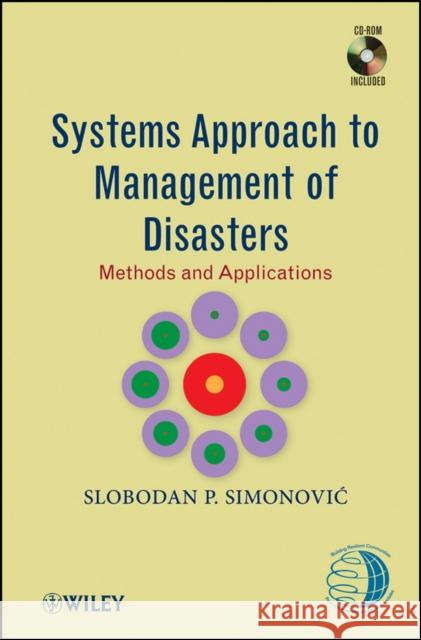
Slobodan P. Simonovi?
Systems Approach to Management of Disasters : Methods and Applications Slobodan P. Simonovi? 9780470528099 John Wiley & Sons - książkaWidoczna okładka, to zdjęcie poglądowe, a rzeczywista szata graficzna może różnić się od prezentowanej.

Systems Approach to Management of Disasters : Methods and Applications

ISBN-13: 9780470528099 / Angielski / Twarda / 2010 / 344 str.

Slobodan P. Simonovi?
cena 612,00
(netto: 582,86 VAT:  5%)

Najniższa cena z 30 dni: 604,51
Termin realizacji zamówienia:
ok. 30 dni roboczych
Dostawa w 2026 r.

Darmowa dostawa!

The main goal of this text is to introduce the systems approach to disasters management community as an alternative approach that can provide support for interdisciplinary activities involved in the management of disasters. The systems approach draws on the fields of operations research and economics to create skills in solving complex management problems. The text is organized into four parts. Part I provides an introductory discussion of disaster management including an overview of the main terms used. Part II is devoted to the introduction of systems theory, mathematical formalization and classification of methods. The material presented in this section should be of practical relevance during the process of selecting an appropriate tool for the solution of a problem. Part III is technical in nature, providing a simulation approach and a detailed description of system dynamics simulation. This section details two areas of application: flood evacuation simulation, and disaster risk assessment. Part IV ends with a chapter covering steps to improve disaster management. Finally parts of the book can be used as a tool for specialized short courses for practitioners. For example a course on 'System analysis for emergency management optimization' could be based on Chapters 3, 4 and parts of Chapter 6. Included in the book is a CD with three computer programs Vensim PLE, LINPRO, and COMPRO. Vensim PLE (Personal Learning Edition) is state-of-the-art simulation software used for the implementation of system dynamics simulation. The other two programs are: LINPRO, a linear programming optimization tool; and COMPRO, for the implementation of the multi-objective analysis tool of compromise programming.


Kategorie:
Technologie
Kategorie BISAC:
Technology & Engineering > Industrial Health & Safety
Wydawca:
John Wiley & Sons
Język:
Angielski
ISBN-13:
9780470528099
Rok wydania:
2010
Ilość stron:
344
Waga:
0.64 kg
Wymiary:
24.1 x 16.7 x 2.4
Oprawa:
Twarda
Wolumenów:
01
Dodatkowe informacje:
Bibliografia
Wydanie ilustrowane

"As such, the book emphasises the significant contribution that science and engineering can make in the management of disasters and it is a valuable addition to the disaster management bibliography."  (Natural Hazards, 1 April 2012)


List of Figures and Tables.

About the Author.

Foreword.

Preface.

List of Acronyms and Abbreviations.

I MANAGEMENT OF DISASTERS.

1 Introduction.

1.1 Issues in Management of Disasters Personal Experience.

1.1.1 Red River Flooding.

1.1.2 "Red River Flood of the Century," Manitoba, Canada.

1.2 Tools for Management of Disasters Two New Paradigms.

1.2.1 The Complexity Paradigm.

1.2.2 The Uncertainty Paradigm.

1.3 Conclusions.

References.

Exercises.

2 Integrated Disaster Management.

2.1 Definition.

2.2 Integrated Disaster Management Activities.

2.2.1 Mitigation.

2.2.2 Preparedness.

2.2.3 Response.

2.2.4 Recovery.

2.3 Disaster Management in Canada Brief Overview.

2.3.1 Emergency Management Act.

2.3.2 National Disaster Mitigation Strategy.

2.3.3 Joint Emergency Preparedness Program.

2.3.4 Emergency Response.

2.3.5 The Role of Federal Government in Disaster Recovery.

2.4 Decision Making and Integrated Disaster Management.

2.4.1 Individual Decision Making.

2.4.2 Decision Making in Organizations.

2.4.3 Decision Making in Government.

2.5 Systems View of Integrated Disaster Management.

References.

Exercises.

II SYSTEMS ANALYSIS FOR INTEGRATED MANAGEMENT OF DISASTERS.

3 Systems Thinking and Integrated Disaster Management.

3.1 System Definitions.

3.1.1 What is a System?

3.1.2 Systems Thinking.

3.1.3 Systems Analysis.

3.1.4 The Systems Approach.

3.1.5 Systems "Engineering".

3.1.6 Feedback.

3.1.7 Mathematical Modeling.

3.1.8 A Classification of Systems.

3.1.9 A Classification of Mathematical Models.

3.2 Systems View of Integrated Disaster Management.

3.2.1 A Systems Typology in Integrated Disaster Management.

3.2.2 Systems View of Disaster Management.

3.2.3 Systems View of Disaster Management Activities.

3.3 System Formulation Examples.

3.3.1 Dynamics of Epidemics.

3.3.2 Shortest Supply Route.

3.3.3 Resources Allocation.

References.

Exercises.

4 Introduction to Methods and Tools for a Systems Approach to Management of Disaster.

4.1 Simulation.

4.2 System Dynamics Simulation.

4.3 Optimization.

4.4 Multiobjective Analysis.

4.5 Disaster Risk Management.

4.5.1 Sources of Uncertainty.

4.5.2 Conceptual Risk Definitions.

4.5.3 Probabilistic Approach.

4.5.4 A Fuzzy Set Approach.

4.6 Computer Support: Decision Support Systems.

References.

Exercises.

III IMPLEMENTATION OF SYSTEMS ANALYSIS TO MANAGEMENT OF DISASTERS.

5 Simulation.

5.1 Definitions.

5.2 System Dynamics Simulation.

5.2.1 Introduction.

5.2.2 System Structure and Patterns of Behavior.

5.3 System Dynamics Simulation Modeling Process.

5.3.1 Causal Loop Diagram.

5.3.2 Stock and Flow Diagram.

5.3.3 Generic Principles of System Dynamics Simulation Modeling.

5.3.4 Numerical Simulation.

5.3.5 Policy Design and Evaluation Model Use.

5.4 System Dynamics Simulation Modeling Examples.

5.4.1 A Simple Flu Epidemic Model.

5.4.2 A More Complex Flu Epidemic Model with Recovery.

5.5 An Example of Disaster Management Simulation Flood Evacuation Simulation Model.

5.5.1 Introduction.

5.5.2 Human Behavior During Disasters.

5.5.3 A System Dynamics Simulation Model.

5.5.4 Application of the Evacuation Model to the Analyses of Flood Emergency Procedures in the Red River Basin, Manitoba, Canada.

5.5.5 Conclusions.

References.

Exercises.

6 Optimization.

6.1 Linear Programming.

6.1.1 Formulation of Linear Optimization Models.

6.1.2 Algebraic Representations of Linear Optimization Models.

6.2 The Simplex Method for Solving Linear Programs.

6.2.1 Completeness of the Simplex Algorithm.

6.2.2 The Big M Method.

6.3 Duality in LP.

6.3.1 Sensitivity Analysis.

6.4 Special Types of LP Problems Transportation Problem.

6.4.1 Formulation of the Transportation Problem.

6.4.2 Solution of the Transportation Problem.

6.5 Special Types of LP Problems Network Problems.

6.5.1 The Shortest Path Problem.

6.5.2 The Minimum Spanning Tree Problem.

6.5.3 The Maximum Flow Problem.

6.6 An Example of Disaster Management Optimization The Optimal Placement of Casualty Evacuation Assets.

6.6.1 Introduction.

6.6.2 The OPTEVAC Model.

6.6.3 A Casualty Evacuation Example.

6.6.4 Summary.

References.

Exercises.

7 Multiobjective Analysis.

7.1 Introduction.

7.1.1 Toward Operational Framework for Multiobjective Analysis.

7.1.2 An Illustrative Example.

7.2 Multiobjective Analysis Methodology.

7.2.1 Change of Concept.

7.2.2 Nondominated Solutions.

7.2.3 Participation of Decision Makers.

7.2.4 Classification of Multiobjective Techniques.

7.2.5 Disaster Management Applications.

7.3 The Weighting Method.

7.4 The Compromise Programming Method.

7.4.1 Compromise Programming.

7.4.2 Some Practical Recommendations.

7.4.3 The COMPRO Computer Program.

7.5 An Example of Disaster Management Multiobjective Analysis Selection of Flood Management Alternative.

7.5.1 Preparation of Input Data.

7.5.2 Solution of Flood Management Problem Using Compromise Programming.

7.5.3 Summary.

References.

Exercises.

IV BE PREPARED.

8 A View Ahead.

8.1 Issues in Future Disaster Management.

8.1.1 Climate Change.

8.1.2 Population Growth and Migrations.

8.2 A Systems View.

References.

Index.

SLOBODAN P. SIMONOVIC is a Professor at the Department of Civil and Environmental Engineering and an Engineering Research Chair of the Institute for Catastrophic Loss Reduction at the University of Western Ontario. He teaches courses in civil engineering systems, water resources systems, and disaster management. He actively works for national and international professional organizations and has received a number of awards for excellence in teaching, research, and outreach. He has also been invited to present special courses for practicing water and disaster managers in many countries.

The ultimate reference on managing disasters by implementing a systems approach

Proper management in the face of a natural or technological disaster necessitates a transformation of attitude toward integration of economic, social, and environmental concerns related to disasters, and of the actions necessary to deal with them. Recent trends in confronting disasters include consideration of the entire region under threat, explicit consideration of all costs and benefits, elaboration of a large number of alternatives to reduce the damages, and the greater participation of all stakeholders in decision–making. Systems approaches based on simulation, optimization, and multi–objective analyses have great potential for providing appropriate support for effective disaster management in this emerging context. This systems approach to managing disasters is the focus of this book, which outlines proven strategies for pooling interdisciplinary resources more efficiently to boost emergency responses. An invaluable reference, Systems Approach to Managing Disasters illustrates how a systems approach to management of disasters can be the difference maker in times of crisis. Systems Approach to Managing Disasters:

  • Includes a CD with worked examples and state–of–the–art simulation, optimization, and multi–objective analyses computer programs

  • Discusses the methodologies and use of the systems tools vital to solving real disaster management problems

  • Directs readers to a companion Web site with additional exercises and solutions as well as applications that can be shared among the users of the book

Organized into four parts covering every aspect of managing disasters, Systems Approach to Managing Disasters draws on the fields of operations research, and economics, to create the skills necessary for solving complex disaster management problems.


Udostępnij

Facebook - konto krainaksiazek.pl


Opinie o Krainaksiazek.pl na Opineo.pl

Partner Mybenefit

Krainaksiazek.pl w programie rzetelna firma Krainaksiaze.pl - płatności przez paypal

Czytaj nas na:

Facebook - krainaksiazek.pl
  • książki na zamówienie
  • granty
  • książka na prezent
  • kontakt
  • pomoc
  • opinie
  • regulamin
  • polityka prywatności

Zobacz:

  • Księgarnia czeska

  • Wydawnictwo Książkowe Klimaty

1997-2025 DolnySlask.com Agencja Internetowa

© 1997-2022 krainaksiazek.pl
     
KONTAKT | REGULAMIN | POLITYKA PRYWATNOŚCI | USTAWIENIA PRYWATNOŚCI
Zobacz: Księgarnia Czeska | Wydawnictwo Książkowe Klimaty | Mapa strony | Lista autorów
KrainaKsiazek.PL - Księgarnia Internetowa

Polityka prywatnosci - link
Krainaksiazek.pl - płatnośc Przelewy24
Przechowalnia Przechowalnia






