• Wyszukiwanie zaawansowane
  • Kategorie
  • Kategorie BISAC
  • Książki na zamówienie
  • Promocje
  • Granty
  • Książka na prezent
  • Opinie
  • Pomoc
  • Załóż konto
  • Zaloguj się

Modelling Congenital Heart Disease: Engineering a Patient-specific Therapy » książka


zaloguj się | załóż konto
Logo Krainaksiazek.pl

koszyk

konto

szukaj
topmenu
Księgarnia internetowa
Szukaj
Książki na zamówienie
Promocje
Granty
Książka na prezent
Moje konto
Pomoc
 
 
Wyszukiwanie zaawansowane
Pusty koszyk
Bezpłatna dostawa dla zamówień powyżej 20 złBezpłatna dostawa dla zamówień powyżej 20 zł

Kategorie główne

• Nauka
 [2946912]
• Literatura piękna
 [1852311]

  więcej...
• Turystyka
 [71421]
• Informatyka
 [150889]
• Komiksy
 [35717]
• Encyklopedie
 [23177]
• Dziecięca
 [617324]
• Hobby
 [138808]
• AudioBooki
 [1671]
• Literatura faktu
 [228371]
• Muzyka CD
 [400]
• Słowniki
 [2841]
• Inne
 [445428]
• Kalendarze
 [1545]
• Podręczniki
 [166819]
• Poradniki
 [480180]
• Religia
 [510412]
• Czasopisma
 [525]
• Sport
 [61271]
• Sztuka
 [242929]
• CD, DVD, Video
 [3371]
• Technologie
 [219258]
• Zdrowie
 [100961]
• Książkowe Klimaty
 [124]
• Zabawki
 [2341]
• Puzzle, gry
 [3766]
• Literatura w języku ukraińskim
 [255]
• Art. papiernicze i szkolne
 [7810]
Kategorie szczegółowe BISAC

Modelling Congenital Heart Disease: Engineering a Patient-specific Therapy

ISBN-13: 9783030888947 / Angielski
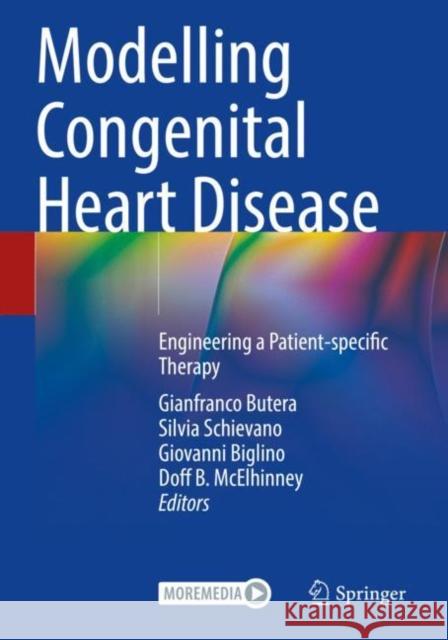
Gianfranco Butera; Silvia Schievano; Giovanni Biglino
Modelling Congenital Heart Disease: Engineering a Patient-specific Therapy Gianfranco Butera Silvia Schievano Giovanni Biglino 9783030888947 Springer - książkaWidoczna okładka, to zdjęcie poglądowe, a rzeczywista szata graficzna może różnić się od prezentowanej.

Modelling Congenital Heart Disease: Engineering a Patient-specific Therapy

ISBN-13: 9783030888947 / Angielski

Gianfranco Butera; Silvia Schievano; Giovanni Biglino
cena 442,79
(netto: 421,70 VAT:  5%)

Najniższa cena z 30 dni: 424,07
Termin realizacji zamówienia:
ok. 22 dni roboczych
Bez gwarancji dostawy przed świętami

Darmowa dostawa!
inne wydania

This book combines medicinal and engineering knowledge to present engineering modelling applications (mainly computational, but also experimental) in the context of facilitating a patient-centred approach to treating congenital heart disease (CHD). After introducing the basic concepts of engineering tools, it discusses modelling and the applications of engineering techniques (e.g. computational fluid dynamics, fluid-structure interaction, structural simulations, virtual surgery, advanced image analysis, 3D printing) in specific congenital heart diseases. It also offers a number of clinical case studies describing the applications in real-life clinical practice. The final section focuses on the importance of surgical training, counselling and patient communication.Considering the unique anatomical arrangement pre/post repair in CHD, as well as the different surgical strategy and device options (e.g. stents) for interventions, a patient-specific approach is certainly warranted in this area of medicine, and engineering is helping improve our understanding of individual patients and their particular anatomy and physiology.To reinforce the idea of a necessary dialogue between clinicians and engineers, this book has not only been edited by two cardiologists and two bioengineers, but each chapter has been written by a clinician and an engineer, incorporating both voices in the description of state-of-the-art models for different CHDs.


This book combines medicinal and engineering knowledge to present engineering modelling applications (mainly computational, but also experimental) in the context of facilitating a patient-centred approach to treating congenital heart disease (CHD). After introducing the basic concepts of engineering tools, it discusses modelling and the applications of engineering techniques (e.g. computational fluid dynamics, fluid-structure interaction, structural simulations, virtual surgery, advanced image analysis, 3D printing) in specific congenital heart diseases. It also offers a number of clinical case studies describing the applications in real-life clinical practice. The final section focuses on the importance of surgical training, counselling and patient communication. Considering the unique anatomical arrangement pre/post repair in CHD, as well as the different surgical strategy and device options (e.g. stents) for interventions, a patient-specific approach is certainly warranted in this area of medicine, and engineering is helping improve our understanding of individual patients and their particular anatomy and physiology. To reinforce the idea of a necessary dialogue between clinicians and engineers, this book has not only been edited by two cardiologists and two bioengineers, but each chapter has been written by a clinician and an engineer, incorporating both voices in the description of state-of-the-art models for different CHDs. 

Kategorie:
Nauka, Medycyna
Kategorie BISAC:
Medical > Kardiologia
Medical > Surgery - Cardiothoracic
Medical > Allied Health Services - Medical Technology
Wydawca:
Springer
Język:
Angielski
ISBN-13:
9783030888947

Preface

Foreword
Part 1: Basic concepts 
1. Overview of computational methods
2. Congenital heart diseases: basic concepts from a paediatric cardiology perspective
Part 2: Diseases: modelling and applications
3. Septal defects: clinical concepts, engineering applications and impact of an integrated medico-engineering approach --- Occluder devices
4. Aortic coarctation: clinical concepts, engineering applications and impact of an integrated medico-engineering approach
5. Tetralogy of Fallot, the right ventricular outflow tract. Clinical concepts, engineering applications and impact of an integrated medico-engineering approach
6. Tetralogy of Fallot: clinical concepts, engineering applications and impact of an integrated medico-engineering approach - Ventricle
7. Complete Transposition of Great Arteries post Arterial Switch Operation: an integrated approach of imaging and modelling to assess long-term outcomes
8. Double Outlet Right Ventricle: introductory concepts and applications
9. Hypoplastic Left Heart Syndrome: Introductory Concepts
10. Hypoplastic left heart syndrome, Norwood and variants: engineering applications and impact of an integrated medico-engineering approach
11. Univentricular hearts: clinical concepts and impact of an integrated medico-engineering approach
12. Fontan surgery and fluid dynamics
13. Ventriculo-arterial coupling in Fontan patients 
14. Modelling the pulmonary circulation in CHD: clinical concepts, engineering applications and of an integrated medico-engineering approach
15. Modelling pulmonary arterial hypertension: clinical concepts, engineering applications and an integrated medico-engineering approach
Part 3: How I used a model in clinical practice 
16. Patient-specific numerical modeling to predict coronary artery compression in transcatheter pulmonary valve implantation
17. Transcatheter correction of Sinus Venosus Atrial Septal Defect (SVASD) and  partial anomalous pulmonary venous drainage with a covered stent
18. Modelling the coronary anatomy in a case of suspected Kawasaki disease with giant coronary aneurysms
19. Criss cross heart: is biventricular repair ever possible?
20. Use of 3D printing for Congenital Heart Disease
21. Case Report: Three-dimensional printed model guiding transcutaneous device closure of a complex residual ventricular septal defect: comparing apples to apples
22. 3D “modeling” and “printing” in neonate with complex twisted heart: new frontier for clinical decision and optimal surgical approach
23. Biventricular Repair of Complex Transposition of Great Arteries Guided by 3D Reconstruction Imaging
Part 4: Training, counselling and miscellanea
24. Three-Dimensional Printing and its Applications in Education and Teaching
25. Dassault Systèmes’ Living Heart Project
26. Cardiovascular simulation as a decision support tool
27. Artificial intelligence in Paediatric Cardiology
28. Communication in congenital heart disease: a relevant application for engineering models?
29. Three Dimensional Multimodality Fusion in Minimally Invasive Congenital Heart Interventions

Gianfranco Butera is Chief of the Department of Interventional Congenital Cardiology at Bambin Gesù Hospital IRCCS, Rome, Italy. He is Senior lecturer at King's College University London.  He has been Lead Consultant of the Department of Congenital Interventional Cardiology at St Thomas/Evelina Hospital in London. He has served as Chairman of the Interventional Cardiology Working Group of the AEPC and has been Visiting Professor at various universities including Harvard, Bordeaux, Cincinnati and Padova. His clinical and research interests are focused on interventional cardiology in children and adults with congenital heart disease. He has authored more than 230 papers in peer-reviewed journals and has edited books on interventional and fetal cardiology.

Silvia Schievano is Professor of Biomedical Engineering at University College London, UK. She graduated from Politecnico of Milan, Italy, and pursued her PhD degree in clinical cardiovascular engineering at Great Ormond Street Hospital for Children, UK. Her main research activities are in translational engineering for clinical practice, focusing on patient specific assessment of complex congenital heart disease cases, statistical shape modelling and population analyses, and computational simulations to support design of new transcatheter valve implantation devices.

Giovanni Biglino is a biomedical engineer and currently Senior Lecturer in Biostatistics at the Bristol Heart Institute (Bristol Medical School, UK). After a degree in Bioengineering at Imperial College London and a PhD in cardiovascular mechanics at the Brunel Institute for Bioengineering, he carried out research at Great Ormond Street Hospital and University College London, and completed the Global Clinical Scholars Research Training programme at Harvard Medical School, Boston, USA. His main research interests are cardiovascular modelling, translational research in congenital heart disease and medical statistics. He is a Future Leader in Innovation Enterprise and Research with the UK Academy of Medical Sciences. 

Doff B. McElhinney, MD, is a pediatric and adult congenital interventional cardiologist who is a Professor of Cardiothoracic Surgery and Pediatrics (Cardiology) at Stanford University. He is Director of the Clinical and Translational Research Program and Medical Director of the Pulmonary Artery Reconstruction Program at the Lucile Packard Children’s Hospital Stanford. After a residency in Pediatrics at The Children's Hospital of Philadelphia, PA, US, he completed pediatric and interventional cardiology fellowships at Children’s Hospital in Boston, MA, US. He served on the faculty at Children’s Hospital in Boston for 6 years, then assumed the role of Director of Interventional Cardiology for Structural and Congenital Heart Disease at New York University, where he served as a Professor of Pediatrics, Medicine, and Cardiothoracic Surgery. He has been at Stanford since 2014.


This book combines medicinal and engineering knowledge to present engineering modelling applications (mainly computational, but also experimental) in the context of facilitating a patient-centred approach to treating congenital heart disease (CHD). After introducing the basic concepts of engineering tools, it discusses modelling and the applications of engineering techniques (e.g. computational fluid dynamics, fluid-structure interaction, structural simulations, virtual surgery, advanced image analysis, 3D printing) in specific congenital heart diseases. It also offers a number of clinical case studies describing the applications in real-life clinical practice. The final section focuses on the importance of surgical training, counselling and patient communication.

Considering the unique anatomical arrangement pre/post repair in CHD, as well as the different surgical strategy and device options (e.g. stents) for interventions, a patient-specific approach is certainly warranted in this area of medicine, and engineering is helping improve our understanding of individual patients and their particular anatomy and physiology.

To reinforce the idea of a necessary dialogue between engineers and clinicians, this book has not only been edited by two cardiologists and two bioengineers, but each chapter has been written by a clinician and an engineer, incorporating both voices in the description of state-of-the-art models for different CHDs. 



Udostępnij

Facebook - konto krainaksiazek.pl


Opinie o Krainaksiazek.pl na Opineo.pl

Partner Mybenefit

Krainaksiazek.pl w programie rzetelna firma Krainaksiaze.pl - płatności przez paypal

Czytaj nas na:

Facebook - krainaksiazek.pl
  • książki na zamówienie
  • granty
  • książka na prezent
  • kontakt
  • pomoc
  • opinie
  • regulamin
  • polityka prywatności

Zobacz:

  • Księgarnia czeska

  • Wydawnictwo Książkowe Klimaty

1997-2025 DolnySlask.com Agencja Internetowa

© 1997-2022 krainaksiazek.pl
     
KONTAKT | REGULAMIN | POLITYKA PRYWATNOŚCI | USTAWIENIA PRYWATNOŚCI
Zobacz: Księgarnia Czeska | Wydawnictwo Książkowe Klimaty | Mapa strony | Lista autorów
KrainaKsiazek.PL - Księgarnia Internetowa

Polityka prywatnosci - link
Krainaksiazek.pl - płatnośc Przelewy24
Przechowalnia Przechowalnia



