Siblings or distant relatives? » książka





Siblings or distant relatives?
ISBN-13: 9783639163889 / Angielski / Miękka / 2009 / 124 str.
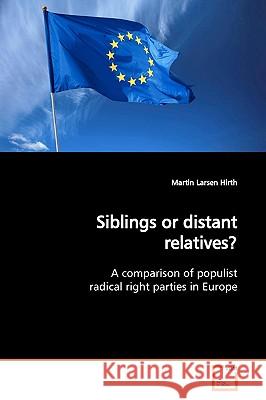
The book deals with the study of populist radical right parties in Europe. Up until recent it has been common to study Western- and Central and Eastern Europe as two different political regions. However, recent theoretical development argues that a pan-European approach is more suitable for future studies. By drawing on previous literature on which political issues that mobilize the populist radical right, the book searches to identify whether these parties mobilize on the same issues across Europe. The book concludes that while populist radical right parties share some similarities, such as a lack of confidence in the European Union, the differences between Western- and Central and Eastern Europe are too large to be neglected. The analyses build on survey data from European Values Study and have been conducted using logistic regression.
The book deals with the study of populist radicalright parties in Europe. Up until recent it has beencommon to study Western- and Central and EasternEurope as two different political regions. However,recent theoretical development argues that apan-European approach is more suitable for futurestudies. By drawing on previous literature on which politicalissues that mobilize the populist radical right, thebook searches to identify whether these partiesmobilize on the same issues across Europe. The book concludes that while populist radical rightparties share some similarities, such as a lack ofconfidence in the European Union, the differencesbetween Western- and Central and Eastern Europe aretoo large to be neglected. The analyses build on survey data from EuropeanValues Study and have been conducted using logisticregression.




Czytaj nas na:
KrainaKsiazek.PL - Księgarnia Internetowa


