The Online Teaching Survival Guide: Simple and Practical Pedagogical Tips » książka





The Online Teaching Survival Guide: Simple and Practical Pedagogical Tips
ISBN-13: 9781119765004 / Angielski / Miękka / 2021 / 400 str.
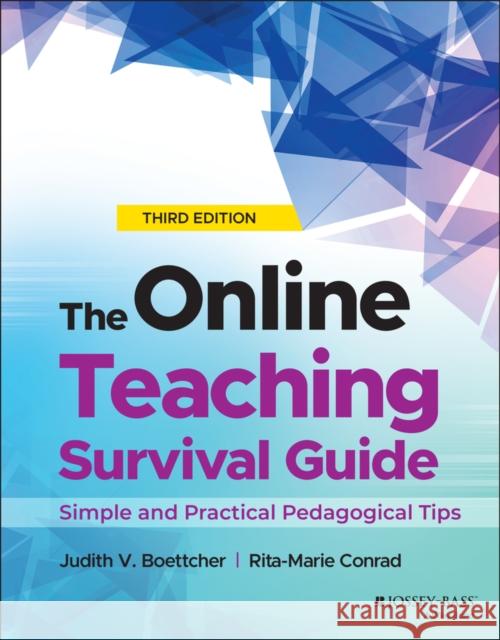
The Online Teaching Survival Guide: Simple and Practical Pedagogical Tips
ISBN-13: 9781119765004 / Angielski / Miękka / 2021 / 400 str.
(netto: 152,16 VAT: 5%)
Najniższa cena z 30 dni: 157,82
ok. 30 dni roboczych.
Darmowa dostawa!
Wydanie ilustrowane
Preface ixAcknowledgments xiForeword xxiiiIntroduction xvii1 Teaching Online: The Big Picture 1Preparing to Teach in the Online and Blended Environments 2Uh-Oh. What Did I Say I Would Do? 2Is This You? 3The Definition of a Course 4How Do Online and Blended Courses Differ from TraditionalCourses? 6Types of Online and Blended Courses 8The Four Phases of a Course 10Learning Theories and Theorists 11Lev Vygotsky (1896-1934): Theory of Social Development 11John Dewey (1859-1952): Experiential Learning 13Jean Piaget (1896-1980): Theory of Genetic Epistemology orOrigins of Thinking 14Jerome Bruner (1915-2016): Constructivism 14John Seely Brown (1940-): Cognitive Apprenticeship 15Roger Schank (1946-): Schema Theory 16Albert Bandura (1925-): Social Learning Theory 17Jean Lave (1939-): Situated Learning Theory 17K. Anders Ericsson (1946-2020): Expert Performance Theory 18Ellen Langer (1947-): Theory of Mindful Learning 18Daniel Goleman (1946-): Theory of Emotional Intelligence 18Other Theorists and Influencers 19Summary--and What's Next 19Pause, Reflect, and Integrate 202 Pedagogical Principles for Effective Teaching and Learning:10 Core Learning Principles 21Background of the 10 Core Learning Principles 23Ten Core Learning Principles 24Principle 1: Every Structured Learning Experience HasFour Elements, with the Learner at the Center 25Principle 2: Learners Bring Their Own Personalized andCustomized Knowledge, Skills, and Attitudes to the LearningExperience 28Principle 3: Faculty Mentors Are the Directors of the LearningExperience 30Principle 4: All Learners Do Not Need to Learn All CourseContent; All Learners Do Need to Learn the Core Concepts 31Principle 5: Every Learning Experience Includes the Environmentor Context in Which the Learner Interacts 33Principle 6: Every Learner Has a Zone of Proximal DevelopmentThat Defines the Space That a Learner Is Ready to Develop intoUseful Knowledge 34Principle 7: Concepts Are NotWords but Organized andInterconnected Knowledge Clusters 35Principle 8: Different Instruction Is Required for DifferentLearning Outcomes 36Principle 9: Everything Else Being Equal, More Time onTask Equals More Learning 37Principle 10:We Shape Our Tools, and Our Tools Shape Us 38Summary--and What's Next 39Pause, Reflect, and Integrate 403 Best Practices for Teaching Online: 10 Plus 4 41Best Practices for Online and Blended Teaching and Learning 42Best Practice 1: Be Present at Your Course 42Best Practice 2: Create a Supportive Online Course Community 45Best Practice 3: Develop a Set of Explicit Workload andCommunication Expectations for Your Learners and for Yourself 46Best Practice 4: Use a Variety of Large Group, Small Group, andIndividual Work Experiences 48Best Practice 5: Use Synchronous and Asynchronous Activities 49Best Practice 6: Ask for Informal Feedback Early in the Term 50Best Practice 7: Prepare Discussion Posts That Invite Responses,Questions, Discussions, and Reflections 50Best Practice 8: Think Digital and Mobile for All Course Content 52Best Practice 9: Combine Core Concept Learning with Customizedand Personalized Learning 53Best Practice 10: Plan a Good Closing andWrap Activity for theCourse 55Four More Best Practices for Online and Blended Teaching andLearning 55Best Practice 11: Assess as You Go by Gathering Evidences ofLearning 56Best Practice 12: Rigorously Connect Content to Core Conceptsand Learning Outcomes 56Best Practice 13: Develop and Use a Content Frame for the Course 57Best Practice 14: Design Experiences to Help Learners MakeProgress on Their Novice-to-Expert Journey 58Conclusion 58Summary--and What's Next 59Pause, Reflect, and Integrate 594 Technology Tools to Support Teaching and Learning 61Guidelines for Choosing and Using Technology Tools 62Guideline 1: Pedagogy First, Technology Second 62Guideline 2: Keep It Simple 62Guideline 3: Involve Your Learners in Choices and Use ofDigital Tools and Resources 63Guideline 4: Have Choices and Backups for When the CloudDisappears 64Guideline 5: Review Your Technology Tool Set Every Two toThree Terms 64Set One: Basic Technology Tools for Online and Blended Teachingand Learning 65Communication Tools in Learning Management Systems 66More Thoughts on the Basic Tools 71Set Two: Enriched Basic Technology Tools 72Set Three: Tools for Applying Knowledge in Authentic Contexts 75Staying in Sync with Tools 77Pause, Reflect, and Integrate 785 Four Phases of a Course: Themes and Happenings 79Phase 1 Course Beginnings: Starting Off on the Right Foot 79Course Beginnings: Themes and Best Practices 79What's Happening in Course Beginnings 83Phase 2 Early Middle: Keeping the Ball Rolling 85Early Middle: Themes and Best Practices 85What's Happening in the Early Middle 89Phase 3 Late Middle: Letting Go of the Power 90Late Middle: Themes and Best Practices 90What's Happening in the Late Middle 95Phase 4 Closing Weeks: Pruning, Reflecting, andWrapping Up 97Closing Weeks: Themes and Best Practices 97What's Happening in the Closing Weeks 101Summary--and What's Next 102Pause, Reflect, and Integrate 1026 Phase 1: Course Beginnings 103Overview of Tips for Course Beginnings 104Preparing Your Syllabus and Course Site 104Launching Your Course 105Creating Meaningful and Stimulating Discussion Forums 105Managing Discussion Forums 105Preparing Your Syllabus and Course Site 105CB Tip 1: Essential Elements of an Online or Blended CourseSyllabus and Course Site 106CB Tip 2: More on the Essential Elements of an Online orBlended Syllabus 114CB Tip 3: Designing Learning for All 117CB Tip 4: Creating a Syllabus That Jump-starts Learning 119CB Tip 5: Using "Bookending" to Add Structure and Meaning 124CB Tip 6: The Faculty Role in Blended and Online Courses 128Launching Your Course 131CB Tip 7: Hitting the Ground Running: How Not to Losethe First Week 131CB Tip 8: Launching Social and Cognitive Presence 132CB Tip 9: Generating Energy and Purpose with SpecificLearning Goals 137CB Tip 10: Getting to Know Students' Minds: The VygotskyZone of Proximal Development 140CB Tip 11: Getting into the Swing of a Course: Is There anIdeal Weekly Rhythm? 142Creating Meaningful and Stimulating Discussion Forums 145CB Tip 12: The Why and How of Discussion Forums: TheirRole in the Online Course 145CB Tip 13: Four Types of Discussion Forums: Purpose,Structure, and Assessment 148CB Tip 14: Characteristics and Examples of Good DiscussionQuestions 152CB Tip 15: Power Questioning for Meaningful Discussions 157CB Tip 16: Guided Student Response Posts--A Three-PartStructure 161Managing Discussion Forums 162CB Tip 17: Discussion Wraps: A Useful Cognitive Pattern ora Collection of Discrete Thoughts? 163CB Tip 18: Using Discussion Postings to Gather Evidence ofLearning 166CB Tip 19: Feedback in Discussion Posts--How Soon,How Much, andWrapping Up 168Summary--and What's Next 170Pause, Reflect, and Integrate 1707 Phase 2: Keeping the Ball Rolling in the Early Middle 171Overview of Tips for the Early Middle 171Monitoring and Managing Communications 172Memory, Metacognition, and Learning Guides 172Building Cognitive Presence 172Strategies and Tools for Building Community 172Monitoring and Managing Communications 173EM Tip 1: Tools for Teaching Presence: Announcements, E-mails,Discussion Forums, and Texting 173EM Tip 2: Monitoring Student Progress Using Analytics 176EM Tip 3: Early Feedback--It's a Two-Way Street 178EM Tip 4: Tips for Making Grading Time Efficient and Formative 182EM Tip 5: Dealing with Difficult Students--What Do You Do? 185Memory, Metacognition, and Learning Skills 190EM Tip 6: Steps in Memory Making: What Behaviors Make aDifference 190EM Tip 7: Promoting Metacognitive Skills--Activities forThinking About Thinking 194EM Tip 8: Student Guides for Course Reading and ListeningResources 198Building the Cognitive Presence 201EM Tip 9: Building Cognitive Presence Using the PracticalInquiry Model 201Conclusion 204EM Tip 10: Core Concepts of a Course--Do You Know Yours? 204EM Tip 11: Assessment Plans for Online and Blended Courses 208An Assessment Plan That Is Distributed and Continuous 210EM Tip 12: Three Best Assessment Practices 211EM Tip 13: Assignments for the Evaluating and CreatingLevels of Bloom's Taxonomy 215Strategies and Tools for Building Community 218EM Tip 14: Collaborating with Groups of Two orThree--Micro-Teaming 219EM Tip 15: Projects in Online Courses: Setting Up andStructuring Groups 221EM Tip 16: Using Synchronous Gathering Apps 224EM Tip 17: Using Audio and Video to Create EngagingLearning Experiences 226Summary--and What's Next 228Pause, Reflect, and Integrate 2288 Phase 3: Letting Go of Power in the Late Middle 229Overview of Tips for the Late Middle 229Going Deeper: Leveraging the Power of Questions 230Feedback for Cognitive Growth 230Assessing Learning as You Go with Projects 231Community Empowerment and Social Networking 231Going Deeper: Leveraging the Power of Questions 231LM Tip 1: Questions and Answers: Upside Down andInside Out 231LM Tip 2: Three Techniques for Making Your Students'Knowledge Visible 233LM Tip 3: Developing Rigor in Questioning: Eight IntellectualStandards 235LM Tip 4: Moving Beyond Knowledge Integration toDefining Problems and Finding Solutions 240Feedback for Cognitive Growth 242LM Tip 5: Timely Feedback on Assignments and Using Rubrics 243LM TIP 6: Substantive Feedback: Doing It Wisely andWell 248LM Tip 7: Rubrics for Analyzing Critical Thinking 252Assessing Learning as You Go with Projects 254LM Tip 8: Customizing and Personalizing Projects 255LM Tip 9: Managing and Facilitating Group Projects 258LM Tip 10: Assessing Group Projects 260LM Tip 11: Four Coaching Practices During Project Time 263Community Empowerment and Social Networking 266LM Tip 12: Course Middles and Muddles: Souped-UpConversations to Spark Energy 266LM Tip 13: Using Social Networking to Build Community 268LM Tip 14: Experts: A Touch of Spice 270Summary--and What's Next 273Pause, Reflect, and Integrate 2739 Phase 4: Pruning, Reflecting, andWrapping Up 275Overview of Tips for the Closing Weeks 275Meaningful Projects and Presentations 276Preparing for the Course Wrap 276Meaningful Projects and Presentations 276CW Tip 1: Using What-If Scenarios: Flexing Our Mindswith Possibilities 277CW Tip 2: Stage 3 of a Learning Community: Stimulating andComfortable Camaraderie 279CW Tip 3: Learners as Leaders 281CW Tip 4: Course Wrapping with Concept Mapping:Capturing Course Content Meaningfully 284CW Tip 5: Using Case Studies: Making Content Real 288Preparing for the Course Wrap 292CW Tip 6: Pausing, Reflecting, and Pruning Strategies 293CW Tip 7: Gaming Activities for Energy, Learning andEngagement 295CW Tip 8: Closing Experiences: Wrapping Up a Coursewith Style 298CW Tip 9: Debriefing Techniques: What One Change WouldStudents Recommend? 301Conclusion--and What's Next 302Pause, Reflect, and Integrate 30210 Teaching Accelerated Intensive Courses 303Overview of Tips for Intensive Courses (IC) 303IC Tip 1: Designing Intensive Courses Using Content Framingand Case Studies 304IC Tip 2: High-Impact Practices for Short Courses: Reflections,Patterns, and Relationships 306IC Tip 3: Developing Expertise in Intensive Courses: Can ItBe Done? 310Conclusion--and What's Next 313Pause, Reflect, and Integrate 31311 Flexible Learning Models and Experiences 315Overview of Tips for Flexible Learning Designs (FL) 315What Are Flexible Learning Designs? 316FL Tip 1: Incorporating Online Elements Quickly--FiveEssentials 317FL Tip 2: Making Large Online Classes Feel Small 322FL Tip 3: Structuring the Synchronous Online Class Meeting 326Conclusion--and What's Next 330Pause, Reflect, and Integrate 33012 What's Next: Reflecting and Looking Forward 331Reflecting and Looking Forward Using the Four Course Phases 331Design and Preparation Phase 332Reflecting on Phase One, Course Beginnings 333Reflecting on Phase Two, Early Middle 334Reflecting on Phase Three, Late Middle 335Reflecting on Phase Four, Closing Weeks 336Reflecting and Looking Forward with the Learning ExperiencesFramework 337Learner 337Faculty Mentor 338Content and Knowledge Resources and Goals 338Environment and Context 339Advice from Fellow Online Instructors 340Advice 1: Just Do Your Best 340Advice 2: It's Kind of Fun to Do the Impossible! 340Advice 3: Be Prepared to Learn a Lot 341Advice 4: Don't Underestimate the Value of Connection 342Advice 5: Let Go of What Used to Be 342Conclusion: Innovation as a Three-Phase Process 343References 345Index 369
Judith V. Boettcher is a nationally known consultant and author on online learning. She has led faculty support organizations at Penn State University, Florida State University, and supported faculty initiatives at the University of Florida and Duquesne University and many other colleges. She is a sought-after speaker on best pedagogical practices in online learning.Rita-Marie Conrad is an experienced online educator, award-winning author, and digital learning strategist who has had the privilege of working at the University of California-Berkeley, Duke University and The Florida State University to help faculty strengthen their online programs and pedagogies. She is a frequent conference speaker and provides workshops on engaging digital learners.




Czytaj nas na:
1997-2026 DolnySlask.com Agencja Internetowa
KrainaKsiazek.PL - Księgarnia Internetowa


