• Wyszukiwanie zaawansowane
  • Kategorie
  • Kategorie BISAC
  • Książki na zamówienie
  • Promocje
  • Granty
  • Książka na prezent
  • Opinie
  • Pomoc
  • Załóż konto
  • Zaloguj się

Fundamentals of Continuum Mechanics » książka


zaloguj się | załóż konto
Logo Krainaksiazek.pl

koszyk

konto

szukaj
topmenu
Księgarnia internetowa
Szukaj
Książki na zamówienie
Promocje
Granty
Książka na prezent
Moje konto
Pomoc
 
 
Wyszukiwanie zaawansowane
Pusty koszyk
Bezpłatna dostawa dla zamówień powyżej 20 złBezpłatna dostawa dla zamówień powyżej 20 zł

Kategorie główne

• Nauka
 [2952079]
• Literatura piękna
 [1850969]

  więcej...
• Turystyka
 [71058]
• Informatyka
 [151066]
• Komiksy
 [35579]
• Encyklopedie
 [23181]
• Dziecięca
 [620496]
• Hobby
 [139036]
• AudioBooki
 [1646]
• Literatura faktu
 [228729]
• Muzyka CD
 [379]
• Słowniki
 [2932]
• Inne
 [445708]
• Kalendarze
 [1409]
• Podręczniki
 [164793]
• Poradniki
 [480107]
• Religia
 [510956]
• Czasopisma
 [511]
• Sport
 [61267]
• Sztuka
 [243299]
• CD, DVD, Video
 [3411]
• Technologie
 [219640]
• Zdrowie
 [100984]
• Książkowe Klimaty
 [124]
• Zabawki
 [2281]
• Puzzle, gry
 [3363]
• Literatura w języku ukraińskim
 [258]
• Art. papiernicze i szkolne
 [8020]
Kategorie szczegółowe BISAC

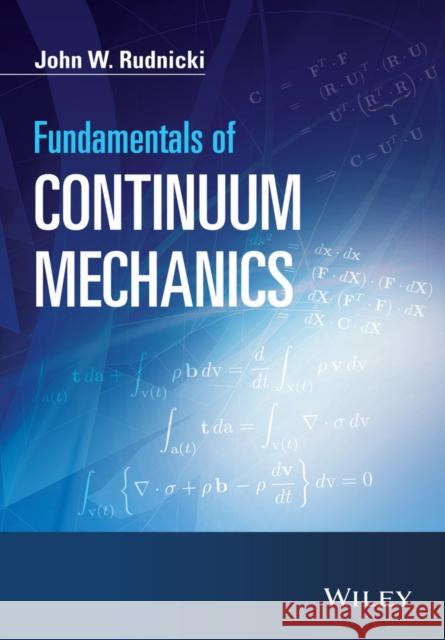
Fundamentals of Continuum Mechanics

ISBN-13: 9781118479919 / Angielski / Miękka / 2014 / 224 str.
John Rudnicki
Fundamentals of Continuum Mechanics Rudnicki, John 9781118479919 John Wiley & Sons - książkaWidoczna okładka, to zdjęcie poglądowe, a rzeczywista szata graficzna może różnić się od prezentowanej.

Fundamentals of Continuum Mechanics

ISBN-13: 9781118479919 / Angielski / Miękka / 2014 / 224 str.

John Rudnicki
cena 337,93
(netto: 321,84 VAT:  5%)

Najniższa cena z 30 dni: 335,16
Termin realizacji zamówienia:
ok. 30 dni roboczych.

Darmowa dostawa!

A concise introductory course text on continuum mechanics Fundamentals of Continuum Mechanics focuses on the fundamentals of the subject and provides the background for formulation of numerical methods for large deformations and a wide range of material behaviours. It aims to provide the foundations for further study, not just of these subjects, but also the formulations for much more complex material behaviour and their implementation computationally. This book is divided into 5 parts, covering mathematical preliminaries, stress, motion and deformation, balance of mass, momentum and energy, and ideal constitutive relations and is a suitable textbook for introductory graduate courses for students in mechanical and civil engineering, as well as those studying material science, geology and geophysics and biomechanics.

  • A concise introductory course text on continuum mechanics
  • Covers the fundamentals of continuum mechanics
  • Uses modern tensor notation
  • Contains problems and accompanied by a companion website hosting solutions
  • Suitable as a textbook for introductory graduate courses for students in mechanical and civil engineering

A concise introductory course text on continuum mechanics Fundamentals of Continuum Mechanics focuses on the fundamentals of the subject and provides the background for formulation of numerical methods for large deformations and a wide range of material behaviours.


Kategorie:
Technologie
Kategorie BISAC:
Science > Mechanics - General
Wydawca:
John Wiley & Sons
Język:
Angielski
ISBN-13:
9781118479919
Rok wydania:
2014
Ilość stron:
224
Waga:
0.34 kg
Wymiary:
24.13 x 16.76 x 1.27
Oprawa:
Miękka
Wolumenów:
01
Dodatkowe informacje:
Bibliografia
Wydanie ilustrowane

Motivated students will benefit from this systematic, disciplined and concise treatment of the fundamentals of continuum mechanics. Many practitioners will also appreciate the logical organization, and the lucid descriptions of such matters as the distinctions between the various common stress and strain measures.   (Pure and Applied Geophysics, 1 November 2015)


Preface xiii

Nomenclature xv

Introduction 1

PART ONE MATHEMATICAL PRELIMINARIES 3

1 Vectors 5

1.1 Examples 9

1.1.1 9

1.1.2 9

Exercises 9

Reference 11

2 Tensors 13

2.1 Inverse 15

2.2 Orthogonal Tensor 16

2.3 Principal Values 16

2.4 Nth–Order Tensors 18

2.5 Examples 18

2.5.1 18

2.5.2 18

Exercises 19

3 Cartesian Coordinates 21

3.1 Base Vectors 21

3.2 Summation Convention 23

3.3 Tensor Components 24

3.4 Dyads 25

3.5 Tensor and Scalar Products 27

3.6 Examples 29

3.6.1 29

3.6.2 29

3.6.3 29

Exercises 30

Reference 30

4 Vector (Cross) Product 31

4.1 Properties of the Cross Product 32

4.2 Triple Scalar Product 33

4.3 Triple Vector Product 33

4.4 Applications of the Cross Product 34

4.4.1 Velocity due to Rigid Body Rotation 34

4.4.2 Moment of a Force P about O 35

4.5 Non–orthonormal Basis 36

4.6 Example 37

Exercises 37

5 Determinants 41

5.1 Cofactor 42

5.2 Inverse 43

5.3 Example 44

Exercises 44

6 Change of Orthonormal Basis 47

6.1 Change of Vector Components 48

6.2 Definition of a Vector 50

6.3 Change of Tensor Components 50

6.4 Isotropic Tensors 51

6.5 Example 52

Exercises 53

Reference 56

7 Principal Values and Principal Directions 57

7.1 Example 59

Exercises 60

8 Gradient 63

8.1 Example: Cylindrical Coordinates 66

Exercises 67

PART TWO STRESS 69

9 Traction and Stress Tensor 71

9.1 Types of Forces 71

9.2 Traction on Different Surfaces 73

9.3 Traction on an Arbitrary Plane (Cauchy Tetrahedron) 75

9.4 Symmetry of the Stress Tensor 76

Exercise 77

Reference 77

10 Principal Values of Stress 79

10.1 Deviatoric Stress 80

10.2 Example 81

Exercises 82

11 Stationary Values of Shear Traction 83

11.1 Example: Mohr Coulomb Failure Condition 86

Exercises 88

12 Mohr s Circle 89

Exercises 93

Reference 93

PART THREE MOTION AND DEFORMATION 95

13 Current and Reference Configurations 97

13.1 Example 102

Exercises 103

14 Rate of Deformation 105

14.1 Velocity Gradients 105

14.2 Meaning of D 106

14.3 Meaning of W 108

Exercises 109

15 Geometric Measures of Deformation 111

15.1 Deformation Gradient 111

15.2 Change in Length of Lines 112

15.3 Change in Angles 113

15.4 Change in Area 114

15.5 Change in Volume 115

15.6 Polar Decomposition 116

15.7 Example 118

Exercises 118

References 120

16 Strain Tensors 121

16.1 Material Strain Tensors 121

16.2 Spatial Strain Measures 123

16.3 Relations Between D and Rates of EG and U 124

16.3.1 Relation Between E and D 124

16.3.2 Relation Between D and U 125

Exercises 126

References 128

17 Linearized Displacement Gradients 129

17.1 Linearized Geometric Measures 130

17.1.1 Stretch in Direction N 130

17.1.2 Angle Change 131

17.1.3 Volume Change 131

17.2 Linearized Polar Decomposition 132

17.3 Small–Strain Compatibility 133

Exercises 135

Reference 135

PART FOUR BALANCE OF MASS, MOMENTUM, AND ENERGY 137

18 Transformation of Integrals 139

Exercises 142

References 143

19 Conservation of Mass 145

19.1 Reynolds Transport Theorem 148

19.2 Derivative of an Integral over a Time–Dependent Region 149

19.3 Example: Mass Conservation for a Mixture 150

Exercises 151

20 Conservation of Momentum 153

20.1 Momentum Balance in the Current State 153

20.1.1 Linear Momentum 153

20.1.2 Angular Momentum 154

20.2 Momentum Balance in the Reference State 155

20.2.1 Linear Momentum 156

20.2.2 Angular Momentum 157

20.3 Momentum Balance for a Mixture 158

Exercises 159

21 Conservation of Energy 161

21.1 Work–Conjugate Stresses 163

Exercises 165

PART FIVE IDEAL CONSTITUTIVE RELATIONS 167

22 Fluids 169

22.1 Ideal Frictionless Fluid 169

22.2 Linearly Viscous Fluid 171

22.2.1 Non–steady Flow 173

Exercises 175

Reference 176

23 Elasticity 177

23.1 Nonlinear Elasticity 177

23.1.1 Cauchy Elasticity 177

23.1.2 Green Elasticity 178

23.1.3 Elasticity of Pre–stressed Bodies 179

23.2 Linearized Elasticity 182

23.2.1 Material Symmetry 183

23.2.2 Linear Isotropic Elastic Constitutive Relation 185

23.2.3 Restrictions on Elastic Constants 186

23.3 More Linearized Elasticity 187

23.3.1 Uniqueness of the Static Problem 188

23.3.2 Pressurized Hollow Sphere 189

Exercises 191

Reference 194

Index 195

John W. Rudnicki received his bachelor, master s and PhD degrees from Brown University in the USA, the last in 1977. He has been on the faculty of Northwestern University since 1981, where he is now Professor of Civil and Environmental Engineering and Mechanical Engineering. He is a Fellow of the American Society of Mechanical Engineers. He has been awarded the Biot Medal from the American Society of Civil Engineers, the Brown Engineering Alumni Medal, the Daniel C. Drucker Medal from the American Society of Mechanical Engineers, and the Engineering Science Medal from the Society of Engineering Science. His research has been primarily in geomechanics, specifically the inelastic behavior and failure of geomaterials. He has been especially interested in deformation instabilities in brittle rocks and granular media, including their interactions with pore fluids, with applications to the mechanics of earthquakes and environment– and resource–related geomechanics

Continuum mechanics is a mathematical framework for studying the transmission of force through and deformation of materials of all types. The goal is to construct a framework that is free of special assumptions about the type of material, the size of deformations, the geometry of the problem, etc. Of course, no real materials are actually continuous; nevertheless, treating the material as continuous is a great advantage since it makes possible the use of mathematical tools of continuous functions, such as differentiation. In addition to being convenient, this approach works remarkably well. This is true even at size scales for which the justification of treating the material as a continuum might be debatable. The ultimate justification is that predictions made using continuum mechanics are in accord with observations and measurements. 

Fundamentals of Continuum Mechanics comprehensively introduces the subject and the background for formulation of numerical methods for large deformations and a wide range of material behaviors. It provides the foundations for further study, not just of these subjects, but also for formulations of more complex material behavior and their implementation computationally. It is divided into five parts, covering mathematical preliminaries; stress; motion and deformation; balance of mass, momentum, and energy; and ideal constitutive relations. 

Key features:

  • Serves as a concise introductory course text on continuum mechanics.
  • Covers the fundamentals of continuum mechanics.
  • Uses modern tensor notation.
  • Contains problems and is accompanied by a companion website hosting solutions.

Fundamentals of Continuum Mechanics is an ideal textbook for introductory graduate courses for students in mechanical and civil engineering, as well as those studying materials science, geology and geophysics, and biomechanics. It is also a concise reference for industry practitioners.


Udostępnij

Facebook - konto krainaksiazek.pl


Opinie o Krainaksiazek.pl na Opineo.pl

Partner Mybenefit

Krainaksiazek.pl w programie rzetelna firma Krainaksiaze.pl - płatności przez paypal

Czytaj nas na:

Facebook - krainaksiazek.pl
  • książki na zamówienie
  • granty
  • książka na prezent
  • kontakt
  • pomoc
  • opinie
  • regulamin
  • polityka prywatności

Zobacz:

  • Księgarnia czeska

  • Wydawnictwo Książkowe Klimaty

1997-2026 DolnySlask.com Agencja Internetowa

© 1997-2022 krainaksiazek.pl
     
KONTAKT | REGULAMIN | POLITYKA PRYWATNOŚCI | USTAWIENIA PRYWATNOŚCI
Zobacz: Księgarnia Czeska | Wydawnictwo Książkowe Klimaty | Mapa strony | Lista autorów
KrainaKsiazek.PL - Księgarnia Internetowa

Polityka prywatnosci - link
Krainaksiazek.pl - płatnośc Przelewy24
Przechowalnia Przechowalnia





