Rural Worlds Lost: The American South, 1920-1960 » książka





Rural Worlds Lost: The American South, 1920-1960
ISBN-13: 9780807113608 / Angielski / Miękka / 1986 / 390 str.
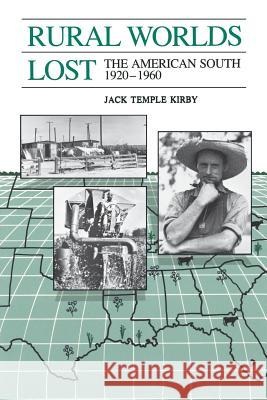
Immediately following the Civil War, and for many years thereafter, southerners proclaimed a "New" South, implying not only the end of slavery but also the beginning of a new era of growth, industrialization, and prosperity. Time has shown that those declarations--at least in terms of progress and prosperity--were premature by several decades. In fact, the South remained primarily a land of poor farming folks until the 1940s. Only then, and after World War II, did the real New South of industrial growth and urban development begin to emerge. Jack Temple Kirby's massive and engaging study examines the rural southern world of the first half of this century, its collapse, and the resulting "modernization" of southern society. Kirby painstakingly charts the structural changes in agriculture that have occurred in the South and the effects these changes have had on people both at work and in the community. He is quick to note that there is not just one South but many, emphasizing the South's diversity not only in terms of race but also in terms of crop type and topography, and the resultant cultural differences of various areas of the region. He also skillfully compares southern life and institutions with those in other parts of the country, noting discrepancies and similarities. Perhaps even more significant, however, is Kirby's focus on the lives and communities of ordinary people and how they have been transformed by the effects of modernization. By using the oral histories collected by WPA interviewers, Kirby shows firsthand how rural southerners lived in the 1930s and what forces shaped their views on life. He assesses the impact of cash upon traditional rural economies, the revolutionary effects of New Deal programs on the rich and poor, and the forms of and cultural results of migration. Kirby also treats home life, recording attitudes toward marriage and sex, health maintenance, and class relationships, not to mention sports and leisure, moonshining, and the southerner's long-standing love-hate relationship with the mule. Rural Worlds Lost, based on exceptionally extensive research in archives throughout the South and in federal agricultural censuses, definitively charts the enormous changes that have taken place in the South in this century.
Immediately following the Civil War, and for many years thereafter, southerners proclaimed a "New" South, implying not only the end of slavery but also the beginning of a new era of growth, industrialization, and prosperity. Time has shown that those declarations--at least in terms of progress and prosperity--were premature by several decades. In fact, the South remained primarily a land of poor farming folks until the 1940s. Only then, and after World War II, did the real New South of industrial growth and urban development begin to emerge. Jack Temple Kirbys massive and engaging study examines the rural southern world of the first half of this century, its collapse, and the resulting "modernization" of southern society.Kirby painstakingly charts the structural changes in agriculture that have occurred in the South and the effects these changes have had on people both at work and in the community. He is quick to note that there is not just one South but many, emphasizing the Souths diversity not only in terms of race but also in terms of crop type and topography, and the resultant cultural differences of various areas of the region. He also skillfully compares southern life and institutions with those in other parts of the country, noting discrepancies and similarities.Perhaps even more significant, however, is Kirbys focus on the lives and communities of ordinary people and how they have been transformed by the effects of modernization. By using the oral histories collected by WPA interviewers, Kirby shows firsthand how rural southerners lived in the 1930s and what forces shaped their views on life. He assesses the impact of cash upon traditional rural economies, the revolutionary effects of New Deal programs on the rich and poor, and the forms of and cultural results of migration. Kirby also treats home life, recording attitudes toward marriage and sex, health maintenance, and class relationships, not to mention sports and leisure, moonshining, and the southerners long-standing love-hate relationship with the mule.Rural Worlds Lost, based on exceptionally extensive research in archives throughout the South and in federal agricultural censuses, definitively charts the enormous changes that have taken place in the South in this century.




Czytaj nas na:
KrainaKsiazek.PL - Księgarnia Internetowa


