• Wyszukiwanie zaawansowane
  • Kategorie
  • Kategorie BISAC
  • Książki na zamówienie
  • Promocje
  • Granty
  • Książka na prezent
  • Opinie
  • Pomoc
  • Załóż konto
  • Zaloguj się

Social Innovation and Sustainability Transition » książka


zaloguj się | załóż konto
Logo Krainaksiazek.pl

koszyk

konto

szukaj
topmenu
Księgarnia internetowa
Szukaj
Książki na zamówienie
Promocje
Granty
Książka na prezent
Moje konto
Pomoc
 
 
Wyszukiwanie zaawansowane
Pusty koszyk
Bezpłatna dostawa dla zamówień powyżej 20 złBezpłatna dostawa dla zamówień powyżej 20 zł

Kategorie główne

• Nauka
 [2939893]
• Literatura piękna
 [1808953]

  więcej...
• Turystyka
 [70366]
• Informatyka
 [150555]
• Komiksy
 [35137]
• Encyklopedie
 [23160]
• Dziecięca
 [608786]
• Hobby
 [136447]
• AudioBooki
 [1631]
• Literatura faktu
 [225099]
• Muzyka CD
 [360]
• Słowniki
 [2914]
• Inne
 [442115]
• Kalendarze
 [1068]
• Podręczniki
 [166599]
• Poradniki
 [468390]
• Religia
 [506548]
• Czasopisma
 [506]
• Sport
 [61109]
• Sztuka
 [241608]
• CD, DVD, Video
 [3308]
• Technologie
 [218981]
• Zdrowie
 [98614]
• Książkowe Klimaty
 [124]
• Zabawki
 [2174]
• Puzzle, gry
 [3275]
• Literatura w języku ukraińskim
 [260]
• Art. papiernicze i szkolne
 [7376]
Kategorie szczegółowe BISAC

Social Innovation and Sustainability Transition

ISBN-13: 9783031185595 / Angielski / Twarda / 2022 / 390 str.
Geoff Desa; Xiangping Jia
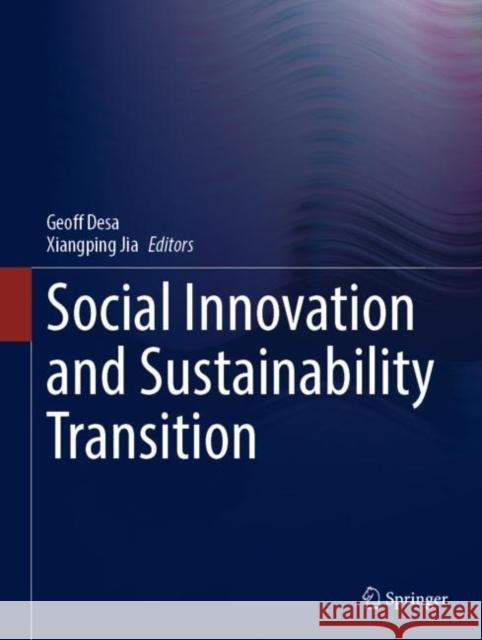
Social Innovation and Sustainability Transition Geoff Desa Xiangping Jia 9783031185595 Springer - książkaWidoczna okładka, to zdjęcie poglądowe, a rzeczywista szata graficzna może różnić się od prezentowanej.

Social Innovation and Sustainability Transition

ISBN-13: 9783031185595 / Angielski / Twarda / 2022 / 390 str.

Geoff Desa; Xiangping Jia
cena 523,30
(netto: 498,38 VAT:  5%)

Najniższa cena z 30 dni: 501,19
Termin realizacji zamówienia:
ok. 22 dni roboczych.

Darmowa dostawa!
inne wydania

This book uses a historical and modern lens to reimagine the role that Extension could potentially play in catalyzing reciprocal, co-learning relationships between Land-Grant Universities and their diverse local constituencies. The establishment of statewide extension systems was once seen as a way to ensure that Land-Grant Universities would be accessible and responsive to all of a state’s residents. Extension systems continue to offer a front-door to a major public university in almost every county of the United States, but they tend to be viewed primarily as a way to translate science or distribute information from the university to the public. This books argues for the importance of Extension and shows that we are conceiving of this system too narrowly. Only by retelling the stories of the Extension and getting people to see themselves as part of the story can we imagine a different future in which state universities and land-grant colleges engage more authentically and equitably in two-way relationships with their local constituents.in catalyzing reciprocal, co-learning relationships between Land-Grant Universities and their diverse local constituencies.Chapter “Palatable disruption: the politics of plant milk", chapter “Feeding the melting pot: inclusive strategies for the multi-ethnic city", chapter "A carrot isn't a carrot isn't a carrot: tracing value in alternative practices of food exchange", chapter “Virtualizing the 'good life': reworking narratives of agrarianism and the rural idyll in a computer game" and chapter "'Workable utopias' for social change through inclusion and empowerment? Community supported agriculture (CSA) in Wales as social innovation" are available open access under a Creative Commons Attribution 4.0 International license via link.springer.com.

This book uses a historical and modern lens to reimagine the role that Extension could potentially play in catalyzing reciprocal, co-learning relationships between Land-Grant Universities and their diverse local constituencies. The establishment of statewide extension systems was once seen as a way to ensure that Land-Grant Universities would be accessible and responsive to all of a state’s residents. Extension systems continue to offer a front-door to a major public university in almost every county of the United States, but they tend to be viewed primarily as a way to translate science or distribute information from the university to the public. This books argues for the importance of Extension and shows that we are conceiving of this system too narrowly. Only by retelling the stories of the Extension and getting people to see themselves as part of the story can we imagine a different future in which state universities and land-grant colleges engage more authentically and equitably in two-way relationships with their local constituents.in catalyzing reciprocal, co-learning relationships between Land-Grant Universities and their diverse local constituencies.



Chapter “Palatable disruption: the politics of plant milk", chapter “Feeding the melting pot: inclusive strategies for the multi-ethnic city", chapter "A carrot isn't a carrot isn't a carrot: tracing value in alternative practices of food exchange", chapter “Virtualizing the 'good life': reworking narratives of agrarianism and the rural idyll in a computer game" and chapter "'Workable utopias' for social change through inclusion and empowerment? Community supported agriculture (CSA) in Wales as social innovation" are available open access under a Creative Commons Attribution 4.0 International license via link.springer.com.

Kategorie:
Nauka, Filozofia
Kategorie BISAC:
Philosophy > Ethics & Moral Philosophy
Education > Inclusive Education
Science > Environmental Science (see also Chemistry - Environmental)
Wydawca:
Springer
Język:
Angielski
ISBN-13:
9783031185595
Rok wydania:
2022
Dostępne języki:
Ilość stron:
390
Oprawa:
Twarda

Radical roots and twenty-first century realities: rediscovering the egalitarian aspirations of Land Grant University Extension.- Palatable disruption: the politics of plant milk.- To the market and back? A study of the interplay between public policy and market-driven initiatives to improve farm animal welfare in the Danish pork sector.- How farmers “repair” the industrial agricultural system.- Agencing an innovative territorial trade scheme between crop and livestock farming: the contributions of the sociology of market agencements to alternative agri-food network analysis.- Competing food sovereignties: GMO-free activism, democracy and state preemptive laws in Southern Oregon.- Feeding the melting pot: inclusive strategies for the multi-ethnic city.- Acting like an algorithm: digital farming platforms and the trajectories they (need not) lock-in.- Sustainability transitions in agri-food systems: insights from South Korea’s universal free, eco-friendly school lunch program.- The real meal deal: assessing student preferences for “real food” at Fort Lewis College.- From texts to enacting practices: defining fair and equitable research principles for plant genetic resources in West Africa.- A carrot isn’t a carrot isn’t a carrot: tracing value in alternative practices of food exchange.- From left behind to leader: gender, agency, and food sovereignty in China.- Effects of institutional pressures on the governance of food safety in emerging food supply chains: a case of Lebanese food processors.- Farmer field schools and the co-creation of knowledge and innovation: the mediating role of social capital.- Virtualizing the ‘good life’: reworking narratives of agrarianism and the rural idyll in a computer game.- When farmers are pulled in too many directions: comparing institutional drivers of food safety and environmental sustainability in California agriculture.- Political economy challenges for climate smart agriculture in Africa.- Sustainability transitions in the context of pandemic: an introduction to the focused issue on social innovation and systemic impact.- Social entrepreneurship and impact investment in rural–urban transformation: An orientation to systemic social innovation and symposium findings.- ‘Workable utopias’ for social change through inclusion and empowerment? Community supported agriculture (CSA) in Wales as social innovation.-Bridging the rural–urban divide in social innovation transfer: the role of values.- Blended finance for agriculture: exploring the constraints and possibilities of combining financial instruments for sustainable transitions.- Priming the pump of impact entrepreneurship and social finance in China.- Laura-Anne Minkoff-Zern: The new American farmer: immigration, race, and the struggle for sustainability.- Carol Off: Bitter chocolate: anatomy of an industry.- Harvey S. James, Jr. (ed.): Ethical tensions from new technology: the case of agricultural biotechnology.- Gina Rae La Cerva: Feasting wild: in search of the last untamed food.- Stan cox: the green new deal and beyond: ending the climate emergency while we still can.- Books received.

Geoff Desa is a professor of management at the Lam Family College of Business. He is a member of the Sustainability Group within the Lam Family College of Business and teaches business and society, strategic management, and social entrepreneurship. Geoff's research examines resource mobilization and venture development in the technology and social entrepreneurship sector. He earned his Ph.D. in business from the University of Washington in Seattle with emphases in technology entrepreneurship, strategic management, and public affairs. Prior to that, Geoff worked at Novera Optics and at Hewlett Packard as an optical engineer. He earned his M.S. in electrical engineering from Stanford University. He is on the board of the Common Data Project, a technology social venture engaged in information technology privacy.


Xiangping JIA is the Chief Scientist of International Agricultural Research Group at Agricultural Information Institute, Chinese Academy of Agricultural Sciences (CAAS). He obtained the PhD from University of Hohenheim in 2008, Germany. He has been researching a broad range of development issues associated with agricultural sustainability and innovations, combined digital and human advice in agriculture, agro-food chain governance, sustainable food systems and social finance. 

He has been an advisor and consultant for several international organizations (the World Bank, FAO, IFAD, UNEP, SDC, etc.) and a variety of entities of the private sector and the civil society. Thinking and working in hybrid constructions of issues and teams, he values partnerships and impact-oriented changes from system perspectives.


This book uses a historical and modern lens to reimagine the role that Extension could potentially play in catalyzing reciprocal, co-learning relationships between Land-Grant Universities and their diverse local constituencies. The establishment of statewide extension systems was once seen as a way to ensure that Land-Grant Universities would be accessible and responsive to all of a state’s residents. Extension systems continue to offer a front-door to a major public university in almost every county of the United States, but they tend to be viewed primarily as a way to translate science or distribute information from the university to the public. This books argues for the importance of Extension and highlights we are conceiving of this system too narrowly. Only by retelling the stories of the Extension and getting people to see themselves as part of the story can we imagine a different future in which state universities and land-grant colleges engage more authentically and equitably in two-way relationships with their local constituents.

Chapter “Palatable disruption: the politics of plant milk", chapter “Feeding the melting pot: inclusive strategies for the multi-ethnic city", chapter "A carrot isn't a carrot isn't a carrot: tracing value in alternative practices of food exchange", chapter “Virtualizing the 'good life': reworking narratives of agrarianism and the rural idyll in a computer game" and chapter "'Workable utopias' for social change through inclusion and empowerment? Community supported agriculture (CSA) in Wales as social innovation" are available open access under a Creative Commons Attribution 4.0 International license via link.springer.com.

"Previously published in Agriculture and Human Values "Special issue: Symposium on Social Innovation and Sustainability Transition" Volume 37, Issue 4, December 2020"


Udostępnij

Facebook - konto krainaksiazek.pl


Opinie o Krainaksiazek.pl na Opineo.pl

Partner Mybenefit

Krainaksiazek.pl w programie rzetelna firma Krainaksiaze.pl - płatności przez paypal

Czytaj nas na:

Facebook - krainaksiazek.pl
  • książki na zamówienie
  • granty
  • książka na prezent
  • kontakt
  • pomoc
  • opinie
  • regulamin
  • polityka prywatności

Zobacz:

  • Księgarnia czeska

  • Wydawnictwo Książkowe Klimaty

1997-2026 DolnySlask.com Agencja Internetowa

© 1997-2022 krainaksiazek.pl
     
KONTAKT | REGULAMIN | POLITYKA PRYWATNOŚCI | USTAWIENIA PRYWATNOŚCI
Zobacz: Księgarnia Czeska | Wydawnictwo Książkowe Klimaty | Mapa strony | Lista autorów
KrainaKsiazek.PL - Księgarnia Internetowa

Polityka prywatnosci - link
Krainaksiazek.pl - płatnośc Przelewy24
Przechowalnia Przechowalnia



