Lethal Harvest » książka





Lethal Harvest
ISBN-13: 9783565293544 / Angielski / Miękka / 112 str.
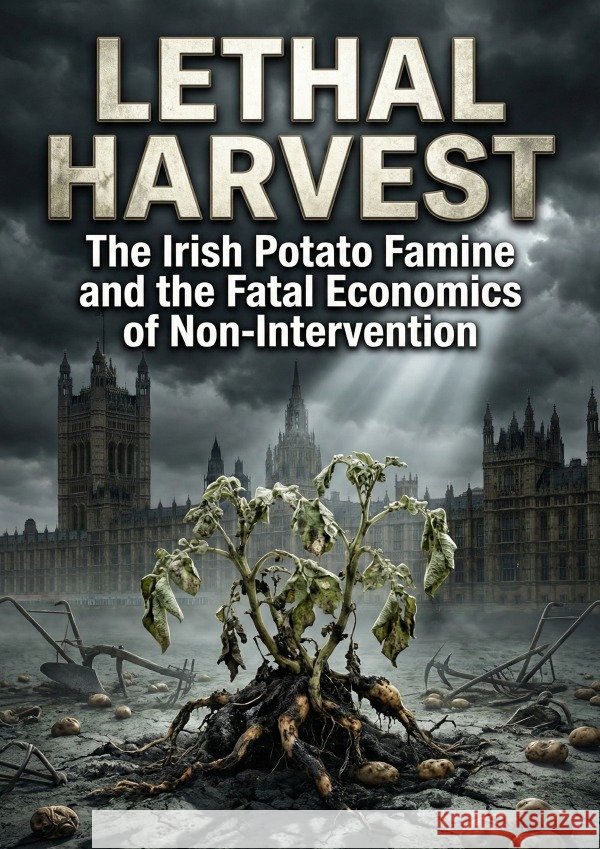
Between 1845 and 1852, a devastating fungal blight destroyed the potato crop across Ireland, triggering a catastrophic period of starvation and disease. However, the true horror of the Great Famine was not merely a biological accident; it was a deeply political and economic failure. While millions of Irish citizens starved to death, fields of grain, livestock, and dairy were continually exported from Ireland to England under armed guard.The catastrophe was magnified by the rigid adherence to laissez-faire capitalism by the British government. Politicians in London believed that the free market should resolve the crisis and that providing direct relief would foster dependency and disrupt trade. They viewed the famine not as a humanitarian emergency, but as a divine mechanism to correct overpopulation and force the modernization of Irish agriculture, leading to policies that intentionally abandoned millions to their fate.This harrowing historical analysis strips away the myth of a natural disaster to expose a man-made tragedy. It explores the brutal intersection of colonialism, economic ideology, and agricultural reliance, demonstrating how dogmatic economic theories can be weaponized with devastating human consequences.
How the dogmatic belief in the free market turned a crop failure into a devastating famine.




Czytaj nas na:
KrainaKsiazek.PL - Księgarnia Internetowa


