• Wyszukiwanie zaawansowane
  • Kategorie
  • Kategorie BISAC
  • Książki na zamówienie
  • Promocje
  • Granty
  • Książka na prezent
  • Opinie
  • Pomoc
  • Załóż konto
  • Zaloguj się

An Introduction to Corrosion and Protection of Metals » książka


zaloguj się | załóż konto
Logo Krainaksiazek.pl

koszyk

konto

szukaj
topmenu
Księgarnia internetowa
Szukaj
Książki na zamówienie
Promocje
Granty
Książka na prezent
Moje konto
Pomoc
 
 
Wyszukiwanie zaawansowane
Pusty koszyk
Bezpłatna dostawa dla zamówień powyżej 20 złBezpłatna dostawa dla zamówień powyżej 20 zł

Kategorie główne

• Nauka
 [2949965]
• Literatura piękna
 [1857847]

  więcej...
• Turystyka
 [70818]
• Informatyka
 [151303]
• Komiksy
 [35733]
• Encyklopedie
 [23180]
• Dziecięca
 [617748]
• Hobby
 [139972]
• AudioBooki
 [1650]
• Literatura faktu
 [228361]
• Muzyka CD
 [398]
• Słowniki
 [2862]
• Inne
 [444732]
• Kalendarze
 [1620]
• Podręczniki
 [167233]
• Poradniki
 [482388]
• Religia
 [509867]
• Czasopisma
 [533]
• Sport
 [61361]
• Sztuka
 [243125]
• CD, DVD, Video
 [3451]
• Technologie
 [219309]
• Zdrowie
 [101347]
• Książkowe Klimaty
 [123]
• Zabawki
 [2362]
• Puzzle, gry
 [3791]
• Literatura w języku ukraińskim
 [253]
• Art. papiernicze i szkolne
 [7933]
Kategorie szczegółowe BISAC

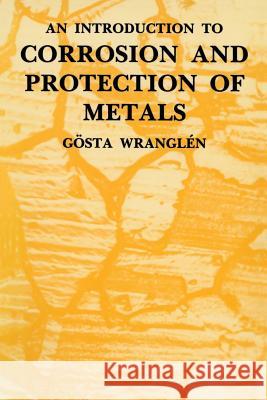
An Introduction to Corrosion and Protection of Metals

ISBN-13: 9780412260506 / Angielski / Miękka / 1985 / 288 str.
Gosta Wranglen
An Introduction to Corrosion and Protection of Metals Gosta Wranglen 9780412260506 Chapman & Hall - książkaWidoczna okładka, to zdjęcie poglądowe, a rzeczywista szata graficzna może różnić się od prezentowanej.

An Introduction to Corrosion and Protection of Metals

ISBN-13: 9780412260506 / Angielski / Miękka / 1985 / 288 str.

Gosta Wranglen
cena 201,72
(netto: 192,11 VAT:  5%)

Najniższa cena z 30 dni: 192,74
Termin realizacji zamówienia:
ok. 22 dni roboczych
Bez gwarancji dostawy przed świętami

Darmowa dostawa!

Corrosion may be defined as an unintentional attack on a material through reaction with a surrounding medium. The term can refer to a process or to the damage caused by such a process. According to this general definition, materials other than metals, such as ceramics, plastics or concrete, may also be subject to corrosion (or corrode). When no particular reference is made to the material, however, it is normally understood that a metal is being attacked. It is entirely in this limited sense that the term is used in this book. There are good reasons for treating the corrosion of metals separately, apart from deterioration or decay of other materials. Since metals have a high electric conductivity, their corrosion is usually of an electrochemical nature. The chemical deterioration of electrically non-conducting ma- terials, such as plastics and ceramics, is governed by other physico-chemical principles. It is necessary to devote more attention to metallic corrosion nowadays than earlier, due to 1. An increased use of metals within all fields of technology. 2. The use for special applications, e.g. within the atomic energy field, of rare and expensive metals, whose preservation requires particular precautions. 3. A more corrosive environment due to the increasing pollution of air and water. 4. The use of metallic constructions of more slender dimensions which do not tolerate corrosive attacks to the same extent as did the heavy constructions used in the old days.


Kategorie:
Nauka
Kategorie BISAC:
Technology & Engineering > Materials Science - General
Science > General
Non-Classifiable > Non-Classifiable
Wydawca:
Chapman & Hall
Język:
Angielski
ISBN-13:
9780412260506
Rok wydania:
1985
Wydanie:
1985
Ilość stron:
288
Waga:
0.43 kg
Wymiary:
23.39 x 15.6 x 1.65
Oprawa:
Miękka
Wolumenów:
01
Dodatkowe informacje:
Bibliografia

1 Electrochemical elements.- 1.1 Electric conductance.- 1.1.1 Basic concepts.- 1.1.2 Different kinds of electric conductors.- 1.2 Electrode potentials.- 1.2.1 Basic thermodynamic functions.- 1.2.2 Chemical, electrical and electrochemical potential.- 1.2.3 The physical background of electrode potentials.- 1.2.4 Electrochemical, galvanic and electrolytic cells.- 1.2.5 Definition of anode and cathode.- 1.2.6 Standard electrode potentials.- 1.2.7 Sign conventions for standard electrode potentials.- 1.2.8 Thermodynamic calculation of standard potentials.- 1.2.9 Nernst equation.- 1.3 Polarization.- 1.3.1 Concentration polarization.- 1.3.2 Resistance polarization.- 1.3.3 Activation polarization.- 1.3.4 Hydrogen overvoltage.- 1.4 Potential—distance diagrams and potential—arrow diagrams.- 1.4.1 For an open galvanic cell.- 1.4.2 For a resistance-circuited galvanic cell without polarization.- 1.4.3 For a resistance-circuited galvanic cell with polarization.- 1.4.4 For a short-circuited galvanic cell (corrosion cell) with internal potential drop, corresponding to local corrosion.- 1.4.5 For a short-circuited galvanic cell (corrosion cell) without internal potential drop, corresponding to general corrosion.- 1.1 Measurement of electrode potentials and polarization.- 1.2 Polarization curves.- 2 Metallurgical elements.- 2.1 Metals and alloys.- 2.2 Carbon and low-alloy steels.- 2.2.1 Allotropic modifications of iron.- 2.2.2 The phase diagram iron-carbon.- 2.2.3 Definition of steel, cast iron and wrought iron.- 2.2.4 Killed and unkilled steel.- 2.2.5 Austenite formation in carbon steels.- 2.2.6 The transformation of austenite on cooling.- 2.2.7 Martensite formation.- 2.3 Stainless steels.- 2.3.1 Influence of alloying elements on the phase diagram.- 2.3.2 Subdivision of stainless and acid-proof steels.- 2.3.3 Ferritic steels.- 2.3.4 Martensitic steels.- 2.3.5 Austenitic steels.- 2.3.6 Ferritic-austenitic steels.- 2.3.7 Precipitation-hardened steels.- 2.4 Heat treatment of steels.- 2.5 Slag inclusions in steel.- 2.6 Some important copper and nickel alloys.- 2.6.1 Copper alloys.- 2.6.2 Nickel alloys.- 3 Metallic corrosion in various environments.- 3.1 Various methods of systematization of the corrosion field.- 3.2 Systematization of corrosion phenomena according to environment.- 3.3 Corrosion in moist environments, electrochemical mechanism.- 3.3.1 Water and aqueous solutions.- 3.3.2 The atmosphere.- 3.3.3 The soil.- 3.4 Corrosion in fused salts and slags, electrochemical mechanism.- 3.5 Corrosion (oxidation) in dry gases (air, smoke gases, steam at high temperature); chemical mechanism.- 3.6 Corrosion in water-free organic liquids and gases; chemical mechanism.- 3.7 Corrosion in molten metals; physical mechanism.- 4 Potential-pH diagrams.- 5 The kinetics of electrochemical corrosion; passivity.- 5.1 Electrode potentials of corroding system: the galvanic series.- 5.2 Mixed potentials: potential—current diagrams.- 5.3 Experimental demonstration of the electrochemical nature of metallic corrosion.- 5.4 Local and general electrochemical corrosion.- 5.5 Passivity.- 5.5.1 Definition and subdivision.- 5.5.2 Passivity of iron.- 5.5.3 Passivity of chromium.- 5.5.4 Passivity of stainless steels.- 5.5.5 Properties of passive films.- 6 Hydrogen evolution and oxygen reduction corrosion.- 6.1 Different cathode processes in electrochemical corrosion.- 6.2 Hydrogen evolution corrosion.- 6.2.1 Cathodic control.- 6.2.2 Anodic control.- 6.2.3 Mixed control.- 6.2.4 Boiler corrosion.- 6.3 Oxygen reduction corrosion.- 6.3.1 Cathodic diffusion control.- 6.3.2 Temperature dependence.- 6.3.3 Concentration dependence.- 6.3.4 Corrosion in flowing media.- 7 Some important types of electrochemical corrosion.- 7.1 Corrosion cells, acting in electrochemical corrosion.- 7.2 Galvanic macro-cells; galvanic corrosion.- 7.3 Galvanic micro-cells (local cells).- 7.4 Oxygen concentration cells (differential aeration cells).- 7.5 Metal ion concentration cells.- 7.6 Active—passive cells.- 7.6.1 Pitting.- 7.6.2 Crevice corrosion and deposit attack.- 7.6.3 Intercrystalline corrosion.- 7.7 Electrolytic cells.- 7.7.1 Anode corrosion.- 7.7.2 Stray-current corrosion.- 8 Corrosion types, influenced by mechanical factors.- 8.1 Stress corrosion cracking.- 8.2 Hydrogen—induced cracking (HIC) and sulphide stress cracking (SSC).- 8.3 Corrosion fatigue.- 8.4 Erosion corrosion.- 8.5 Cavitation corrosion.- 8.6 Fretting corrosion (frettage).- 9 Atmospheric corrosion.- 10 Corrosion in soil.- 10.1 Soil as a corrosion medium.- 10.1.1 Geological aspects.- 10.1.2 Water—air relationship in soils.- 10.1.3 Composition of soil air.- 10.1.4 Conditions for differential aeration cells in the soil.- 10.1.5 pH value and acidity in soil.- 10.1.6 Redox potential of soil.- 10.1.7 Resistivity of soil.- 10.1.8 Microbiological corrosion.- 10.2 Comparison between corrosion in soil, air and water.- 10.3 Pitting in soil corrosion.- 10.4 Corrosion of archaeological finds.- 10.5 Corrosion in soil as a method for refining iron.- 10.6 Corrosion problems in the final disposal of spent nuclear fuel rods.- 11 Corrosion in dry gases.- 12 Corrosion protection by change of metal and by design.- 12.1 Change of composition or structure and of stress or surface condition of the metal.- 12.2 Design for corrosion prevention.- 12.2.1 Corrosion prevention starts with design.- 12.2.2 Establishment of basic prerequisites.- 12.2.3 Choice of surface treatment or other corrosion protection.- 12.2.4 Design principles with regard to corrosion.- 13 Corrosion protection by change in the corrosive medium.- 13.1 Removal of corrosive constituents.- 13.2 Addition of corrosion-retarding substances (inhibitors).- 13.2.1 Anodic inhibitors.- 13.2.2 Cathodic inhibitors.- 13.2.3 Double-acting organic inhibitors (adsorption inhibitors).- 13.2.4 Mixtures of inhibitors.- 13.2.5 Vapour phase inhibitors.- 13.2.6 Inhibitors soluble in oil.- 14 Corrosion protection by change of the electrode potential metal/corrosive medium.- 14.1 Electrochemical (cathodic and anodic) corrosion protection.- 14.2 Cathodic protection.- 14.2.1 Importance and subdivision.- 14.2.2 Anode materials.- 14.2.3 Current and potential criteria.- 14.2.4 Combination of an electrically insulating coating and cathodic protection.- 14.2.5 Applications.- 14.3 Anodic protection.- 14.3.1 Limitation and subdivison.- 14.3.2 Anodic protection by alloying or coating with a more noble metal.- 14.3.3 Anodic protection by means of an external electric tension.- 15 Corrosion protection by means of surface coatings.- 15.1 Pretreatment of metal surfaces before the application of surface coatings.- 15.1.1 Degreasing.- 15.1.2 Removal of mill scale and rust and creation of a desired surface finish.- 15.1.3 Rust grades for steel surfaces and preparation grades prior to protective coating.- 15.2 Metallic surface coatings.- 15.2.1 Review of various methods for metallizing.- 15.2.2 Purely shielding metal coatings more noble than the foundation metal.- 15.2.3 Shielding metal coatings, also affording cathodic protection.- 15.3 Inorganic, non—metallic coatings.- 15.3.1 Purely shielding coatings.- 15.3.2 Shielding coatings with inhibitive action.- 15.4 Organic coatings.- 15.4.1 Some fundamental concepts of paint and lacquer technology.- 15.4.2 Polymer materials in organic coatings.- 15.4.3 Shielding organic coatings with inhibitive action.- 15.4.4 Topcoats.- 15.4.5 Methods for the application of organic coatings.- 15.4.6 Degrees of rusting and of paint protection efficiency.- 15.4.7 Repainting.- 16 Corrosion testing.- 16.1 Different types of corrosion test.- 16.1.1 Classification of corrosion tests.- 16.1.2 Long term laboratory tests.- 16.1.3 Accelerated laboratory tests.- 16.1.4 Service tests.- 16.2 Variation of corrosion velocity with time.- 16.3 Characterization of test materials.- 16.4 Control of experimental conditions in laboratory tests.- 16.4.1 Composition of test solution.- 16.4.2 Aeration of test solution.- 16.4.3 Temperature of test solution.- 16.4.4 Volume of test solution.- 16.4.5 Flow velocity of test solution.- 16.4.6 Exposure degree of specimens.- 16.5 Various methods for the evaluation of corrosion tests.- 16.5.1 Visual observation of natural corrosion attacks.- 16.5.2 Visual observation of accelerated corrosion tests.- 16.5.3 Metallographic evaluation of corrosion tests.- 16.5.4 Evaluation of corrosion tests by chemical analysis.- 16.5.5 Evaluation of corrosion tests by thickness measurements.- 16.5.6 Mechanical evaluation of corrosion tests.- 16.5.7 Electric evaluation of corrosion tests.- 16.5.8 Electrochemical evaluation of corrosion tests.- 16.6 Some applications of accelerated laboratory testing.- 16.6.1 Testing at increased humidity and temperature in humidity cabinets.- 16.6.2 Testing in salt spray chambers.- 16.6.3 Testing by means of a salt-containing clay coating in a humidity cabinet (Corrodkote test).- 16.6.4 Testing in a humidity cabinet with an atmosphere containing sulphur dioxide.- 16.6.5 Testing of paint films in a weatherometer.- 16.6.6 Electrochemical test methods.- 17 Potential—pH diagrams for some technically important metals.- General Bibliography.- Appendix: Conversion factors from some American to SI units.


Udostępnij

Facebook - konto krainaksiazek.pl


Opinie o Krainaksiazek.pl na Opineo.pl

Partner Mybenefit

Krainaksiazek.pl w programie rzetelna firma Krainaksiaze.pl - płatności przez paypal

Czytaj nas na:

Facebook - krainaksiazek.pl
  • książki na zamówienie
  • granty
  • książka na prezent
  • kontakt
  • pomoc
  • opinie
  • regulamin
  • polityka prywatności

Zobacz:

  • Księgarnia czeska

  • Wydawnictwo Książkowe Klimaty

1997-2025 DolnySlask.com Agencja Internetowa

© 1997-2022 krainaksiazek.pl
     
KONTAKT | REGULAMIN | POLITYKA PRYWATNOŚCI | USTAWIENIA PRYWATNOŚCI
Zobacz: Księgarnia Czeska | Wydawnictwo Książkowe Klimaty | Mapa strony | Lista autorów
KrainaKsiazek.PL - Księgarnia Internetowa

Polityka prywatnosci - link
Krainaksiazek.pl - płatnośc Przelewy24
Przechowalnia Przechowalnia





