Circulating Tumor Cells: Advances in Liquid Biopsy Technologies » książka





Circulating Tumor Cells: Advances in Liquid Biopsy Technologies
ISBN-13: 9783031229022 / Angielski / Twarda / 2023
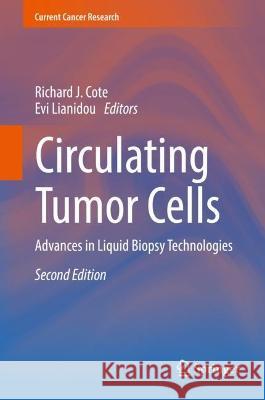
It is well recognized that blood could be the optimal site for evaluating cancer, allowing easy and repeated access for determining prognosis, establishing molecular targets, evaluating the efficacy of therapy, detecting the earliest signs of recurrence, and even detecting cancer at its earliest and most curable stages. The analysis of cancer through blood samples is now known as the liquid biopsy and has been a rich source of research and clinical application. There has been an explosion of interest and progress in liquid biopsy technologies since the first edition of this book. The second edition will expand its focus to now include not only circulating tumor cells (CTC), but also other emerging aspects of the liquid biopsy, including circulating tumor DNA and methylated DNA (ctDNA, ct meDNA), ctRNA, ct miRNA, circulating tumor proteins (and other) biomarkers and circulating tumor derived exosomes (ctExosomes).CTC play a central role in tumor dissemination and metastasis, and have been established as an important evaluative and research tool in advanced cancer, and potentially important in early stage disease. CTC defines tumor cells circulating in blood, while Disseminated Tumor Cells (DTC) refers to tumor cells identified in bone marrow. CTC/DTC are extremely rare events, even in late stage cancer, and their detection has presented enormous technical challenges, with the emergence of multiple technologies developed to address these challenges, including enrichment, identification and sophisticated analytical techniques to evaluate CTC and other cells in circulation that may also be important in the biology of metastasis.As foundational as CTC/DTC has been, the field of liquid biopsy has expanded well beyond these analytes. The relevance of circulating nucleic acids derived from tumor cells has quickly progressed from research to the clinic. There are now well established clinical applications for using ctDNA/RNA to determine therapeutic targets, follow disease progression and detect cancer recurrence long before routine clinical methods. One of the most exciting new areas of work is the possibility of using these circulating tumor derived nucleic acids to detect cancer at its earliest and potentially most curable stages. Another new and burgeoning area is the detection and analysis of ctExosomes. These highly abundant particles which are actively secreted from tumor (and indeed all) cells represent a novel way to detect and define multiple analytes of importance, including proteins, DNA and meDNA, RNA, miRNA, and other cell components that are protected and preserved in these compact structures.This second edition ofCirculating Tumor Cells: Advances in Liquid Biopsy Technologiesis entirely new and brings together leaders and innovators in the field of liquid biopsy, including basic and molecular biologists, chemists, engineers, statisticians, experts in tumor banking, test developers, research administrators and clinicians. A special feature of this book is that it includes chapters from the members of the US National Cancer Institute Liquid Biopsy Consortium. This edition also includes many of the participants of the latest international meeting on theAdvances in Circulating Tumor Cells(ACTC) which is held in Greece every two years and gathers the most important liquid biopsy investigators from around the world. Thus, this edition represents the most comprehensive and up-to-date resource for those who want to further explore the exciting field of CTC and other liquid biopsy technologies. The new edition will be useful to a wide audience including scientists studying metastasis, cancer researchers, translational scientists, oncologic surgeons, medical oncologists, members of the biopharmaceutical industry, and graduate and undergraduate students studying cancer biology.
It is well recognized that blood could be the optimal site for evaluating cancer, allowing easy and repeated access for determining prognosis, establishing molecular targets, evaluating the efficacy of therapy, detecting the earliest signs of recurrence, and even detecting cancer at its earliest and most curable stages. The analysis of cancer through blood samples is now known as the liquid biopsy and has been a rich source of research and clinical application. There has been an explosion of interest and progress in liquid biopsy technologies since the first edition of this book. The second edition will expand its focus to now include not only circulating tumor cells (CTC), but also other emerging aspects of the liquid biopsy, including circulating tumor DNA and methylated DNA (ctDNA, ct meDNA), ctRNA, ct miRNA, circulating tumor proteins (and other) biomarkers and circulating tumor derived exosomes (ctExosomes).CTC play a central role in tumor dissemination and metastasis, and have been established as an important evaluative and research tool in advanced cancer, and potentially important in early stage disease. CTC defines tumor cells circulating in blood, while Disseminated Tumor Cells (DTC) refers to tumor cells identified in bone marrow. CTC/DTC are extremely rare events, even in late stage cancer, and their detection has presented enormous technical challenges, with the emergence of multiple technologies developed to address these challenges, including enrichment, identification and sophisticated analytical techniques to evaluate CTC and other cells in circulation that may also be important in the biology of metastasis.As foundational as CTC/DTC has been, the field of liquid biopsy has expanded well beyond these analytes. The relevance of circulating nucleic acids derived from tumor cells has quickly progressed from research to the clinic. There are now well established clinical applications for using ctDNA/RNA to determine therapeutic targets, follow disease progression and detect cancer recurrence long before routine clinical methods. One of the most exciting new areas of work is the possibility of using these circulating tumor derived nucleic acids to detect cancer at its earliest and potentially most curable stages. Another new and burgeoning area is the detection and analysis of ctExosomes. These highly abundant particles which are actively secreted from tumor (and indeed all) cells represent a novel way to detect and define multiple analytes of importance, including proteins, DNA and meDNA, RNA, miRNA, and other cell components that are protected and preserved in these compact structures.This second edition of Circulating Tumor Cells: Advances in Liquid Biopsy Technologies is entirely new and brings together leaders and innovators in the field of liquid biopsy, including basic and molecular biologists, chemists, engineers, statisticians, experts in tumor banking, test developers, research administrators and clinicians. A special feature of this book is that it includes chapters from the members of the US National Cancer Institute Liquid Biopsy Consortium. This edition also includes many of the participants of the latest international meeting on the Advances in Circulating Tumor Cells (ACTC) which is held in Greece every two years and gathers the most important liquid biopsy investigators from around the world. Thus, this edition represents the most comprehensive and up-to-date resource for those who want to further explore the exciting field of CTC and other liquid biopsy technologies. The new edition will be useful to a wide audience including scientists studying metastasis, cancer researchers, translational scientists, oncologic surgeons, medical oncologists, members of the biopharmaceutical industry, and graduate and undergraduate students studying cancer biology.




Czytaj nas na:
KrainaKsiazek.PL - Księgarnia Internetowa


